Washington Heights, an area of northern Manhattan in New York City is where many immigrants from the Dominican Republic live.
It
was at a Latino Film Festival in nearby Berkeley, CA where the film
Nueba Yol was being introduced. It was about a man from the Dominican
Republic who moved to New York, known as Nueba Yol to his countryman. He was able to enter the US illegally and outsmarted the system to become legal. During
the 1990's there was a heavy influx of legal and illegals from the
Dominican Republic into the US, and about 41% of them arrived in New
York City (Nueba Yol), greatly surpassing the Puerto Rican community as
the largest Latino group in the city, and the fifth-largest Latino group
in the US, after Mexican Americans, Puerto Ricans (stateside), Cuban
Americans, and Salvadoran Americans.
Recently,
I took advantage of my long, overdue vacation to
New York City where I grew up by visiting a community directly north of Harlem with over
150,000 residents (as of 2010) and where my mother attended church. I personally refer to this area as
“Dominican Harlem.” I hopped on the A-train that used to drop me off at
my old apartment building in Harlem to Washington Heights, the real name
for this community known to
Dominicans as Quisqueya Heights. Quisqueya is the original name of the
Dominican Republic before the Spanish invaded the island.
Fortunately
for me, my visit to this community came after the years of heavy crimes, such as drugs
and gang violence died down. In 2011, Washington Heights became the
fourth-safest neighborhood in
New York's borough of Manhattan, according to one analysis of police
records. However, I still made sure I went through Dominican Harlem in
broad daylight, and out before nightfall. I had such great experiences
interacting with members of the community (in Spanish), and with great
customer service in two well-known Dominican restaurants; El Malecón and
Albert's Mofongo
House, which inspired me to leave larger than normal tips. In the
Mofongo House, not only did I have a great seafood meal, there was jazz,
salsa, merengue, and bachata music playing in the background.
Sadly,
like other ethnic groups in the history of Washington Heights, and like
other ethnic communities of color around the country, gentrification is
slowly breaking up Dominican Harlem. Due to rising rents and other
costs, families and friends who lived in this area for years are being
scattered, and widening the gap
between rich and poor. Dominican political power in the city is also
being realigned. Even
though Dominicans still make up 73 percent of Washington (Quisqueya) Heights, their
moves to the Bronx have made room for other Latinos groups.
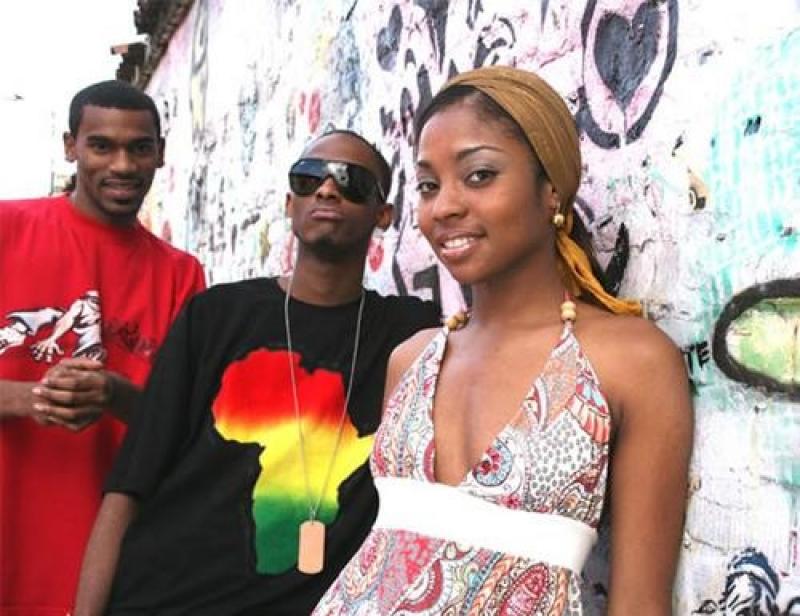
According to a study conducted by the Dominican
Studies Institute at the City University of New York, about 90% of the
contemporary Dominican population has ancestry from West and Central
Africa
. However, most Dominicans do not identify themselves
as black. The colonial and political events in the Dominican Republic
directed against Afro Dominicans have left emotional scars causing a rejection of their "blackness."
Also,
during Haitian rule of the Dominican Republic between 1822 and 1844,
Afro-centrism was pushed, which the Dominicans refused. The Dominican
Dictator Rafael Trujillo,
who ruled between 1930 and 1961, tenaciously promoted the anti-Haitian
sentiment and used racial persecution and nationalistic fervor against
the Haitians. He is considered blamed for creating the many racial
categories that avoided the use of the word "black,"
and in
1955, he promoted an emigration from Spain to his country to "whiten" the
Dominican population. Afro-Dominican poet Blas Jiménez states:
under Trujillo, there was nothing worse than being black.