Showing posts with label Afro-Latinos. Show all posts

Tuesday, April 14, 2015

The Afro Latin Experience in Texas


Much of the ignorance described in the blog post below is true in many other parts of the US, especially here on the west coast where I live, and surprisingly in New York where there is a large number of Latinos who are also black.


In Texas, there was an occasion when a black woman went to a Mexican restaurant with some brown and olive-skinned friends. The Mexican-American waitress took the order in Spanish from the brown and olive-skinned women.


When it was the black woman's turn to order, the waitress automatically switched to English even though the black woman made it evident that she is fluent in Spanish. Little did the waitress know that real Latinas come in all colors, including black. Where has she and so many others been all their lives? 


Below is a guest post from  Black Girl Latin World, which was originally published on The Latinegr@s Project website.


Afrolatinidad In Texas
#Escribelanegra


A while ago, on the Afrolatinos Facebook page, a member posted about her experience as an Afrolatina in the South. She pointed out that many people she comes in contact with don’t understand the concept of being both Black and Latina.

The conversation thread exploded. For two days, people commented with experiences, opinions and advice. Even I chimed in as an Afro-American Spanish speaking body in Texas. People are shocked when they find that I know Spanish. Where I am from a Black person speaking anything other than English is looked at as strange or interesting.

The main takeaways/experiences mentioned on the thread were:

  • Frustrations around people not believing that they were Latin@
  • People speak badly in Spanish about Black people around them not expecting them to understand
  • Lack of Media attention for Afrolatin@ issues/figures

When someone doesn’t understand your identity, it can be easy to get upset. But I like to look at everything as a teaching moment. Telling them about your experience and identity might just be the seed that can help them grow into an ally.

Tuesday, April 2, 2013

Meeting a Black Carib from Honduras


Travel networking is one of the most wonderful experiences I've ever had. It gives me that homey feeling when I visit a foreign country for the first time. On my trip to Cuba, I was introduced to a wonderful family by a Cuban immigrant who lived down the street from me. On my trips to Ecuador and Perú, I've made an abundance of lifetime friends through Facebook who gave me tours, directions, advice, and home-stays. And today, I return that favor by helping others who want to travel to where I've been.


However, just last night, I was in a restaurant and made Spanish-speaking conversation with one of the servers, a Black woman from Honduras. I asked if she was Garífuna, a Black Carib, a descendant of African people who escaped British slavery and merged themselves with the Indigenous population known as the Caribs. I explained to her that as a hobby, I visit and learn about the African heritage in Spanish-speaking countries, and that her home village of Travesía, Honduras and another Garífuna village of Livingston, Guatemala were on my list of places to visit.

Later, as I was finishing my meal, this restaurant worker came over my table speaking perfect English. She gave me her number and wants to introduce me to the people in her town and give me a place to stay when I arrive in Honduras. She even went to her car and gave me a free CD of Garífuna (Black Carib) music of which she was selling for $10. Yes, travel networking is a wonderful experience!

Wednesday, February 27, 2013

Afro-Latinas Underrepresented in Latino Film

Celebrating Afro-Latina Documentarians for Black History Month

Reposted from SydneysBuzz 


by Vanessa Erazo
February 20, 2013 1:00 PM


Actors of color contend with stereotypes and typecasting on a daily basis. In Hollywood, even in the ‘post-racial era’ an actor’s ethnicity can severely limit the types of roles they are considered for. A Latino actor often has no choice but to audition for roles as a gardener, maid, or janitor and be asked to fake an accent. It’s not much better for blacks.

Despite the success of black actors in mainstream blockbusters and African-Americans having won Oscars in all the major acting categories, it is still rare to have an all-black cast or to see a black actor in a leading role in Hollywood. Most of the roles offered in mainstream movies to a person of color are that of the token minority. Either that or you play a criminal, thug, gangbanger, or sometimes a reformed criminal trying to change your life around.

What if you happen to be Latino and black? Well, things get even more complicated. Early last year mun2, an English-language television network targeting U.S.-born Latinos, took on this very issue in a short web documentary called Black and Latino. Actors, musicians, and journalists like Christina Milian, Tatyana Ali, and Judy Reyes take on the question, “What does it mean to be black and Latino in the U.S.?”
Watch the full doc here.

Black and Latino features interviews with Latino actors Laz Alonso (Avatar, Jumping the Broom), Tatyana Ali (Fresh Prince of Bel Air), Gina Torres (Suits, Hercules: The Legendary Journeys) and Judy Reyes (Scrubs), musicians Christina Milian ("Dip it Low") and Kat DeLuna ("Whine Up"), and journalist Soledad O'Brien (CNN), among many others.

Afro-Latino actors are a conundrum for casting directors who are looking for a more ‘typical’ Latino look (read as light-skinned and Mexican). They end up booking more African-American roles because they don’t fit the stereotype of what Latinos look like. In Black and Latino actress Gina Torres explains, “When I became an actress I quickly realized that the world liked their Latinas to look Italian, not like me. So I wasn't going up for Latina parts. I was going up for African-American parts.”

Beyond the acting world Afro-Latinos contend with a host of issues. They have to fight for acceptance within the Latino community and sometimes even within their own family (lighter skin is often considered more desirable amongst Latinos). And to further complicate things many Latinos are unaware of or even deny their African roots. But outside of the Hollywood system, in the indie film world, there are Latinos who have embraced their African heritage and focused their cameras on Afro-Latinos. LatinoBuzz talked to some Afro-Latina filmmakers who have decided to tell their own stories. Who needs Hollywood anyway? Here are three documentaries that are currently in production.

Friday, June 15, 2012

Where Afro-Ecuadorian Stars are Made

DREAMTOWN
 R1-18A
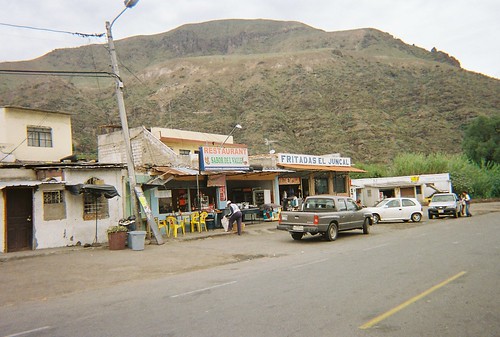
Dreamtown, Ecuador, generally known as Juncal, 
in the region of Valle de Chota (Chota Valley)


Have you seen the film Hoop Dreams about African-American basketball talent being created in the hood, aspiring to be stars in the NBA? Well, similar dreams are occurring communities around the world, such as Juncal in Ecuador's Valle de Chota (or Chota Valley) region where international soccer stars are made. After Ecuador's impressive performance in the 2002 and 2006 World Cup games, tourists from around the world, including I, wanted to visit the very town that gave Ecuador a respectable name in international soccer. However, my motives were somewhat different.

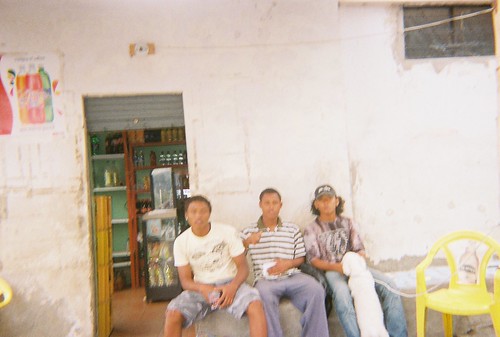
As a hobby, I get hands on experience developing my Spanish by traveling, primarily to black communities. in Latin-America. Juncal, in Ecuador's Chota Valley joined my list of places to visit, and I finally arrived in December of 2009. I saw the soccer field where these young aspiring stars are trained and was given the full scoop on the community and their stars by three teens who were fascinated by the presence of an African-American wanting to learn about their community. I left Juncal feeling exhilarated after having met and chatted with several members of the community. Even police officers who questioned my presence in their town were flattered and pleased. I gave everyone I met a post card of my home city, Oakland, and post card of the Obama family. A gesture very much appreciated in my travels.


Augustin Delgado, all-time top scorer for the Ecuadorian National Team, 
who played professionally in Ecuador, Mexico and England.


As of this writing , the dreams of soccer stardom and wealth by young men in this town are being made into a documentary called Dreamtown--the HOOP DREAMS of Ecuadorian Soccer. The producer Betty Bastidas puts it this way, it is an underdog story with a universal theme that will move and inspire every person to keep striving for their dreams no matter the odds or the obstacles! DreamTown is about the thrilling victories and tragic challenges that three young athletes face to secure their dreams as they start out playing barefoot in their impoverished town, and eventually to wealth and stardom in international stadiums. Betty goes on to explain how these players' hunger and passion about soccer, a source of Ecuador's greatest pride, and the great sacrifices they make for themselves, their families, and their community! 

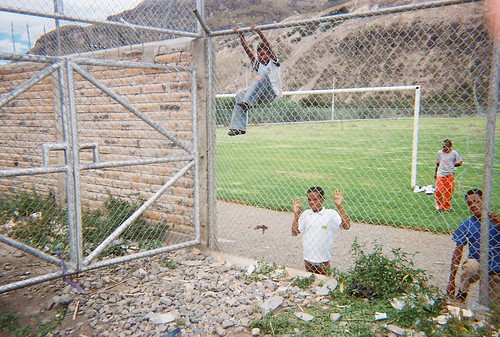
R1-00A
Excited young boys on the very soccer field that produced 
international soccer legend Augustín Delgado

It's been estimated that only 5% of Ecuador is of African descent and the racism is rampant and glaring from my own observation during my visits to this country on the Pacific coast. Yet over half of Ecuador's national team that scored impressive victories in World Cup competitions were Afro-Ecuadorians straight out of Chota Valley. One of these players who rose from the impoverished dirt fields of Chota Valley to the ranks of world class stardom was Ulises De La Cruz who donated much of his earnings to promote land development of his hometown, which had been neglected by the Ecuadorian government. Today, his donations and promotional campaigns has resulted in new schools, hospitals, running water, and paved roads. He is inspiring others who come behind him to do the same.

R1- 8A
Young men who gave me the lowdown on 
their community and their soccer stars.

Ecuadorian-American filmmaker and photographer Betty Bastidas holds a Master of Arts Degree from University of California at Berkeley's School of Journalism, and a degree in Documentary Photography from Salt Institute of Documentary Studies in Maine.  Her work has been exhibited internationally and she herself has been the recipient of numerous awards including the 2010 NALIP/HBO Documentary Award for DreamTown, 2008 NALAC Fund for the Arts, the 2006 NYFA Photography Fellowship, among others. Betty was recently selected to attend the 2011 NALIP Producer’s Academy with the DreamTown documentary.

 If you want to host a screening or get involved, e-mail Betty... betty.alexandra@gmail.com

The Voices of Dreamtown--Trailer
 

Sunday, June 3, 2012

How Color and Race are Viewed in Latin America


Filmed by Dash Harris
Creative Director, Journalist, Multi-Media Artist at In.A.Dash.Media
Color and African descendant identity is examined in Latin America. How are color and 'race' viewed in Latin America? What connections do African-descendants and in Latin America share with African-descendants in the U.S.? Latinos and Afro-Americans share their stories.


Monday, May 21, 2012

Undercover Afro-Latinos


Any one or more of these young men could be Latino, but how would you know if they keep their heritage private while assimilating into the African-American community?
Antonio, a long time friend from Central America is of African heritage, and of course, speaks fluent Spanish. He blends well with African-Americans; after all, he was married to one, and his children are totally assimilated into the African-American community. However, with my being an admirer of Afro-Latino cultures, it's quite evident to me how Antonio tends to minimize his Latino heritage in his communication with others, and even with other Latinos. 
One evening, for my birthday, he took me to see an Afro-Peruvian dance performance, and I, not him, was the one engaging with the Peruvians who were present. For this event, I was wearing a t-shirt reflecting Afro-Peruvian culture as a conversation piece while circulating among the crowd. It worked as Antonio simply observed me with fascination as I answered people's questions in Spanish who thought I myself might be Afro-Peruvian. He showed no interest in engaging with others, besides eavesdropping. 
I've always been outspoken about the African presence in Latin America at local black heritage events and in my Toastmasters meetings. I feel that a lot of African-Americans, and surprisingly many Latinos, need to be educated to the fact that we African-Americans are not the only black population in the western world. In fact, we are indeed a minority because an overwhelming majority of the slaves ships went to Spanish and Portuguese speaking countries almost 100 years before they started coming the U.S.
When Antonio and I first met, I asked him why he is so reluctant to assert the Latino side of his heritage. Antonio only gave me a vague answer, and to this day, I still do not understand. He is not the only person of Latin-American heritage who tries to keep it on the down-low. I've seen Latinos of all colors do it, and I'm wondering why. I brought this topic up in a forum of which I'm a member, and here are are some of their comments: 
Dora: Sometimes you just don't want to be the representative educator. It's exhausting, and other times, it still doesn't matter. Adults with narrow minds will continue to have it.  I don't always broadcast my background unless I need to. My mother does the same. I usually lay low in Spanish speaking establishments to see if they'd talk !@#$ about me.
Rob: It could be that she identifies more with just being “black” due to discrimination she may have experienced in her country. I've had Afro-Latinos friends who  say that they were treated as second class citizens and not welcomed as fellow Hispanics, so they just align more with being “black.” 

Carlos: In America, so-called Black Latinos have to assimilate. We don't have a choice. Like my man Laz Alonso said, he is Cuban inside his house and African American outside. Its just the way it is in the US. 

Ayana: My dad is from Dominica, and my mother from St. Lucia,raised in French Guiana. When I started grade school I went to a school where the kids were mostly South American and Eastern European. My best friend was Colombian and I do have distant Colombian heritage as well. I speak Spanish fluently. I was always treated equally among my peers. 

In the 5th grade I went to a different school that was predominantly African American, West Indian, and Puerto Rican. I was treated horribly by the African Americans for being "an Oreo," a "Spanish girl wannabe," and other interesting things. One time, I got kicked in the head and blacked out.
I was very sorry to hear about Latinos who were severely persecuted in their youth by their African-Americans peers who resented their being different. That brings to mind of a black Panamanian who grew up in the hood in West Oakland. He told me that keeping his Latino heritage on the down-low was about survival and fitting in. 

Rob's comment about Afro-Latinos not being welcomed by fellow Hispanics suddenly triggered my memory of Juan, from Venezuela, who could not get a job in Venezuela after finishing journalism school because of his color. He then told me how Spanish-speakers in the U.S. would often answer him in English because they could not relate to a black guy speaking Spanish. This, of course, drove him closer to African-Americans.

I've known Antonio for over 10 years, and he never mentioned any of the abuses, mistreatment, or discrimination stated above. In fact, he seldom discusses his experience as an Afro-Latino, although at times, I've heard him talk about his background as Garífuna, a descendant of escaped African slaves who assimilated with indigenous people of Central America. Even then, he keeps such discussions to a minimum, even with me knowing that I'm planning trips to a couple of Garífuna villages. 

As one member of the forum puts it, there are many things out there that influence people's decisions to downplay an aspect of their heritage. My feeling is that people need to be made aware of the diversity in the “black” community. Right here in the U.S., I've met blacks who speak English, Spanish, French, Portuguese, and Dutch; not to mention the various languages and dialects from the Caribbean and the African continent. My blog, African-American-Latino World, is only a minor contribution to promote this awareness.
     

Sunday, February 12, 2012

Why I Blog African American-Latino World


It was in East Harlem where I experienced a cultural exchange with primarily the Puerto Rican community.

Tynesha, a client, who happens to be African-American, was in my office for some employment counseling, when suddenly the conversation shifted to a topic directed at me. “So you are Black,” she says. I shrugged and said, “the last time I looked in the mirror I was, why?” She says because you got all this Latin stuff on your wall. I then pointed out pictures of Booker T Washington, which was on my office door, and John Coltrane and Muhammad, which were on my wall. Her response was, “yes but those pictures are overwhelmed by your pictures from Perú, Cuba, and Ecuador, and these other Latin countries.” Well, I have to admit that I've always had an interest in Latino cultures, which is why I blog, African American-Latino World.


The Lenox Terrace on New York's 5th Avenue in Harlem, where I lived as a child, was the dividing line between East and West Harlem.

It all started when I was a little boy living on the dividing line between East and West Harlem in New York City. East Harlem contains a large Spanish-speaking population, mostly Puerto Rican. I began noticing some cultural exchange between some African-Americans and Puerto Ricans in the community, mainly New York born Puerto Ricans (Nuyoricans). Even I started picking up on some Spanish at the age of 10. We went to the same schools and community centers. Some of us dated each other. 

In the spring and summer months, it was common to see African-American and Puerto Rican musicians in Marcus Garvey Park, across the street from my old Junior High School, James Fenimore Cooper, in East Harlem. Guys brought their conga drums, bongos, flutes, and other percussion and wind instruments to jam to jazz and Latin jazz tunes. By the time I became a teenager, I felt myself getting culturally turned out! Walter, an African-American school friend came to my house and noticed my large collection of salsa and Latin jazz albums in my room. Walter just chuckled, scratched his head, and told me that I was turning into a Puerto Rican.


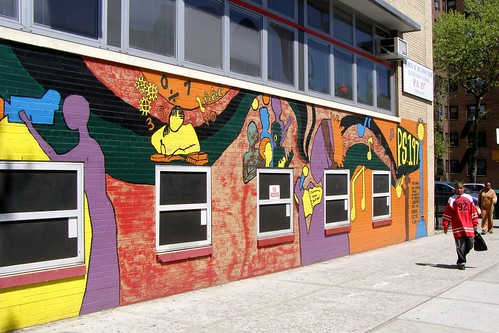
My old elementary school, P.S. 197-Manhattan, also on 5th Avenue; dividing East and West Harlem.

Even people in the Spanish-speaking countries that I've visited have assumed that I too am Latino. In Ecuador, a cab driver asked me, “es usted caribeño?” In other words, am I Puerto Rican, Cuban, or Dominican. When I later crossed the border from Ecuador into Perú, I was stopped by the police three times because they thought I was an illegal alien from either Ecuador or Colombia. One cop, who figured my American passport might be fake, started asking me a lot of intense questions. I said to myself, my Spanish can't be this good? Why is this cop tripping? 

When he first approached me I snapped at him in Peruvian slang, despacio, mi español es monse--slow down, my Spanish is whack! When the officer was finally done interrogating me, I said to him, sarcastically, gracias por la práctica en mi español (thank you for helping me practice my Spanish). The officer responded with, ¡Ya!, meaning  yeah, yeah, yeah as he walked dejectedly back to his patrol car. I think he think he was looking for a bribe.


What Walter, who said that I'm turning into a Puerto Rican, did not realize, and neither did I at the time, was that this hot Latin music that was turning so many people on, including me, not only has Spanish roots, but African roots as well.What my client, Tynesha, don't realize is that during the slave trade, the overwhelming majority of Africans went to Latin-America, not the U.S. 

I was working on a term paper for my African-American studies class at the Arturo Alfonso Schomburg Center for Research and Black Culture in Harlem, which by the way, is named in honor of a Black Puerto Rican, There, I learned about the African presence and influence on Latin-American cultures from Mexico and the Caribbean, all the way down through Argentina.


The Schomburg Center for Research & Black Culture, a branch of the New York Public Library
However, it wasn't until late into my adulthood when I decided to adopt Spanish as my second language. My late Mexican-American friend, Yolanda Gutierrez, encouraged me to learn the culture as well as the language. As badly as I wanted to take Yolanda's advice, I was confused. There must be at least 18, 19, or 20 different Latin American cultures. Exactly where was I supposed to begin?

It was my love for salsa and Afro-Cuban music that reignited my desire to learn to speak Spanish.
Well, I took the easy way out. I started reading about the Latin American cultures where Africans had an influence on the music I enjoyed most; son-montuno from Cuba, bachata from the Dominican Republic, and jarocho from Mexico. Then I expanded to tambor from Venezuela, saya from Bolivia, and marimba from Ecuador. I began traveling to selected Latin American countries to explore their black experience. For example, in Colombia, I visited a landmark African village where their descendants freed themselves, Nat Turner style, from Spanish rule more than 200 years before the rest of the nation of Colombia won their independence.

As of today, I've visited 30 Latin American cities and towns in 10 countries, including Miami, which I consider to be an honorary Latin-American town where people, especially Cubans, are in-your-face proud of their language and culture. I remember walking into Cuban restaurant, and the cook asked me in broken English, “can I help you?” When I told her in Spanish that it was OK to speak to Spanish, she, her co-worker, and a even a customer were so cheered that they made me feel right at home. I don't always get that reaction when I'm in New York where I grew up, San Francisco where I work, or Oakland, where I live.

My next trip includes Honduras and Guatemala where I want some exposure to the descendants of Africans slaves who revolted against the British, escaped, and found refuge among indigenous people; then I'll be going to Chile, where the City of Arica has a historic African presence.  The way it looks, I'm going to continue learning the Spanish language and various Latin-American cultures, particularly those of African ancestry until I'm on my death bed. Thus, my blog, African American-Latino Word continues.

Tuesday, August 16, 2011

Semantics: Black and Latino

Hacienda de San Jose

This former slave plantation in Perú's District of El Carmen had a Nat Turner type uprising in 1879. Today, a large chunk of Peru's black population reside in El Carmen.


Black and Latino Are Not Mutually Exclusive

The majority of slave ships went to Spanish and Portuguese speaking countries.

An African-American female was in my office going over her job search plan when our conversation somehow led to the discussion of my African-American heritage. In astonishment she said, so you 'are' black. I said, yes, the last time I looked in the mirror I was black. What color did you think I am? Her response was, I would have never known with all that Latin sh...(expletive) on your wall. I then pointed to pictures of Muhammad Ali, John Coltrane, and Miles Davis. They were on my wall too. However, she pointed out that those pictures were overshadowed by my travel pictures to Perú, Cuba, and several other Latin American countries. She made a good point. What I had trouble sinking into her head was that you don't have to be African-American to be black. In each of those Latin-American countries, with the exception of El Salvador, I saw black people who speak Spanish as a first language.


Actress Omarosa is black, but her ethnicity is African-American


On another occasion, a Mexican-American woman told me that her boyfriend is black. Immediately, I stopped her and asked for clarification. I wanted to know if her black boyfriend is Jamaican, Nigerian, Cuban, or what? Oh, you know what I mean, she said. No, I don't know what you mean, I insisted. She finally broke it down to me that her boyfriend is African-American. In such a diverse, multiracial, multicultural society that we live in, it is imperative that we be more specific when it comes to identifying race and ethnicity. There is a distinct difference between the two. For example, in Oakland, where I live, there are black communities that are not African-American. There are Continental Africans, Caribbean Islanders, South Asians, Afro-Latinos, and African-Americans.


Actress Zoe Saldaña is black, but her nationality is half Puerto Rican and half Dominican


A black Puerto Rican woman got irritated with me saying, what you have to understand, Bill, is that when people say 'black,' they are referring to African-Americans. I'm thinking, how ludicrous. If this Puerto Rican woman knew anything about her history, a significant number of 'blacks' were brought to Puerto Rico as slaves. In fact, only 10% of all black slaves came to the US. I never understood why so many people use the phrase' black and Latino' to describe African-American and Latino communities when there are more blacks among the Latin-American population than African-Americans, and this is without counting the one-drop rule.
It is imperative that we be more specific when it comes to identifying race and ethnicity. There is a distinct difference between the two.

I was in a chess game with my goddaughter Daniela of Perú. Before the game started, I said I wanted the black pieces because I'm black. She then touched her arm and said that she is black too. I felt so proud of her. Bottom line, black people come in many different cultures and speak many different languages. Latinos come in many different colors reflecting their indigenous, African European, Asian, and Middle Eastern ancestries.

Saturday, July 30, 2011

What is Sammy Sosa's Problem?


“It appears that Sosa is guilty of having a "colonial mentality.”
--Fela Kuti , Late Nigerian activist and musician


Many have been flabbergasted to see black Dominican retired major league baseball star Sammy Sosa with green contact lenses and bleached skin. It is so unfortunate that all over the African Diaspora, people have been so emotionally scarred by racism that they have learned to internalize it. Many of us bleach our skin, straighten our hair, and even deny our African ancestry. There was a time in the U.S. when we African-Americans would feel insulted to the point of physical combat to be referred to as African or black. Although, this attitude changed to a degree by the black-is-beautiful movement of the 1960s, many of us still have never recovered.


I'm not “black,” I'm “Do-min-i-CAN,” said actor/comedian Doug E Doug in the film “Hanging with the Homeboys.”

I have to respect the fact that people in Latin-American countries see themselves by their nationalities first and their race second. Marcus Garvey, whose United Negro Improvement Association (UNIA) included branches in Latin-America, was told by a Cuban delegation that they were Cubans first and blacks second. Does this sense of staunch patriotism stop racial discrimination in these respective countries? Obviously not. From my personal travels to Cuba and other Latin-American countries, I've noticed a blatant absence of blacks, Asians, and indigenous people working in shops, as police officers, and in transportation, let alone those working in office and corporate settings. Just pick up a newspaper and you can count the people of color, if any, who are featured unless they are criminals, athletes, or entertainers.


In Sammy Sosa's home country, 90 percent of the people have African ancestry. Yet only 11 percent identify themselves as black. Despite this denial, black Dominicans, Haitians and Dominicans of Haitian ancestry still face discrimination, poverty, and lower education and health standards. Under the Dominican government's Hispanidad movement, white, Spanish, Catholic heritage was stressed, and the African and indigenous portion of the culture was neglected. I even heard a rumor that Sammy Sosa had Taino Indian on his passport to indicate his race. Many black Dominicans never realized they were black until they came to the United States.


Afrocentric citizens of the Dominican Republic tried to start a movement similar to the black is beautiful movement in the U.S. to embrace the African heritage prevalent throughout their country and found it to be a lost cause due to lack of interest.


Sammy Sosa's problem is that he is just another victim of his upbringing and culture where looking pretty means looking as less black as possible. The one-drop rule works opposite of what is practiced in the United States; with one drop of non-black blood, you are considered a member of a race other than black. Therefore, black Dominicans most often identify themselves as Indian, burned Indian, dirty Indian, washed Indian, dark Indian, cinnamon, moreno (colored/dark), or mulatto. The old adage, “if you are white--you're all right, if you're brown--stick around, if you're black--stay back certainly applies in Latin America, particularly in the Dominican Republic. Black Dominican feminist Sergia Galván points out that black is associated with dark, illegal, ugly, and clandestine.

I was talking to an African-American woman who speaks fluent Spanish and spent quite a bit of time in the Dominican Republic, and asked her, how would Dominicans react to me if I insist that I'm black or African-American. Her response was that educated, probably upper class Dominicans who also speak a bit of English and have family in New York City or Miaimi will understand, but it gets complicated when you are talking to the general population (spanish only) who may or may not be educated, have little knowledge of people outside of the country. She went on to explain that everyone will assume that I am Dominican until I convince them otherwise. Even if my Spanish isn't that good or I speak fluently with a foreign accent they will think that my parents are Dominican. Again, if I prove otherwise, they will think that, perhaps, I immigrated to the US from another country. 

She further stated that if I insist on calling myself black, they will think I'm Haitian and only Haitians are black. The preferred term is “moreno” a Latino way of saying “colored.” While she was there, she continued, she  just went with the flow as far as labels were concerned. Sometimes she was even referred to as Indian.

Thursday, June 23, 2011

Black Baseball Player Calls Afro-Latino Players Imposters


According to a USA today article, black Latinos now make up 38% of Major League Baseball players vs only 8% of African-American baseball players.

African-American center fielder, Torii Hunter made a comment during a USA Today's round table on the state of baseball, that MLB uses dark-skinned players (he won't even refer to them as black) from countries like the Dominican Republic, Puerto Rico and Venezuela to give an appearance that it has more African-Americans playing the game than it really does. He refers to these black Latino ball players as impostors.


To make black Latinos scapegoats as part of a big conspiracy is not the answer to the problem of getting more African-Americans back into the sport of baseball.

Tori's Hunter's exact words were:
As African-American players, we have a theory that baseball can go get an imitator and pass them off as us. It's like they had to get some kind of dark faces, so they can get them cheaper. It's like, 'Why should I get this kid from the South Side of Chicago and have Scott Boras represent him and pay him $5 million when I can get a Dominican guy for a bag of chips?' ... I'm telling you, it's sad.
Just because a black person speaks another language and comes from another country doesn't disqualify him as a member of the African diaspora.
What's sad is not the theory of why MLB would want to pay less for an Afro-Latino player than a home-grown African-American player; I think he is making a good point here. What is sad is his obvious lack of knowledge of black history. The black race does not start and end in the United States. Just because a black person speaks another language and comes from another country doesn't disqualify him as a member of the African diaspora.

What is sad is his obvious lack of knowledge of black history. The black race does not start and end in the United States.

I certainly agree and respect Hunter's advocacy of an increased number of African-American participation in baseball, but let's call a spade a spade (no pun intended). I agree with Tori Hunter's critics that this was a terrible and illogical way to advance that struggle. To make black Latinos scapegoats as part of a big conspiracy is not the answer to the problem of getting more African-Americans back into the sport of baseball.

Saturday, July 24, 2010

My Top 10 “BLACK” Latin Music Stars


Afro-Latino music is a result of a marriage between the Spanish guitar and the African drum. 
----Harry Belafonte


=======================================================================

 
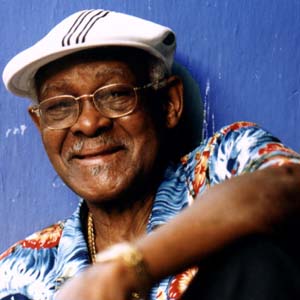
1. The late Ibrahim Ferrer (Santiago de Cuba): In 1998, he became famous in the film ”Buena Vista Social Club” but has been around singing for decades.


 2. Jairo Varela (Chocó, Colombia): The late director, producer, songwriter, and vocalist of the famous salsa band Grupo Niche.


3. Africando (Dakar, Senegal, West Africa): In their very first CD, they stated that their mission is to bring salsa music back to its African roots. Africando sings salsa in Spanish, French, and their native tongue
Wolof.
 

4. Lucresia (Barcelona, Spain): This jazzy Cuban-born singer was once dubbed as the young Celia Cruz, but has come into her own as a Latin jazz singer. She sings the hell out of the song, La Noche de la Iguana (The Night of the Iguana).


5. The Lebron Brothers (Brooklyn, NY): This Nuyorican (New York Puerto Rican) group made up of Angel, José, Carlos, Frankie, and Pablo is known for salsa, Latin Boogaloo, and Latin Soul music.

6. Susana Baca (Lima, Perú): A world traveling diva who improvised on Afro-Peruvian music, crossing it with jazz, salsa, blues, and Afro-Cuban music.


7. Wilmer Cartagena (Lima, Perú): He is singing the shadows of his brother, Antonio, and is the singer of my favorite salsa song Un Amor Como El Tuyo


8 Elio Revé, (Guantánamo, Cuba): Unfortunately, he is no longer with us, but his Changui music lives on.


9. Ricardo Lemvo (Los Angeles, CA by way of the Democratic Republic of the Congo).
 
10. Cuco Valoy, Dominican Republic