Showing posts with label Texas. Show all posts

Tuesday, April 14, 2015

The Afro Latin Experience in Texas


Much of the ignorance described in the blog post below is true in many other parts of the US, especially here on the west coast where I live, and surprisingly in New York where there is a large number of Latinos who are also black.


In Texas, there was an occasion when a black woman went to a Mexican restaurant with some brown and olive-skinned friends. The Mexican-American waitress took the order in Spanish from the brown and olive-skinned women.


When it was the black woman's turn to order, the waitress automatically switched to English even though the black woman made it evident that she is fluent in Spanish. Little did the waitress know that real Latinas come in all colors, including black. Where has she and so many others been all their lives? 


Below is a guest post from  Black Girl Latin World, which was originally published on The Latinegr@s Project website.


Afrolatinidad In Texas
#Escribelanegra


A while ago, on the Afrolatinos Facebook page, a member posted about her experience as an Afrolatina in the South. She pointed out that many people she comes in contact with don’t understand the concept of being both Black and Latina.

The conversation thread exploded. For two days, people commented with experiences, opinions and advice. Even I chimed in as an Afro-American Spanish speaking body in Texas. People are shocked when they find that I know Spanish. Where I am from a Black person speaking anything other than English is looked at as strange or interesting.

The main takeaways/experiences mentioned on the thread were:

  • Frustrations around people not believing that they were Latin@
  • People speak badly in Spanish about Black people around them not expecting them to understand
  • Lack of Media attention for Afrolatin@ issues/figures

When someone doesn’t understand your identity, it can be easy to get upset. But I like to look at everything as a teaching moment. Telling them about your experience and identity might just be the seed that can help them grow into an ally.

Monday, February 16, 2015

Mexico's Historic Aid to Black American Freedom Struggles


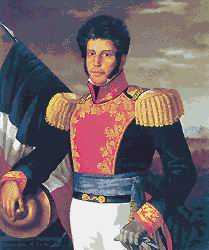
In 1829, Mexico's president, Vicente Guerrero, son of an African slave mother, inadvertently spawned a Mexican underground railroad for African-Americans by signing a decree banning slavery in the Mexican Republic.


“Sometimes someone would come along and try to get us to run up north and be free. We used to laugh at that. There was no reason to run up north. All we had to do was walk south, and we’d be free as soon as we crossed the Rio Grande.”


 Felix Haywood, a Texas slave, as quoted in 
“The Slave Narratives of Texas” 


Beginning in 1822, more than 20,000 slave owners settled into Texas. Even though Mexican Federal Law clearly reasserted the nation’s commitment to defend the right of enslaved Africans to liberate themselves, slave owners in Texas pressed for an extradition treaty which would require Mexico to return runaway slaves. After Texas gained independence from Mexico, the slave population in Texas as well as the number of runaways across the border into Mexico mushroomed. 

Mexicans living in Texas took great risks and invested enormous resources toward facilitating the escape of enslaved Africans. The Texas-to-Mexico routes to freedom constituted major unacknowledged extensions of the Underground Railroad. 

The Tejanos (Texas Mexicans) were accused of tampering with slave property, consorting with blacks, and stirring up a spirit of insubordination among the slave population. Mexican Americans stood their ground refusing to return runaways and continued to support slave uprisings.


In 1857, the same year that the U.S. Supreme Court ruled against Dred Scott, an enslaved African who had sued for his freedom on the grounds that his owner forfeited any claim to him after taking him into a free state, the Mexican Congress declared that enslaved people were free the moment they set foot on Mexican soil.


During the 1890s, hundreds of Black migrants fed up with slave-like conditions and segregation, left Alabama for Mexico and established 10 large colonies. Shortly thereafter, during the period of the Mexican Revolution, large numbers of black people migrated from New Orleans to Tampico, Mexico, as the oil industry prospered. These Africans in Mexico established branches of Marcus Garvey’s Universal Negro Improvement Association (UNIA). 


Sadly today, we hear of conflicts and polarization between African Americans and Mexican Americans in communities around the country. Gone are the days when César Chávez established relationships with Coretta Scott King and members of the Southern Christian Leadership Conference; gone are the days when the Black Panthers were allies with the Mexican-American Brown Berets, and gone are the days when blacks in the Student Nonviolent Coordinating Committee (SNCC) allied with Movimiento Estudiantil Chicano de Aztlán (MEChA), a Mexican-American student organization on college campuses. I cite ignorance in both communities.