Showing posts with label Mexico. Show all posts

Tuesday, June 7, 2016

Mexican Music - African Roots


Graciana Silva, better known as La Negra Graciana because of her African heritage, is a son-jarocho harpist and vocalist.

The Spanish word “son” means folk music,  and “jarocho” is the traditional style of music originating in the Eastern region of Mexico, primarily the Mexican state of Veracruz. Jarocho is a colloquial term for people or things. The music is a fusion of indigenous, Spanish, and West African musical elements, which evolved from Spanish colonial times. It's a vibrant, highly repetitive musical structure with bright melodies, improvisational, and witty lyrics and vigorous heel dancing dating as far back as the 1600s. 

Son jarocho songs feature the call-and-response vocals demonstrating the West African influences due to the Port of Veracruz being the entry point of slaves into Mexico. Many of the jarocho musicians today are Afro-Mexicans. The lyrics involve humorous themes addressing love, nature, sailors, and cattle breeding during Mexico's colonial period.


The instruments generally used in Son Jarocho are small guitar-like instruments called jarana jarocha

The instruments generally used in Son Jarocho are small guitar-like instruments called jarana jarocha, and another small one called the requinto jarocho plucked with a long pick traditionally made from cow-horn, and the harp, known as the arpa jarocha, and sometimes percussion instruments such as a wooden boxed called the cajón and a jawbone of a donkey, called a quijada (pronounced Key-hah-dah).  

The most widely known son jarocho song  is "La Bamba," which became a big hit in the 195os sung by Richie Valens and again in the 1980s by the group Los Lobos.
During the late Colonial period, the Catholic Church, as in other African inspired genres of music, unsuccessfully tried to suppress the son jarocho because of what was perceived as dirty, low class, and ungodly. Catholic bishops were turned off with the music's sexual connotations as it made fun of religion, death, and Catholocism. 

One of the living legends of Son Jarocho is Graciana Silva,  from Veracruz who continues to perform and record this traditional form today. Graciana Silva, better known as La Negra Graciana because of her Africsn heritage, sings and plays the harp.

Monday, February 16, 2015

Mexico's Historic Aid to Black American Freedom Struggles


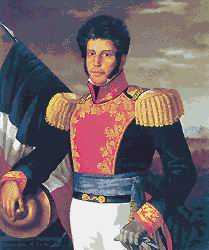
In 1829, Mexico's president, Vicente Guerrero, son of an African slave mother, inadvertently spawned a Mexican underground railroad for African-Americans by signing a decree banning slavery in the Mexican Republic.


“Sometimes someone would come along and try to get us to run up north and be free. We used to laugh at that. There was no reason to run up north. All we had to do was walk south, and we’d be free as soon as we crossed the Rio Grande.”


 Felix Haywood, a Texas slave, as quoted in 
“The Slave Narratives of Texas” 


Beginning in 1822, more than 20,000 slave owners settled into Texas. Even though Mexican Federal Law clearly reasserted the nation’s commitment to defend the right of enslaved Africans to liberate themselves, slave owners in Texas pressed for an extradition treaty which would require Mexico to return runaway slaves. After Texas gained independence from Mexico, the slave population in Texas as well as the number of runaways across the border into Mexico mushroomed

Mexicans living in Texas took great risks and invested enormous resources toward facilitating the escape of enslaved Africans. The Texas-to-Mexico routes to freedom constituted major unacknowledged extensions of the Underground Railroad. 

The Tejanos (Texas Mexicans) were accused of tampering with slave property, consorting with blacks, and stirring up a spirit of insubordination among the slave population. Mexican Americans stood their ground refusing to return runaways and continued to support slave uprisings.


In 1857, the same year that the U.S. Supreme Court ruled against Dred Scott, an enslaved African who had sued for his freedom on the grounds that his owner forfeited any claim to him after taking him into a free state, the Mexican Congress declared that enslaved people were free the moment they set foot on Mexican soil.


During the 1890s, hundreds of Black migrants fed up with slave-like conditions and segregation, left Alabama for Mexico and established 10 large colonies. Shortly thereafter, during the period of the Mexican Revolution, large numbers of black people migrated from New Orleans to Tampico, Mexico, as the oil industry prospered. These Africans in Mexico established branches of Marcus Garvey’s Universal Negro Improvement Association (UNIA). 


Sadly today, we hear of conflicts and polarization between African Americans and Mexican Americans in communities around the country. Gone are the days when César Chávez established relationships with Coretta Scott King and members of the Southern Christian Leadership Conference; gone are the days when the Black Panthers were allies with the Mexican-American Brown Berets, and gone are the days when blacks in the Student Nonviolent Coordinating Committee (SNCC) allied with Movimiento Estudiantil Chicano de Aztlán (MEChA), a Mexican-American student organization on college campuses. I cite ignorance in both communities.

Tuesday, March 4, 2014

Women's History Month - Black Mexican Wins Hollywood Academy Award

Women's History Month is an annual declared month celebrated during March in the United States, corresponding with International Women's Day on March 8. 


Academy Award winner Lupita Amondi Nyong'o was born March 1, 1983, in Distrito Federal (Mexico City) She is the daughter of a former Kenyan Minister for Medical Services who was in Mexico City at the time of Lupita's birth to deliver a lecture in political science. It is a Kenyan tradition to name a child after the events of the day, so her parents named her Lupita. The actress of Luo ancestry, one of the 70 different ethnic groups in Kenya, made her American film debut in Steve McQueen's 12 Years a Slave as Patsey immediately after finishing Yale School of Drama where she earned her Masters in Fine Arts .

Nyong'o moved back to Kenya with her parents when she was less than one year old when her father was hired as a professor at Kenya's University of Nairobi; however, when she turned sixteen, her parents sent her back to Mexico for a few months, to learn Spanish.before attending Hampshire College in Amhert, MA earving a degree in film and theater studies.

Back in Kenya Lupita Nyong'o starred in the television series Shuga. She also wrote, directed, and produced the documentary “In My Genes,” about the treatment of Kenya's albino population, which played at several film festivals. Lupita subsequently enrolled in the acting program at the Yale School of Drama where she she appeared in many stage productions earning her Masters Degree in Fine Arts.


Nyong’o shares a deep connection to her native Mexico as she explained in Spanish during a recent interview with CNN en Español. Lupita lived in Taxco in Mexico's state of Guerrero and also spoke about what it was like to move from Kenya to Mexico as a teen and why she fell in love with the country. She adds,. “Mexico was very strange to me, coming from Kenya, but I found such friendly people and fell in love with the food,” “I still have a lot of friends in Mexico and I hope to return soon. I miss Mexico.” Today, Nyong'o lives in Brooklyn, New York with her younger brother, who is a student.

Monday, November 11, 2013

Mexican Cuisine - African Roots


 It was on a city bus in Oakland, CA when I found myself, out of frustration, lecturing (in Spanish) to a group of Mexican-American high school students who seemed to have felt that it was so comical to hear a black guy speaking Spanish. Although I personally am not of Latin American ancestry, I'm fairly knowledgeable of black history throughout Latin America, and  I’ve met very few people, including Mexicans, not to mention Mexican-Americans, who are aware of Mexico's third root in addition to the Spanish and the Indigenous—the African.


Afro-Mexican Pumpkin Soup

Mexico, then known as New Spain, was a key port of entry for slave ships, according to the 1946 book, La Población Negra de Mexico (The Black Population of Mexico), by the renowned Mexican anthropologist and professor at Mexico’s University of Vera Cruz, Gonzalo Aguirre Beltrán. During the colonial period, there were more Africans living in what we know today as Mexico than Europeans. Do you think these Africans just, “POOF,” disappeared? Not hardly. Instead they took part in forging a great racial mixture with European and the Indigenous people over a period exceeding 500 years. Therefore, Western and Central African cuisines contributed to the origin and evolution of popular Mexican culinary arts.


In Guanajuato, Mexico, which at one time had a substantial black population, blackeyed peas, which is closely associated with African cooking, is still a culinary legacy.

One of the most important contributions of African cooking was the widespread use of the peanut. Although the peanut originated in the Americas, it was not widely used by the Indigenous people of Mexico, but brought to Africa by the Portuguese. The peanut was then brought back with African slaves who had eagerly adopted it as a satisfying addition to their diet. Peanuts were used by Africans in meat stews, fish and vegetable dishes and in seasoning pastes for grilling. Ground with onions and chiles, they formed sauces something like the table salsa found in nearly every restaurant and homes in Mexico’s state of Veracruz. The colonial slaves who escaped from the Spanish often fled into the hills, and their culinary influence is particularly noticeable in the mountain regions of Veracruz. Today, peanuts are used throughout the country in desserts, baked goods, in drinks, ices and ice cream, and in sauces for chicken and pork. 

Empenadas de Plátanos (Plantain Empenandas) are among the most popular menu items at Mexico City's El Bajio, considered by many to be the best regional food restaurant in the city.

Another significant part of African cooking that became incorporated into Mexican regional cuisine was the use of plátanos (plantains), which came with the Africans via the Canary Islands. Plátanos are also found throughout the state of Veracruz and used to make dough for gorditas, tortitas, empanadas, and other goodies, which are now appreciated all over the country, and plantain empanadas are among the most popular menu items at Mexico City's El Bajio, considered by many to be the best regional food restaurant in the city.

Peanuts were used by Africans in meat stews, fish and vegetable dishes and in seasoning pastes for grilling. 

Tropical roots, such as yucca, malanga, taro, and sweet potato, collectively known as viandas, were other ingredients in the African kitchen that became important and traditionally provided readily available nourishment. Viandas are inexpensive and easy to grow, requiring no expensive fertilizers. They are also versatile and can be used in dishes ranging from croquettes in garlic and tomato sauces to dessert fritters and sweet tamales. They combine with tropical fruits, such as coconut and pineapple, to make delicious desserts.

One of the most important contributions of African cooking was the widespread use of the peanut.

In Mexico’s state of Veracruz Africans have profoundly influenced people, cuisine, and music, and even the names many towns like Mocambo, Matamba, Mozomboa and Mandinga. Yet, African recipes have become part of Mexico's national cuisine well outside of Veracruz.

Saturday, September 14, 2013

Black Contributions to Mexican Independence—September 16, 1810


.

In 2006, Chicago’s National Museum of Mexican Art revealed the missing chapter in Mexican history with a groundbreaking exhibition, “The African Presence in Mexico.” As Mexico celebrates her Independence Day, I am never surprised to meet Mexican nationals and Mexican-Americans, not to mention so many of my fellow African-Americans, who are unaware of Mexico’s third root -- there is the indigenous,  there is the Spanish, and there is the African.

This is understandable because after centuries of interracial marriages (and “relationships”), the sub-Saharan African presence in Mexico took a much sharper decline than most other Western nations with a history of slavery.

It was the late anthropologist and professor at Mexico’s University of Vera Cruz, Gonzalo Aguirre Beltrán, who published interesting facts in his book, La Población Negra de México (the Black Population of Mexico). One of the facts he pointed out was that more than 500,000 African slaves were brought in through Mexico’s Port of Vera Cruz from the time of the invasion of Hernando Cortez until the day of Mexican independence on September 16, 1810.

I recently engaged in a conversation with an immigrant from Mexico’s State of Guerrero, where the resort city of Acapulco is located. She was so surprised when I told her that her state is named after her country’s liberator General Vicente Guerrero. I didn't share the fact that this liberator happens to be the son of an African slave mother and a Mestizo peasant father, and abolished slavery in Mexico after becoming Mexico’s second president in 1829. She seemed overwhelmed just with hearing how her state got its name..


A statue of Gaspar Yanga who who freed his Mexican town of runaway slaves from Spanish rule almost 200 years before the rest of Mexico.

A Mexican couple was equally surprised when I told them that in their home state of Vera Cruz, almost 200 years before Mexico officially became independent, an African slave rebel named Gaspar Yanga joined forces with another rebel slave leader named Francisco de Matosa to establish Mexico’s first free town, a free Black town independent of Spanish rule. 

It was the diligent work of Vicente Guerrero’s grandson, a writer, an attorney, a former military general, and Mayor of Mexico City, Vicente Rivas Palacio, who made Yanga a national hero as he published accounts of Yanga’s revolutionary valor against Spanish forces in an anthology in 1870.

In the book, No Longer Invisible: Afro-Latin Americans Today by Minority Rights Press, the writer/researcher Jameelah Muhammad pointed out that the African presence in Mexico is a subject often denied, but people of African descent have influenced every aspect of Mexican life, culture, and history. 

Blacks played major roles In Mexico’s war of Independence from Spain believing this will help to end slavery and the caste system. Full blooded black men in leadership positions in the Mexican revolution included Juan Bautista, Francisco Gomez, and José María Alegre. According to some historians, it was the Ejército Moreno (the Colored troops) who launched the independence struggle on behalf of Mexico.


Other Posts on “Black” Mexico
Mexico’s Dark Secret
La Bamba: The Souls of Black Mexican Folk
Mexico’s Third Root