Showing posts with label Ecuador. Show all posts

Friday, January 8, 2016

THE BLACK CIVIL RIGHTS MOVEMENT: Ecuador, South America

 Youth jamming to Afro-Ecuadorian music 
in Ecuador's  black region Valle de Chota


I made successful attempts to connect with Black Latin America during my travels to experience for myself how they live, to embody their culture, and to learn some black history in the respective countries that I have visited. In fact, there were occasions when I fit in so well with the respective black communities that instead of my being perceived as a rich gringo from the U.S., I got a good taste of some of the racism that local blacks experience.

In Quito, Ecuador, one taxi cab after another passed me by despite my obvious flagging. Another sped by me to pick up a white couple 25 yards from where I was standing. When I approached a taxi letting out a couple of white passengers at a busy intersection, the driver wagged his finger making it clear that he did not want me in his cab. To make light of the situation, I waved some bills as he was about to drive off.laughed at him when he stopped to reconsider. He appeared very relieved to learn that I was an African-American gringo, and not a homegrown Afro Ecuadorian stereotyped to be robbers and thieves.


The abundance of Ecuador's black international soccer stars like Agustín Delgado is helping to improve Ecuador's relationship with the black community.

In 1997, Ecuador's black community organized the Afro-Ecuadorian Cultural Week to promote awareness cultural, political and economic issues. That same year, the Ecuadorian National Congress declared October 2 to be the National Day of Black Ecuadorians during which black leaders introduced a proposal to improve the economic, political and cultural status of Ecuador's Black communities.

As recently as November 19, 2015, an anti-racial discrimination decision was handed down on behalf of an Afro-Ecuadorian who entered Ecuador’s Escuela Superior Militar (The “West Point” of Ecuador) in hopes of becoming Ecuador’s first Black army officer. He was one of 200 selected out of 5,000 applicants after passing a battery of academic, psychological, and physical tests.


Afro-Ecuadorian Cultural Center in Quito, the nation's capital

Yet, the young cadet found himself brutalized and psychologically tormented by the commanding officer. He complained that the lieutenant pitted him against his fellow cadets to such an extent that at one point he was forced to defend himself in a boxing ring against four other cadets. 

The lieutenant forced him to crawl through mud while totally nude, and fellow cadets testified that the officer regularly deprived him of food or would make him eat the food he did receive while on the floor. The black cadet was even denied sleep at some points and was ordered to stand guard all night, all because the lieutenant did not like having a young black man under his command.

Avenida Colón (Columbus Avenue) near my place of residence in Quito, Ecuador

This lieutenant has been sentenced to five months and four days in prison for racial hatred and has been ordered to pay the cadet’s legal fees. The military academy itself has been ordered to make a public apology to the cadet during an official military ceremony. And Ecuador’s armed forces has been ordered to publish details about the case on its website and in official publications.

Ecuador first passed penal laws against racial hatred in February of 1979, but this case is the first time anyone has been convicted of the crime. 


This black community in the Andes Mountains first reacted to me like I was Five-O 
(undercover cop) until they realized I am just an African American visitor trying to connect with the diaspora.

The attorney of the black cadet explained there is still a long road ahead in terms of making it easy for other Afro-Ecuadorians to bring racial discrimination cases to court. There will certainly be more cases, but litigating them remains a challenge. 

Because there aren't enough lawyers with the experience necessary to fight racial discrimination, attempts have been made to provide more training in conjunction with the work that Ecuador is doing in support the United Nations’ declared International Decade for People of African Descent (2015-2024).
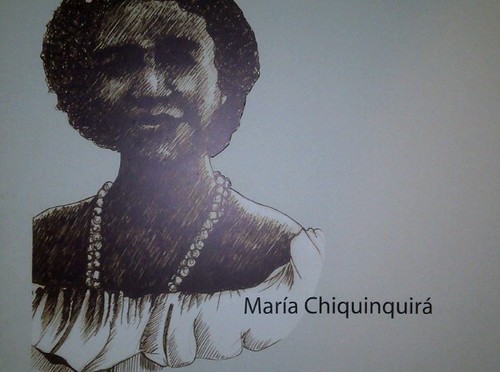
Slave woman María Chiquinquirá won a stunning victory in court to win freedom for herself and other slaves.

Both the Afro-Ecuadorian cadet and the lieutenant have been ordered to undergo psychological counseling in regard to this case.

Sunday, June 29, 2014

TEAM ECUADOR: From the Black Ghettos to World Cup Competition


I have social, sentimental, and Afro-centric reasons for loving Team Ecuador

When I off-boarded my plane in Quito, Ecuador, the security staff detected a large can of insect repellant in one of my bags. They were impressed when I told them that I'm going to Valle de Chota (Chota Valley), a hot, sticky region consisting of Ecuador's black ghettos that produces big time soccer stars in national and international competition. Although, Ecuador was eliminated in the most recent World Cup competition (2014) with one win, one loss, and one tie against France, one of the world's toughest teams, Team Ecuador remains my sentimental favorite.

In my Spanish-speaking Facebook account, I posted the following message and repeated it in English on my English account:

“No soy Ecuatoriano; sino hincha del Equipo Ecuador, sobretodo los Choteños.”
“I'm not Ecuadorian; but a fan of Team Ecuador, especially of those from Chota Valley

I'm sure those who read those messages were wondering about my true nationality. Even my supervisor at work alluded to the fact that the Team USA is also playing, aren't I a fan of them?. Well, I am an American and also a US Navy veteran having served my country overseas under oath to defend this country against all enemies foreign and domestic, so it's not a question of patriotism. I have social, sentimental, and Afro-centric reasons for loving Team Ecuador. 

 
El Juncal in Ecuador's Chota Valley

It was Saturday, December 5, 2009 when I stepped off the bus in the town of El Juncal, in the Valle de Chota (Chota Valley) region of Ecuador. I immediately felt very much at home in a community where everyone looks like me, even though it was evident from my Spanish, my attire, and my overall demeanor that I am not from around those parts, let alone Ecuador. At first, people were suspicious of me, then that changed once we started communicating. Even the police officers who questioned me about my presence were pleased.


Agustín Delgado

Chota Valley is Ecuador's second largest black community behind Esmeraldas. This is the hometown of 30 or more of Ecuador's top soccer stars such as the retired Agustin Delgado, the all-time leading scorer for the Ecuadorian national team. He was named by Ecuador's president as head of the Afro-Ecuadorian Development Council as Delgado, and other Afro-Ecuadorian soccer stars hope to use their influence to improve the overall quality of life in their country's black communities. Nationally, 70% of Afro-Ecuadorians live in poverty, and in towns like El Juncal, where they only have two paved roads, no high school, or permanent medical clinic, the number is as high as 99%.  El Juncal has struggled against an endemic of racism which has left it perhaps the poorest community in Ecuador. 


The soccer field where boys practice

Augustín Delgado established La Escuela de Fútbol (the Soccer School) in El Juncal where more than 300 boys and young men arrive every afternoon to hone their skills. There is always a game going on as they practice endlessly. In some ways, poverty has proven to be a successful training method because soccer balls roll faster down the dirt lot in El Juncal than they would on a grass field in a big high-end stadium. Therefore, players must learn speed and control. The school, however, is not only interested in providing young black men with a way out of the ghetto to the bright lights of soccer stadiums. There is an emphasis on building self-reliance, self-esteem, and literacy. 

Like most Latin Americans, Ecuadorians ardently love soccer. In 2002, Ecuador's national team qualified for the first time for the World Cup finals – a fact attributed to the slow integration of Afro-Ecuadorians. For many towns in Chota Valley, success on the soccer field remains the best hope for receiving government attention. And that attention has just begun to happen.


Sunday, May 11, 2014

I Get So Many Inquiries About Ecuador

R1-21A
Avenida Colón (Columbus Avenue) in Quito, Ecuador

I'm hardly an expert on Ecuador, or any other Latin-American country to which I've traveled to nine thus far. Yet, most of the inquiries about my Latin-American travels are about Ecuador. My blog is based on personal experience and I welcome the opinions and personal experience expressed by others. In another one of my blog post, a woman from Quito, Ecuador got very upset with me because of some things I wrote about her city; things strictly based on my own first-hand experience.

Recently, I received an e-mail from one of my blog readers who wants to take a Spanish language immersion course in Quito, Ecuador's largest city or in Cuenca, the third-largest city. Immersion training is the best thing for anyone who wants to learn another language. I took similar courses in Cuba and Perú, which helped me considerably as I went out into the community and put to use what I learned in the classroom and from  my own self-study out of books. However, Ecuador's Spanish-language schools reportedly are not only very good, but very cheap. You can take private lessons for under $7 per hour.

The blog reader who e-mailed me also expressed an interest in visiting Ecuador's black communities of Valle de Chota in the Andes and Esmeraldas on Ecuador's coast like I did, which I posted in several of my blogs. I was fortunate enough to meet some fine black Ecuadorian friends, such as an Afro-Ecuadorean Studies consultant at the University of the Andes in Quito among others. I also made Facebook friends with people from provinces of Cuenca, Guayas, Esmeraldas, and Imbabura.

I've never been to Cuenca, but it is of my understanding that it is not as racially diverse as other cities. One Afro-Ecuadorean living in Cuenca told inboxed me on Facebook before my first trip telling me that if I want to meet Afro-Ecuadoreans, my best bet is to go to the northern coast of Esmeraldas. However, I met blacks in Loja in Southern Ecuador, and of course in Quito and Guayaquil. However, Esmeraldas is the black capital, where historically, it is the home of descendants of escaped slaves who fought for their liberty—Nat Turner style and won.

The one thing Cuenca has over the other big cities is less crime, although that has begun to change, especially with the increasing arrival of so many gringos from North America and Europe taking advantage of the great weather and one of cheapest costs of living in the world..The cheap cost of living applies to all of Ecuador, not just Cuenca. Ecuador is growing as one of the most attractive retirement destinations, especially for those living on solely social security.

Friday, February 28, 2014

Mourning the Loss of an Ecuadorian Friendship

R1-00A
Gloria Chalá of Quito, Ecuador


She was a traveler's dream! Upon my first visit to Ecuador in December 2009, Gloria took me in, a total stranger as she was  introduced by her daughter, a Facebook friend living in Germany whom I never met in person. Gloria took time between her work hours to take me out, show me around, and even escorted me to the Center of the World, the equator, better known as La Mitad del Mundo. The following December of 2010, I stopped in Quito during a five-nation Latin American tour, and she took me home to be among her family. In Each of my visits, she saved me an enormous amount of money in travel expenses.

R1-21A
Gloria escorted me to the Center of the World—the equator
better known in Ecuador as La Mitad del Mundo 

I was very sad to get an e-mail from Gloria's daughter, Alexandra, in Germany telling me that her mother passed away. At the same time, I felt happy that I stayed in touch with her, made sure to call her yearly just to wish her happy birthday, and even wired money to her on a couple of occasions. Today, as I write this piece, I'm wiring money to her daughter as an expression of my condolences. 

Real friends, wherever they may be in the world, are precious. Unlike your average traveler, I never want to forget the wonderful people I meet, like I did when I was a young sailor in the US Navy. People who take the time and the energy to host us in our travels need to know how much we really appreciate them, and they love it when we take some time from our hectic lives and simply say “hello.” Gloria María Chalá Anangonó, REST IN PEACE.

Monday, December 2, 2013

Afro-Ecuadorian Outsmarts Her Slave Masters


María Chinquiquirá (pronounced Cheen-kee-kee-RAH), a former black slave in what is now Ecuador's largest city, Guayaquil, is today an important symbol in Ecuador, particularly among Afro-Ecuadorians whom from my observations during my two visits, and from my correspondence with Afro-Ecuadorian Facebook friends, are raising their consciousness and pride in their heritage. Someone in an Afro-Ecuadorian forum referred to Ecuador's black movement as being in the spirit of María Chinquiquirá.

María, born in Guayaquil had a history of being mistreated by men. She lived during the 16th century, a time when being black meant being a slave in Ecuador. Her intelligence, knowledge, and determination along with a thorough understanding of her rights according to Ecuadorian law, changed the course of her history and those of thousands of women in Ecuador as she became the first slave in Ecuador to win her freedom and that of her daughter through a legal battle in May 1794. She won her freedom by accusing her masters of dishonorable acts including, siring children with slave women, requiring work on Sundays, withholding time for mass, and failing to provide instruction in the faith. Her portrait hangs in the Museum of Nahim Isaias in Guayaquil.

Tuesday, November 19, 2013

Going to Ecuador? Watch Your Back!

 Scopolamine a dangerous drug used by criminals.
  
It was 11 PM on a Thursday  evening when I had just arrived in the Mariscal District in Quito, Ecuador. After checking into a little neighborhood hotel, I went out to get a glimpse of the city I was going to be visiting for a few days. The (La) Mariscal, better known as Gringolandia (Gringo Land),  where people from all over the world come to stay and/or hang out, and where businesses cater to an international clientele. 
 
As I strolled the neighborhood, I noticed a black Ecuadorian male hanging out. Thinking he might turn me on to Quito's black community, I tried to make conversation. He asked me to get him something to eat from a restaurant across the street, which I did. When I returned with the food, I saw him farther down the block throwing "pitches" at passing tourists. Realizing that he had some kind of hustle going, I left him alone not wanting to be involved. 
 
Meanwhile a black woman appeared, seemingly out of nowhere, and I immediately greeted her and introduced myself. I can tell by the way she spoke that she was local, and again, I figured she might turn me on to some Afro-Ecuadorian action. But I got a little suspicious of her vague conversation coupled with the fact that she was hanging out in Gringolandia alone at night. She seemed overly elated that I even stopped to talk to her.
As I gazed into her eyes, I got the impression that she was truly interested in what’s in my pants (wallet). I figured that she too might be hustling, and perhaps working for the brother down the street. Maybe she wanted to set me up for a robbery. Who knows? I quickly reminded myself that Quito has a long standing reputation of foreign visitors being harmed by its criminal element, and that Gringolandia in particular, attracts such criminals because gringos (foreigners) are considered easier and more lucrative prey. With that thought in mind, I tactfully excused myself and headed back to my hotel calling it a night.
 
Looking back on this encounter, I wonder what would have been in store for me, had I continued to hang out with this woman. It has been brought to my attention that there is a dangerous drug known as scopolamine that is increasingly gaining popularity among Ecuadorian robbers, thieves and rapists. This colorless, odorless, and tasteless drug is slipped into drinks, sprinkled onto food, and even absorbed through the skin when holding tainted documents, such as pamphlets. Victims become so docile that they have been known to help thieves rob their homes and empty their bank accounts. Women have been drugged repeatedly over days, gang-raped, or rented out as prostitutes. Most troubling for police is that scopolamine completely blocks the formation of memories where it is usually impossible for victims to ever identify their aggressors.

The tree which naturally produces scopolamine grows wild around Bogata, Colombia, and is popularly known as borrachero (gets you drunk). The alkaloid from this drug is used legally in medicines across the world to treat everything from motion sickness to the tremors of Parkinson's disease. 

Because I have personal friends in Ecuador, I do plan to return, however, to avoid being drugged, I will not accept drinks, food, or even documents from strangers, no matter how sweet and innocent-looking they appear. I did that once and simply was lucky that the stranger I just met and chatted with didn't have evil intentions (that time!). And I certainly will not leave my drink or food unattended in public places, such as bars and restaurants.

Sunday, September 29, 2013

Ecuador Celebrates Black Heritage Week

R1- 3A 
Afro-Ecuadorian Cultural Center (below)
R1-00A

Negro, negro renegrido       Black, black, blackened
Negro, hermano del carbón       black, brother of charcoal,
negro de negros nacido       black of blacks born
Negro ayer, mañana y hoy       Black yesterday, tomorrow, and today
Algunos creen insultarme       Some believe they insult me
gritándome mi color       mocking my color,
más lo mismo yo pregono       but I myself proclaim it
con orgullo frente al sol       with pride in the place of the sun

Negro he sido, negro soy        Black I was, black I am
negro vengo, negro voy       Black I come, black I go
negro bien negro nací               black, real black I was born,
negro negro he de vivir       black black I must live
y como negro morir       and as a black I must die

~~~Nelson Estumpiñán Bass


In 1997, the Ecuadorian National Congress declared October 2 as the National Day of Black Ecuadorians. This, in turn, motivated black communities to organize and create Afro-Ecuadorian Cultural Week in Quito, the nation’s capital, in an effort to raise awareness of Afro-Ecuadorian culture as well as their political and economic challenges, and where black leaders introduced a proposal to improve the economic, political, and cultural status of Ecuador's Black communities.

 
Monica Chalá, former Miss Ecuador

The existence of Blacks in Ecuador was brought to center stage internationally when it was revealed that two-thirds of Ecuador’s impressive 2006 World Cup soccer team, who made their presence felt, was of African descent. Ecuador’s performance brought in visitors from around the world, including me, to Ecuador’s black community in the Andes Mountains known as Valle del Chota (Chota Valley), which produces many of Ecuador’s professional soccer stars.

    Augustín Delgado, Ecuador's Shaquille O'Neal of the soccer world

According to the 2001 census, Afro-Ecuadorian population is 604,009, or 5 per cent of the total population. However, Afro-Ecuadorian organizations argue that this number is inaccurate due to problems with self-classification, such as those blacks who don't want to consider themselves black. They estimate Ecuador's black population to be at 10%, living mostly in the northern coastal province of Esmeraldas and in the south-central coastal region. About two-thirds of Afro-Ecuadorians now live in urban areas like Quito, the nation’s capital and Guayaquil, Ecuador’s second largest city.

Marí Chinquinquiá was the first slave in Ecuador to win her freedom. She did it through legal means.


Alonso de Illescas (1528-1585)
Ecuador's Nat Turner who successfully led black rebels against Spanish forces refusing to be slaves.


Antonio Preciado Bedoya
Ecuador's leading black poet today.


Nelson Estumpiñan Bass, literary giant; a contemporary of the African-American literary giant Langston Hughes who wrote about the black experience in Ecuador.