Showing posts with label Latin American Etiquette. Show all posts

Friday, February 14, 2014

VALENTINES DAY - Latin America


 El Dia de San Valentin
As Valentines Day approaches, I think of all of my lady friends, or sister figures, in countries like Argentina, Colombia, Ecuador, Perú, and Uruguay. In fact, I asked an Ecuadorian friend, “como se dice Feliz Día de San Valentín en Ecuatoriano (how do you say Happy Valentines Day in Ecuador)” as people in some Latin American countries give this day a different name.

In most of Latin America the Día del Amor y la Amistad (Day of Love & Friendship) and the Amigo Secreto (Secret Friend's Day) are quite popular and are usually celebrated together on February 14, with the exception of Colombia where it is celebrated on the third Saturday in September. In Guatemala, the day is more commonly known as ‘El Día del Cariño’ (the Day of Affection).

In Latin America, this day is not just a celebration of romantic love, but also of love between friends, colleagues, and family. In Perú, this day is a public holiday. The people of Guatemala celebrate a similar holiday on the 14th of February, but is known there as the “Día del Cariño.”

There are varying accounts of how Valentines day all began, but the most-popular story claims that the holiday can be traced back to the Roman Emperor Claudius II. The Roman ruler had banned marriage, claiming that single men made better soldiers. Ever the consummate romantic, a priest named Valentine continued to marry couples against the emperor’s will until he was eventually imprisoned for his disobedience. While in jail, Valentine fell in love with a young girl who regularly came to visit him. Right before he died, the priest wrote her a love letter, which is now referred to as the first ever Valentine.


Friday, November 15, 2013

Pssst, A Gringo is Paying!


While on vacation in Ecuador, I made an appointment to meet with an Afro-Ecuadorian Studies Consultant at the Simón Bolívar University of the Andes in Quito, the nation's capital. I offered to take him to lunch to show my appreciation for the black on black cultural exchange. 

Well, his girlfriend popped in about 15 minutes before our scheduled lunch. Not a problem! We hugged and continued to chat. A nutritious, filling lunch in Ecuador is as little as $2.00. When I told the couple that I’m paying, they both chuckled as though this was expected. After all, I’m the “gringo” here.


In addition to Ecuador, I've been to eight other Latin American countries. If there is one attitude that so many people throughout Latin American have in common is that they view every North American and European as always having their pockets bulging with money. 


A retired police officer living in Ecuador explains that over many years, he and his wife would have a night out with a group whom they have invited. Word got around that a gringo is paying, and invite other friends to join them. 

They normally don’t show up at the beginning of the night, but straggle in without having any qualms about joining the party. It would have been considered bad manners to turn them down; thus, he and his wife felt put on the spot, and wound up spending considerably more money than initially planned.


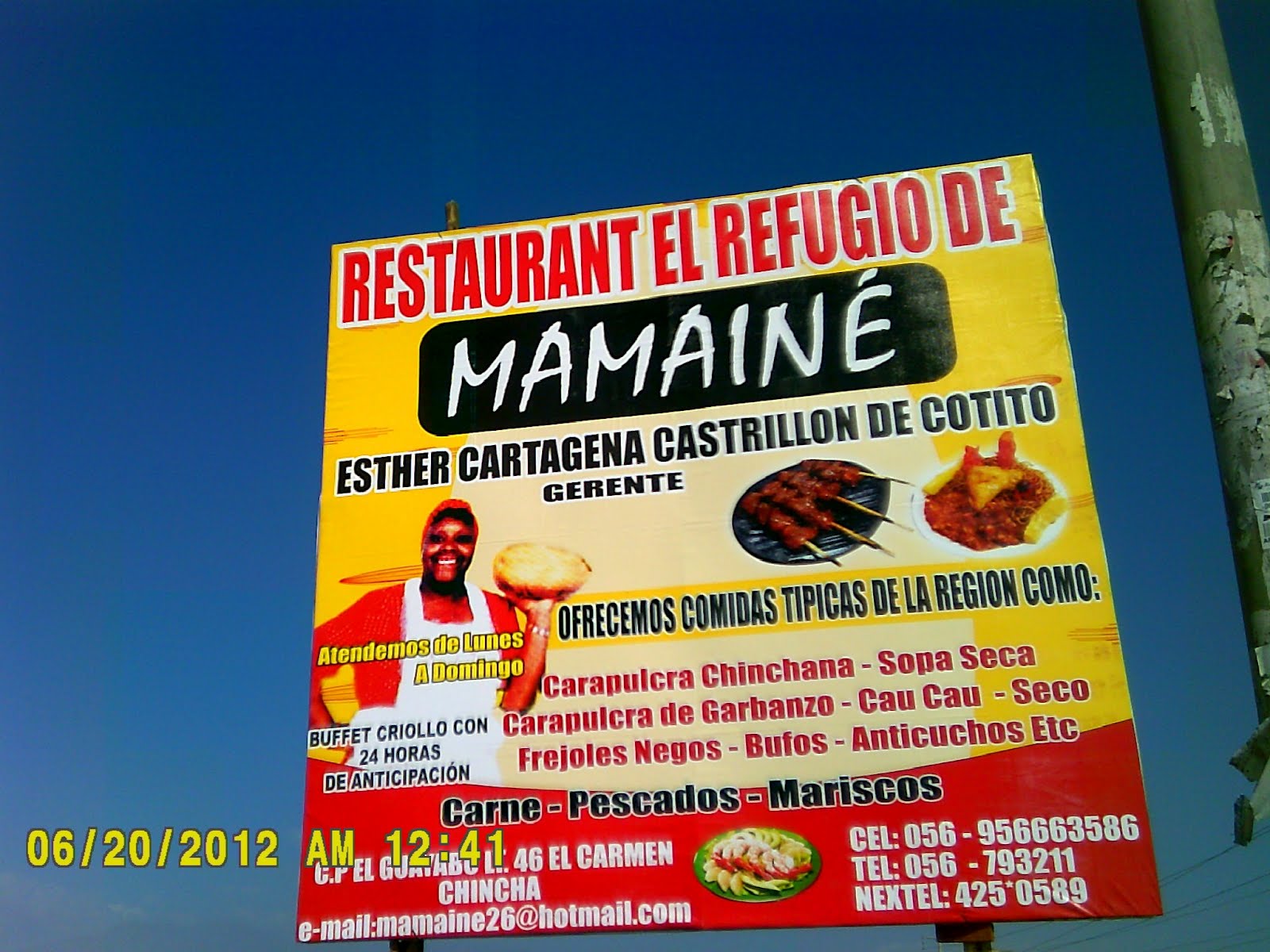
With my repeated trips to Perú, and as people got to know me better, thefelt bolder in treating me like a walking ATM. When I first arrived in Chincha, the hub of Afro-Peruvian culture, I approached a black guy working in one of the shops to get some directions. When he heard my foreign accent, he became gleeful as it was evident that I am a gringo. He immediately stopped what he was doing, took a self-appointed break from his job, and said, ¡Vamos, un moreno tiene que ayudar un moreno (come on, man; a brotha gotta help a brotha out)!


He took about 30 minutes of his time to show me around. Out of appreciation for his hospitality, I invited him for a delicious seafood lunch, and towards the end of our little tour, he asked me for some money. I reached in my pocket and handed him 10 nueva soles (Peruvian dollars), and we parted ways.

On another occasion, I invited my nine-year-old Afro-Peruvian goddaughter and her older sister out to a local restaurant. Her uncle instinctively tagged along for a free meal, so I had to (reluctantly) include him in the dining bill. The older sister mysteriously disappeared and returned with four more of her family members. 

Like the retired police officer, I felt put on the spot. If I had more cash on my person at the time, or if this particular restaurant accepted Visa or Mastercard, or at least had an ATM; I too would have fallen for that blatant manipulation. 


Instead, the four other family members simply had to be left hanging. My goddaughter felt hurt and disappointed. The older sister was absolutely appalled. I later pulled her aside and explained to her that I am not one of those rich Americans; I live on a budget, and unfortunately, I don’t have the money to be spending on everyone in Perú on her whim or mine.

I thoroughly enjoy interacting with Spanish-speaking members of the African diaspora, and have even established family-like relationships with free room and board, such as the occasion when I got very sick on one of my trips, and two different families looked after me and nursed me back to health so I can continue my travels. 

As a general rule, however, no matter how well I connect with the people,  the indisputable fact still stands… I’m a gringo with a pocket full of money first, a “brotha” second.

Thursday, November 7, 2013

Latin American Etiquette (with the Ladies)


One morning, on my way to work in Oakland, CA, a woman and I boarded a city bus. Having been taught some manners as a child, I stepped back so the woman can board first. In a frustrated tone, she snapped at me, “go ahead!” With a suit yourself attitude and a shrug, I boarded the bus ahead of her. The transit operator (female) and I had a good laugh as she reminded me that times are changing. Trying to be a gentleman is not so much en vogue anymore. And speaking of ladies, I’ve met women here in the US who bitterly resent being called a lady. Woman is the politically correct term. Not all USA women, of course, share this sentiment, but enough to make me wonder.

On another occasion, I was riding a metro train (BART) from San Francisco to Oakland, and there was a Spanish-speaking immigrant couple standing over me conversing. With times changing, as alluded to by the female bus driver, I normally do not give up my seat unless it is for an elderly or disabled person (male or female). However, seizing an opportunity to practice my Spanish, I offered the women my seat. She smiled, seemingly pleasantly surprised to meet a gentleman in the United States of America, and responded with gracias, muy amable (thank you, you are so kind).

As I go about my Latin American vacations trying to fit in as much as gringo-ly possible, I’ve literally asked the friends that I made in those countries about proper etiquette. Of the many things they shared was that a gentleman absolutely gives up his seat for a lady on public transportation; a gentleman permits a lady to go first, such as boarding a bus, and the ladies expect it.

One hectic evening in a Quito, Ecuador bus station, I was waiting in line to buy a bus ticket back to Lima, Perú. Being next in line, I stepped forward as soon as a window became vacant. Suddenly, seemingly out of nowhere, a woman swooped past me towards the vacant window. Irritated, I snapped, con permiso señora, pero estaba aquí primero (excuse me, ma’am, but I was here first)! The ticket clerk looked at me as if I was from another planet, not to mention another country. To get even, she gave me, what I found out later to be, inaccurate information. I shared this incident with an Ecuadorian lady-friend hoping to learn a little more about cultural sensitivity, and was told that it is an Ecuadorian federal law that pregnant women, seniors (male and female), and the disabled (male or female) get to go the head of the line. The woman I confronted was neither pregnant, a senior, nor disabled, thus, I’m still up-in-the-air about as to  where I went wrong in my assertiveness.

When I land on Latin American soil, I find it necessary to change my paradigm when relating to women. In Latin-America, as in other parts of the world, the women’s movement have not come close to the advances made here in the US. Women in these countries generally hold positions where the disparity between male and female pay is far greater than that in the US. And the old-school customs that were practiced when I was a child growing up are still common place in Latin American countries. However, as I continue to explore Latin American cultures while improving my Spanish, I will need to keep abreast of their women’s movement because it is active and slowly gaining momentum.