Thursday, January 14, 2016

Slave Mentality in the Afro-Latino Community

 
First, my people must be taught the knowledge of self. Then and only then will they be able to understand others and that which surrounds them.
—The Honorable Elijah Muhammad
Founder of the Black Nation of Islam


The other day I had to call out an Afro-Latina who made a comment about a mixed black and mestizo couple and how they are going to have “beautiful” babies; a comment I often hear among black Americans as well. 

I reminded her that babies look beautiful regardless of color. Why does a baby have to look less than black to be a beautiful baby? I strongly feel that this mentality is a carryover from the slave plantation of which a large number of blacks in the western world, regardless of language or culture, possess.

In the Afro-Latino community, there is a pervasive mejorar la raza (improve the race) syndrome where many blacks, not all, feel that marrying a fairer complexion man or woman is upgrading one's status in life. Black parents in Latin America have been known to tell their children coming of age not to bring home a black man or woman; “I don't want no black grand babies,” they would say.


As a single black male, I have seen attractive women ranging from jet black to lily white. I have dated women in Asia and Latin America. Although, my top preference is for a black women, that does not mean I'm not open to a woman of a different color. And should I happen to get involved with one, it will be for reasons having nothing to do with skin color, but how well we click.

Throughout the African diaspora, be they black American, Afro Latino, Caribbean folk, and even on the African continent where the sale of bleaching creme to lighten one's skin is at a all-time high, there is a high degree of internalized racism that is practiced on a regular basis.

Although I have an ardent interest in black Latino cultures and history, I don't discuss race with Afro Latinos until I know where their heads are. Many of them do not consider themselves to be black, although a Ku Klux Klansman would beg to differ. A black Mexican woman told my younger brother that her roots are in Spain, not Africa. A black Peruvian woman told me to my face, “tú no eres negro, eres moreno (you are not black, you are 'colored')!” As it is among many black Americans who feel that blacks with straight hair have “good hair,” many Afro Latinos refer to kinky hair as pelo malo (bad hair).

In the living room of an Afro-Peruvian home, I noticed how the family was enjoying a sitcom starring a mestizo comedian with black makeup playing the role of black man living up to all of the negative stereotypes of black Peruvians. LUNDU, one of the nation's black civil rights organizations, has been trying to get that program off the air for years. There is another sitcom, played by the same actor, portraying he negative stereotypes of Peru's indigenous community.

The good news is that no where in Latin America are blacks shooting each other like we are doing in the USA. I have been noticing a positive trend among young Afro-Latinos, especially in South America where I have visited and have made Facebook friends who are very Afrocentric. 

Last night in a Dominican restaurant, I noticed how the Afro-Dominicans gathered around the TV in support of Barack Obama's state of the union address, and one shouted a comment about his black pride. There is hope!


Friday, January 8, 2016

THE BLACK CIVIL RIGHTS MOVEMENT: Ecuador, South America

 Youth jamming to Afro-Ecuadorian music 
in Ecuador's  black region Valle de Chota


I made successful attempts to connect with Black Latin America during my travels to experience for myself how they live, to embody their culture, and to learn some black history in the respective countries that I have visited. In fact, there were occasions when I fit in so well with the respective black communities that instead of my being perceived as a rich gringo from the U.S., I got a good taste of some of the racism that local blacks experience.

In Quito, Ecuador, one taxi cab after another passed me by despite my obvious flagging. Another sped by me to pick up a white couple 25 yards from where I was standing. When I approached a taxi letting out a couple of white passengers at a busy intersection, the driver wagged his finger making it clear that he did not want me in his cab. To make light of the situation, I waved some bills as he was about to drive off.laughed at him when he stopped to reconsider. He appeared very relieved to learn that I was an African-American gringo, and not a homegrown Afro Ecuadorian stereotyped to be robbers and thieves.


The abundance of Ecuador's black international soccer stars like Agustín Delgado is helping to improve Ecuador's relationship with the black community.

In 1997, Ecuador's black community organized the Afro-Ecuadorian Cultural Week to promote awareness cultural, political and economic issues. That same year, the Ecuadorian National Congress declared October 2 to be the National Day of Black Ecuadorians during which black leaders introduced a proposal to improve the economic, political and cultural status of Ecuador's Black communities.

As recently as November 19, 2015, an anti-racial discrimination decision was handed down on behalf of an Afro-Ecuadorian who entered Ecuador’s Escuela Superior Militar (The “West Point” of Ecuador) in hopes of becoming Ecuador’s first Black army officer. He was one of 200 selected out of 5,000 applicants after passing a battery of academic, psychological, and physical tests.


Afro-Ecuadorian Cultural Center in Quito, the nation's capital

Yet, the young cadet found himself brutalized and psychologically tormented by the commanding officer. He complained that the lieutenant pitted him against his fellow cadets to such an extent that at one point he was forced to defend himself in a boxing ring against four other cadets. 

The lieutenant forced him to crawl through mud while totally nude, and fellow cadets testified that the officer regularly deprived him of food or would make him eat the food he did receive while on the floor. The black cadet was even denied sleep at some points and was ordered to stand guard all night, all because the lieutenant did not like having a young black man under his command.

Avenida Colón (Columbus Avenue) near my place of residence in Quito, Ecuador

This lieutenant has been sentenced to five months and four days in prison for racial hatred and has been ordered to pay the cadet’s legal fees. The military academy itself has been ordered to make a public apology to the cadet during an official military ceremony. And Ecuador’s armed forces has been ordered to publish details about the case on its website and in official publications.

Ecuador first passed penal laws against racial hatred in February of 1979, but this case is the first time anyone has been convicted of the crime. 


This black community in the Andes Mountains first reacted to me like I was Five-O 
(undercover cop) until they realized I am just an African American visitor trying to connect with the diaspora.

The attorney of the black cadet explained there is still a long road ahead in terms of making it easy for other Afro-Ecuadorians to bring racial discrimination cases to court. There will certainly be more cases, but litigating them remains a challenge. 

Because there aren't enough lawyers with the experience necessary to fight racial discrimination, attempts have been made to provide more training in conjunction with the work that Ecuador is doing in support the United Nations’ declared International Decade for People of African Descent (2015-2024).

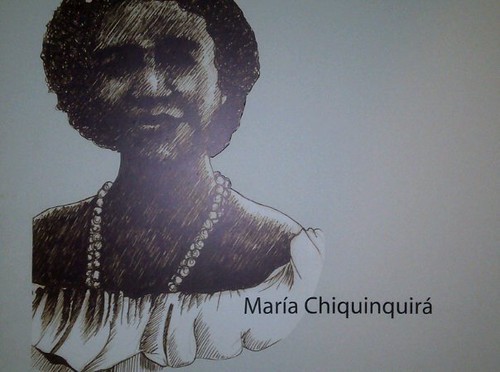
Slave woman María Chiquinquirá won a stunning victory in court to win freedom for herself and other slaves.

Both the Afro-Ecuadorian cadet and the lieutenant have been ordered to undergo psychological counseling in regard to this case.

Monday, January 4, 2016

Black Colombians the First to Win Freedom from Spanish Rule


Anyone visiting the city of Cartagena on the Caribbean coast of Colombia, South America should check out the historical African village about two hours south known as San Basilio de Palenque (or simply Palenque). It is a village that won their freedom from Spanish rule Nat Turner style. 

Upon arrival, you will have the opportunity treat yourself to a scrumptious, fresh fish dinner with rice and plantains and a tour by one of the locals. There is one catch; the tour is in Spanish. The only other language spoken in this crime-free village is Palenquero, a mixture of Spanish and various West African languages. 


The people are friendly and curious about visitors, especially if you are black. When they saw me, they marveled as though they had never seen a black gringo before.

Even if you speak a little of Spanish, it will go a long way in helping you connect with the people, and if you don't, you will still have a worthwhile experience.


San Basilio de Palenque is a town of about 3,500 residents  established by slave revolt leader named Benko Biohó from Senegal, West Africa. He set a precedent, not only for the nation of Colombia, but for all of South America more than 200 years before the renown liberator Simón Bolívar was born.

Of the many palenques (fortresses of escaped slaves) that existed during slavery in the western world, San Basilio de Palenque is the only one, other than the town of Yanga in Mexico, that survived. Many of the oral and musical traditions have roots in Palenque's African past.

In 2005, the village of San Basilio de Palenque was declared Masterpieces of the Oral and Intangible Heritage of Humanity by United Nations Educational, Scientific and Cultural Organization (UNESCO).  

Tuesday, December 29, 2015

Perú Reacts Strongly to Anti-Black Racism


For the first time in history, a Peruvian court fined two company officials $1,560 and sentenced them to prison for blatant acts of racism against an Afro-Peruvian employee. 

Perú's minister of culture stated that this action against the two defendants is an important vindication for the historically discriminated black community, and could set a precedent for more racially sensitive cases. 

The general manager abused his black employee with hurtful words and derogatory gestures regarding her skin color. The black employee complained to the company's human resource manager. Even witnesses stepped forward to verify the employee's complaint, and still no action was taken against the perpetrator. The woman then filed charges in court.

After the Rodney King incident years back, a Peruvian co-worker told me there was no such racism in Perú against their black community.

In the first of my several visits to Perú, I was somewhat impressed after off-boarding my plane and saw a large welcoming sign containing a photo of an Asian, a white, an indigenous, and a black person over the words printed, “Welcome to Perú” as if to boasts of the country's racial diversity. I was also pleased to see a black woman working at the desk to greet us before we were cleared by immigration.

Outside of these minor examples, I observed an overwhelming amount of racial discrimination against, blacks, Asians, and the indigenous. Even in heavily populated black areas, I saw only a handful of blacks working in the business community, public transportation, or in government buildings. In fact, blacks, and other people of color are limited to the types of careers they can enter.

However, a black American friend who purchased a home in Perú with his Afro-Peruvian wife prefers Perú's  institutional racism over the hate crimes, racial profiling, and police brutality and murders that consistently occurs against black and brown people in the U.S. He has a son, and feels strongly that his son will be much safer in Perú than in the U.S. Now, I understand what my Peruvian co-worker he was trying to tell me when he said there was no racism in Perú.

Monday, December 21, 2015

Mexico Finally Recognizes Its Own Black Community

Statue of Gaspar Yanga who who freed his black Mexican town of runaway slaves from Spanish rule 200 years before Mexico gained national independence.

Afro Mexicans fighting for recognition from their government now have a reason to celebrate. For the first time in Mexican history, the national census includes the "Afro" category. Until December 8 2015, Mexico was one of only two Latin American countries (the other being Chile) that did not recognize its 1.3 million of its Black citizens.  

This new inclusion by the Mexican government came after years of hard work by Afro-Mexican community activists who consistently petitioned national leaders. In addition, Mexico's Human Rights Commission organized a forum to address and fight racial discrimination against its black citizens.


Half black/half mestizo Vicente Guerrero led Mexico to her independence in 1810 as a general, and became Mexico's president in 1829.

Back in 2006, the Chicago’s National Museum of Mexican Art opened a groundbreaking exhibition that black Americans as well as Mexican people need to know,  “the African Presence in Mexico.” I am always astonished at the majority of Mexican nationals I meet who are totally oblivious to Mexico's black community. 

And Mexican Americans—forget it! I've met too many, barring those who are better educated, who think only African Americans are black, never mind the Afro-Mexicans, Afro-Nicaraguans, or Afro-Peruvians. I was on an Oakland city bus when I found myself lecturing a group of Mexican Americans high school students, in Spanish, who seemed to have felt that it was comical to hear a black man speak Spanish. I informed them about black history throughout Latin America, including Mexico's third root—the African.


 Mexican cuisine; African roots
 
I recently engaged in a conversation with an immigrant from Mexico’s State of Guerrero, where the resort city of Acapulco is located. She was so surprised when I told her that her state is named after her country’s liberator General Vicente Guerrero. 

I didn't share the fact that this liberator happens to be the son of an African slave mother and a Mestizo peasant father, and became the Mexico’s first black president in 1829. She seemed overwhelmed just with hearing how her state got its name. 


In Guanajuato, Mexico, which at one time had a substantial black population, blackeyed peas, closely associated with African cooking, is still a culinary legacy.

Another Mexican couple I met in my office was equally surprised when I told them that in their home state of Vera Cruz, where 200 years before Mexico became independent, an African slave rebel named Gaspar Yanga joined forces with another rebel slave leader named Francisco de Matosa to establish Mexico’s first free town, a free Black town independent of Spanish rule.  

In 1946, the late anthropologist and professor at Mexico’s University of Vera Cruz, Gonzalo Aguirre Beltrán, published in in his book, La Población Negra de México (the Black Population of Mexico) that more than 500,000 African slaves were brought in through Mexico’s Port of Vera Cruz from 1519, the time of the Cortez invasion, until the day of Mexican independence in 1810.


In Mexico’s state of Veracruz Africans have profoundly influenced people, music, and food, such as this pumpkin soup.

The black population during colonial Mexico history was much larger until they began intermarrying with the Spanish and the Indigenous over a period of 500 years. Afro Mexicans played major roles In Mexico’s war of Independence from Spain as full blooded black men such as such as Juan Bautista, Francisco Gomez, and José María Alegre held leadership positions in the revolution.

Most Afro Mexicans, can be found in Mexico's states of Guerrero and Oaxaca on the west coast, and in Vera Cruz on the east coast where you can find the following towns with African names: Mandinga, Matamba, Mozambique, Mozomboa, Chacalapa, Coyolillo, Yanga, and Tamiahua.


Tuesday, December 15, 2015

Dominican Hatred of Black Folks?


Where is all the Dominican hate that I heard so much about? Word is, Dominicans, even the black ones, don't like black folks. It's only been a month since my return to New York City after spending most of my adult life in Oakland, CA where there are very few immigrants from the Dominican Republic. 

Since my arrival, my interactions with Dominicans in Manhattan's Washington Heights and in the Bronx, so far, has been 100% positive. Some thought that I too was Dominican because of my Spanish, and others could tell that I am American, but were still cool. Am I missing something here? Do tell!


I shared my experience with a black Latino who was quick to tell me, from his personal experience, that I need to remember that a lot of African Americans are very hostile towards Latinos, even the black Latinos, and he does not know why? I've heard similar comments from other black immigrants to this country that as soon as black Americans realize they are immigrants they experience animosity. As a result, my friend continues, you have ignorant Latinos acting hostile towards black Americans.
 
Another friend who is half Dominican and half Cuban reminded me bluntly of another point of view that I've certainly known for many years. The Dominican Republic has a very long, complicated, and difficult history. It is very present with racism along with all the light-skinned/dark-skinned color-ism among the Afro-Dominicans.

The Dominican Republic's historical conflicts with Afro-centric Haiti played a large role in their anti-black sentiments. The former racist dictator of the Dominican Republic, Rafael Trujillo, had many black Dominicans accused of being Haitians slaughtered, and the black Dominicans who were not harmed were convinced by this dictator that if they have one drop of Indigenous blood, they were not black, but Indio (Indian). The former baseball star, Sammy Sosa, was said to have “Indio” listed as his race on his passport.

As much as I like being around Afro Latinos, I don't discuss race unless they bring it up and acknowledge their own blackness. Especially Dominicans! Depending on the context of our discussion, I may bring it up by talking about areas of their home country that I know are predominately black or have a large black presence, and how their music influenced the rest of the country, without ever mentioning the word “black.”

Friday, December 11, 2015

Message to Spanish-Speaking Servers and Wait Staff


I tipped this amiable server quite handsomely while visiting the Pino Suarez District of Mexico City even though she had no choice but to address me in Spanish.


If you are a Spanish speaker and have a job where tips are a big portion of your income, there is something I would like for you to consider.

One evening in New York City, as I was about to leave a restaurant owned and staffed by immigrants from the Dominican Republic, the waitress expressed deep emotional gratitude for the tip that I left—well over 20% of the bill.

Besides the food being very good along with great jazz, salsa, and bachata music in the background, and not to mention the high-end customer service; everybody, including my waitress, spoke to me in Spanish! As a customer constantly seizing every opportunity to improve my Spanish, that was a real treat.

However, at a Mexican restaurant in San Francisco, California, I placed my order in Spanish, and the waitress immediately displayed her annoyance, and asked me in loud, perfect English, “WITH RICE and BEANS?” Surprised by her response, I continued placing my order in English. I don't remember the tip that I left, or if I left anything at all, but it was nothing like the tip I left in that Dominican restaurant in New York.

A lot of Spanish speakers seem to have issues with speaking Spanish to those whom they “perceive” to be non-native speakers. I don't know if it is shame of their heritage in our racist society, or if they simply don't want to be stereotyped, or perhaps, they are more comfortable with English from being born and raised in the U.S., but any of those negative attitudes can potentially affect their tips if they are in a service industry.

As I pointed out in my blog post, “What Do Spanish-Speakers Look Like?,“ I've personally met native Spanish speakers who are Asian, black, Indigenous, Jewish, Middle Eastern, white, and of course, a mixture of some of the aforementioned in my travels through nine Spanish-speaking countries, and from living in New York and California.

In a town near El Paso, Texas, a black woman went out to lunch at a Mexican restaurant with several other woman who fit the stereotypical profile of “Latinas.” Although the black woman demonstrated her fluency in Spanish while ordering, the waitress continued to speak to this woman in English and the other women in Spanish. Had I been in that black woman's place, I would have spoken to the management in Spanish about the blatant prejudice of that waitress, and explained why I left no tip.

There are a lot of customers who, like I, enjoy speaking Spanish as a second language, and it's just good, plain, professional courtesy for someone in customer service to respond likewise, and not get defensive. If the customers have any class, they are likely to leave bigger tips. So, my advice is to go for it.

Finally, let me clear something up just in case you didn't know; there is nothing wrong with the Spanish language. It was spoken in the United States of America almost 100 years before English. It survived and thrived during centuries of persecution, and is now the second most widely spoken language out of over 100 spoken in this country. So, please chill out, stand up, and be proud!