This blog is about my exposure to the Spanish language and various Latin-American cultures through travel and research; particularly Black/Afro-Latino.
Showing posts with label Black Dominican Republic. Show all posts
Saturday, November 21, 2015
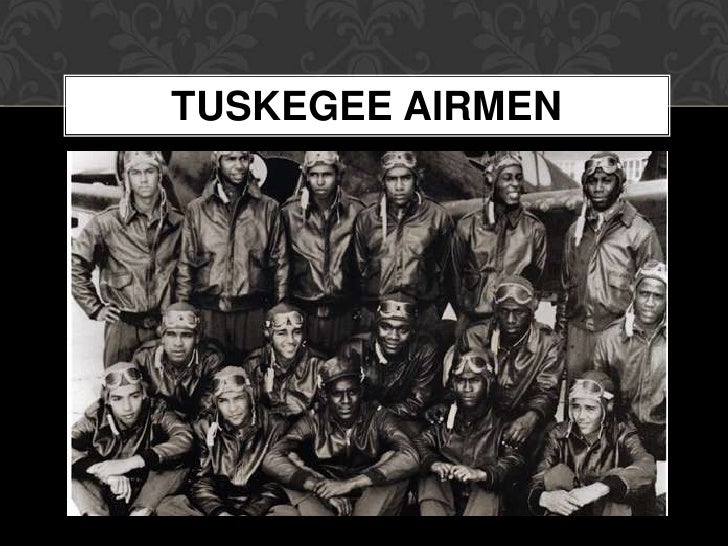
Black Latino Among Tuskegee Airmen
An exhibit that opened at the City College of New York (CUNY) paid tribute to immigrants from the Dominican Republic who served in the U.S. armed forces during World War II. Among the honorees will be Esteban Hotesse, a Dominican Republic native who immigrated to the country as a child with his mother and little sister. They came through the famous port of Ellis Island.
A determined research associate, Edward De Jesus, at the Dominican Studies Institute at CUNY, made the discovery during a three-year research mission into the role of Dominican servicemen and women who made significant contributions to the war effort or to society.
Hotesse, who enlisted in February 1942, was among a group of 101 Tuskegee Airmen officers arrested for refusing to follow Jim Crow orders from a white commanding officer at a base near Seymour, Indiana where the KKK had a strong presence. This act of disobedience later became known as the Freeman Field Mutiny.
He made second lieutenant before joining the Tuskegee Airmen, the first all-black group of military pilots in the U.S. Armed Forces who made their presence known against the Germans during the war with 1578 combat missions, winning at least one Silver Star, 96 Distinguished Flying Crosses, 14 Bronze Stars, 744 Air Medals, and 8 Purple Heart.
This post should serve as more than a history lesson to black people in the Dominican Republic who, despite their actual skin color, refuse to believe that they are black. Here in the U.S., Dominican Immigrants have been noted for commenting that they are not black, but Dominican. They confuse their race with their nationality.
If Lieutenant Esteban Hotesse were anything other than black, he would have never been subject to Jim Crow laws in KKK territory, let alone having been considered for such a fine unit as the Tuskegee Airmen.
Friday, July 17, 2015
Black on Black Racism in the Dominican Republic
Haitians and dark-skinned Dominicans
confront racism on a daily basis.
Here in California, I don't meet too many people from the Domincan Republic as most of them are on the east coast of the USA. However, I did recently meet a couple of light-skinned Dominican woman at a bus stop where we got into a brief conversation. Both were fine looking and rather friendly compared to what I hear about Dominicans and their attitudes towards black people.
One thing that stood out about them is that their hair looked as though they were fresh from a beauty parlor. This is a big deal in the Dominican Republic, making your hair look as straight and Eurocentric as possible. Although, these two women were of color, I thought they would have looked just as good with curly or frizzy hair. However, anything making reference to an Afro-centric or Haitian look is beneath the average Dominican.
In a country where 90% of the citizens have African ancestry, the self hatred among Dominicans of color is unfathomable. Black Dominicans have gone as far as lynching black Haitian-Dominicans trying to drive the Haitians, even though they were born in the Dominican Republic, back into Haiti.
The African-American woman who wrote the article below is black and proud, and describes a conflicting experience living in the Dominican Republic.
My only question to her would be why did she choose the Dominican Republic to live and teach English versus other Latin-American countries where racism and internalized racism is not nearly as steep? She says, going to the Dominica Republic would give her a break from the racism that she experiences in the US. Wow was she mistaken.
The African-American woman who wrote the article below is black and proud, and describes a conflicting experience living in the Dominican Republic.
My only question to her would be why did she choose the Dominican Republic to live and teach English versus other Latin-American countries where racism and internalized racism is not nearly as steep? She says, going to the Dominica Republic would give her a break from the racism that she experiences in the US. Wow was she mistaken.
Below is the link to the article followed by a copy of the actual article itself.
As a black American from the South, I initially (and perhaps naively) thought I’d catch a break from the daily racism I experienced in the U.S. As with black Americans, there are Dominicans (and Haitians) of every shade. I welcomed the idea of living in a country where most people looked like my family members and me, as 90 percent of the Dominican population has black ancestry.
However, it wasn’t long before I encountered a familiar, yet foreign, racism. While I realize that experiences vary and my story is one of many, it is certainly not the exception. Whether in the form of racial slurs or extreme violence, both Haitians and dark-skinned Dominicans alike confront racism on a daily basis. After continuously feeling like a walking target with my sizable pajón, I decided to carry hair ties for the days that the taunts became unbearable.
I arrived in Santiago, Dominican Republic as an English professor one month before Sentencia 168/13, a Supreme Court ruling that revoked the citizenship of Dominican residents whose parents were born outside of the country as far back as 1929, unless they could regularize their status. In the months that followed, lynchings of Haitians became more frequent, according to media reports. Black American friends that had come to study abroad were harassed and interrogated by police about their nationality. After my friends explained that they were Americans studying abroad, the officers scoffed at them, laughing that “esa se cree americana pero es haitiana” (this one thinks she’s American, but she’s Haitian). Even my Dominican host sister, whose surname was French in origin, encountered complications with government agencies that questioned her Dominican identity. I began to realize that the recurring treatment my colleagues and I were receiving was probably a result of intensified anti-haitianismo following the Supreme Court ruling.
Most of my fellow U.S. English professors condemned the ruling, though others viewed it as the Dominican Republic exercising its sovereign right to regulate immigration within its borders. Some of my Dominican and Haitian students criticized the ruling as discriminatory, while others adamantly defended the court’s decision. However, few dared to denounce it as racist.
I was no stranger to discrimination in the Dominican Republic, having endured taunts, repeatedly been denied entry to clubs, and received regular slights during my time there. With both the history of Hispaniola and my own experience in mind, I know the court’s ruling was founded upon anti-haitianismo that the country has yet to reconcile. In the words of Junot Díaz, “if we do not begin to practice the muscles of having a possessive investment in each other’s oppressions, then we are in some serious trouble.”
Saturday, December 7, 2013
Dominican Republic’s Persecution of Haitians
Demonstrators
outside Dominican consulate
in New York City protesting
the persecution of Haitians in the
Dominican Republic.
Due to the
deep-seated racism against blacks in the Dominican Republic, even the average
black Dominican will state, I’m not
black, I’m Dominican. They refuse to identify as black because they do not
want to be identified and persecuted as Haitian. Most black Dominicans, such as Sammy Sosa (allegedly) have
gone as far as declaring Taino heritage. The Tainos are the indigenous people who were enslaved
by the Spanish after Columbus' arrival and perished through overwork and disease before African slaves were brought in to replace them.
Haiti and the Dominican Republic share the island of Hispaniola, where
Christopher Columbus established the first European settlement in 1492.
Despite their shared history of colonialism and slavery, dictatorship and oppression, a physical and emotional border has long separated the two countries. By 1801 the famous ex-slave, Toussaint L'ouverture, had freed all the slaves on the island of Hispaniola and united
it under his governorship. In 1808, five years after L'ouverture' death, a group of rebels started a war to return the eastern part the island to what is now the Dominican Republic–
the west by this point was the republic of Haiti. By 1822, Haiti had
established control of the whole island once more. Indeed, the Dominican Republic gained its independence from Haiti, and not Spain, in 1844.
Modern times have demonstrated no less hostility. In 1937, Dominican dictator
Rafael Trujillo ordered the
massacre of 10,000 to 25,000 Haitians in border areas where many worked cultivating
sugar. Recently, there has been talk
of African-American travelers boycotting the Dominican Republic, and there
has even been demonstrations, such as the one in New York in front of the Dominican Republic embassy to pressure the Dominican government to
stop the persecution.
What really needs to be
addressed here, in my opinion, is the reason why so many Haitians flee their homeland in the first place for
places like the Dominican Republic, the USA, France, and Cuba. I even met
Haitians during my trip to Venezuela. While CARICOM and so many others are damning the Dominican government, what
about the corrupt Haitian government that has a long history of persecuting its own
people? If Toussaint ‘L Overture were alive today, he’d be absolutely appalled
with what is going on in the country he risked his life to liberate from
France, and become the first black independent nation in the western world.
Sunday, September 22, 2013
Controversy over Black Girl Winning a Latina Beauty Contest
After being
announced the winner, there was an uproar stating that she is not the best
representative of Latin beauty. It never ceases to amaze me how so many Latinos
that I meet in my personal life who are so oblivious to the racial diversity in
their own community. I hate to bust some folks bubble, but not all Latinas look
like Jennifer Lopez. I’m not Latino, yet I myself have personally met and
rubbed elbows Latinos who look like Denzel Washington, Merryl Streep, Mahmoud Ahmadinejad,
and Sun-Young-Moon. Where have these folks who criticized the winner been all of their lives assuming you have to be a certain color to be Latino. As I stated on another blog post, I’ve been in Latin-American
restaurants and grocery stores in the US, Perú, and Venezuela that were owned
and staffed by Chinese, and if I didn’t speak Spanish (or Cantonese), I didn’t
eat. It was simple as that!
The pageant
winner’s Latin-American bloodline goes back to her grandmother who was born in
the Dominican Republic. Jakiyah herself was born in Brooklyn, New York where
her mother currently lives. The little Miss Hispanic Delaware currently stays
with her father in the city of Wilmington, Delaware. She likes to sing, dance
and watch movies with her grandmother. Jakiyah McKoy has one brother, Shad, and
a sister, Jamiyah. She loves spending time with her aunts, uncles, and her
cousins and loves her godmother Relly. Her favorite pastime is drawing.
Monday, June 10, 2013
Dominican Teen “Comes Out” as Black
by NPR Staff
A lot of teens ask themselves, "What am I?" For multiracial teens, the answer gets especially complicated. It's something that Elaine Vilorio has thought about a lot. She's a high school senior, originally from the Dominican Republic. Over the course of her life, people assumed that she was black, and that bothered her. But two years ago, after she stopped chemically straightening her hair, the change in her appearance made her rethink her roots. She wrote about this in a Huffington Post and talked about it Thursday on Tell Me More with guest host Celeste Headlee. You can read the . Highlights from the exchange are below.
Interview Highlights
On the difference between US and Dominican perceptions of identity:When I came here ... I was really, really small. I never had gotten the question of what I was. I never really understood what that was. So when I encountered other kids who had grown up here more than I had, and they asked me ... what was I. And I was a little confused. I was like, "Well, I'm from the Dominican Republic," you know. They always said, Oh, well, you know, I thought you were black. And I had never gotten that.
[For] Dominican kids, it's always ... You're Dominican. So national identity was placed above racial identity, whereas here I found that racial identity was pinpointed first.
On 'black-on-black' racism: I've seen ... Afro-Latinos, to use that phrase — Latinos who have obvious Afro-descendency — separate themselves from blacks by putting them off ... using stereotypes, like, Oh my goodness, they're so uneducated and blah blah blah. And I've always thought, "Well, you look like 'them.' And they're referring to ... American blacks. And I'm just thinking, So you look like them, you're putting these people in, you know, this category, but what about you? And that's always been something that's bothered me.
On being 'racially black and culturally Hispanic':
My parents raised me and the values that they grew up with. And then also I had, ... growing up in America and in the American school system so I had ... that bi-cultural influence. But racially I'm black, you know. I can say that I'm black and being black and being Hispanic, Hispanic being a culture and black ... being associated with a culture, yes, but also with a race. You can be racially black and you can be culturally Hispanic and that was something that I wanted to combine, that I want to explore further and talk about more.
CELESTE HEADLEE, HOST:
This is TELL ME MORE from NPR News. The question of, what am I, is one that a lot of teens ask themselves and the answer can be quite complicated for multiracial kids. It's something that Elaine Vilorio has thought a lot about. She's a high school senior, originally from the Dominican Republic. Over the course of her life, people assumed she was black and that bothered her. But two years ago, after she stopped chemically straightening her hair, the change in her appearance made her rethink her roots. She wrote about that in a Huffington Post piece titled "Coming Out as Black," and Elaine Vilorio is now here to tell us more.
Welcome to the program, first of all.
ELAINE VILORIO: Thank you, I'm happy to be here.
HEADLEE: First of all, let me ask you, why did you phrase it that way, coming out as black?
VILORIO: Well, people have always asked me, you know, like you said, you know, if I was black consistently, and I've always denied that. So I thought that was a very fitting way, a very dramatic way to say that I finally have admitted, you know, this Afro identity, so to speak, when it's always been there. Coming out, I finally can say it out loud, and I can finally explain to people, yes, I have African roots in me and that's okay.
HEADLEE: Well, when you talk about racial identity, it's something you've written about quite a bit as well.
VILORIO: Yes.
HEADLEE: What is racial identity for you? Is it about the way you see yourself or how others see you?
VILORIO: I mean, it's a combination of both. I think people perceive me and they separate Afro-descendancy from, you know, the Hispanic identity. Hispanic identity doesn't really take into account that African racial root. You know, I see myself as a predominantly black Hispanic. And then other people, you know, they just see a mixed person, just mixed. Blackness isn't really, you know, acknowledged.
HEADLEE: You know, the Dominican Republic has kind of an uneasy relationship with race and...
VILORIO: Yes.
HEADLEE: ...and the darkness of one's skin. What did you learn about this issue, black versus Latina, during your time in the Dominican Republic?
VILORIO: When I came here, you know, I was really, really small. I never had gotten the question of what I was. I never really understood what that was. So when I encountered, you know, other kids who had grown up here more than I had and they asked me, you know, what was I?
And I was a little confused. I was like well, I'm from Dominican Republic and you know, they always said, oh well, you know, I thought you were black. And I had never gotten that. I'd never, for you know, for Dominican kids it's always, you know, you're Dominican. So national identity was placed above racial identity, whereas here I found that racial identity was pinpointed first.
HEADLEE: Although Dominicans, they identify - if you want to talk about black, they usually identify black as equivalent to Haitian.
VILORIO: Yes.
HEADLEE: And that's not seen as a positive thing. Being black is not considered to be positive in the Dominican Republic. How did that attitude affect the way you answered that question?
VILORIO: I had never consciously thought about it until a couple years ago when I stopped chemically straightening my hair. But I had always, you know, grown up with those subtle phrases like, stop being such a Haitian and you know, that's an equivalent to, let's say, stop being so stupid. The other day, I came home really, really tan and my mother was like, oh my goodness, you look like a Haitian, this is horrible. So you know, my mother was...
HEADLEE: What did you say to her?
VILORIO: Oh, I was like, oh my goodness, mother, you know, it's not a big deal, I'm just a little tan. But I was - it's something that I was used to. And I was thinking about this. I was like, man, you know, this just keeps coming up, this whole, you know, subtle racism type of thing. I've seen, you know, Afro-Latinos to use that phrase, Latinos who have obvious, you know, Afro descendancy separate themselves from blacks by putting them off, you know, using stereotypes like, oh my goodness, they're so uneducated and blah blah blah.
And I've always thought, well, you look like them. And they're referring to, you know, American blacks. I'm just thinking, so you look like them. You're putting these people in, you know, this category but what about you? And that's always been something that's bothered me.
HEADLEE: Well, when you say you acknowledged it, last year you actually wrote an article, "Another Latina Nerd Tells Her Story." In that, you talked about the confusion you've had over your racial identity and you identified very proudly, very firmly as Latina and Hispanic.
VILORIO: Yes.
HEADLEE: This year, you wrote another very firm, very confident, again, article, again in the Huff Post, in which you say, I am black.
VILORIO: Yes.
HEADLEE: So what changed?
VILORIO: I mean, I still identify strongly as a Hispanic because, you know, that is my culture. I - you know, my parents raised me on the values that they grew up with. And then also I had, you know, growing up in America and in the American school system. So I had, you know, that bicultural influence. But racially I'm black. You know, I can say that I'm black. And being black and being Hispanic, Hispanic being a culture and black, you know, being associated with a culture, yes, but also with a race, you can be racially black and you can be, you know, culturally Hispanic. And that was something that I wanted to combine and that I want to explore further and talk about more.
HEADLEE: I'm glad to hear you say explore this more, Elaine, 'cause, I mean, as a 40-something mixed race person, I can tell you that your journey into the world of racial identity is just beginning. Where do you go from here? What's your next step in kind of determining this? Or is there going to be a point at which you say, look, call me what you will, I know who I am?
VILORIO: I would like to educate people and breaking down, you know, a little bit of the stereotyping and the racism that goes on with people that are Hispanic and are racially black but then try to separate themselves from, you know, other black people here in the United States.
HEADLEE: Are you about to graduate, Elaine?
VILORIO: I am, yes. This June.
HEADLEE: Well, congratulations.
VILORIO: Thank you.
HEADLEE: Moving on to college?
VILORIO: Yes, that's right.
HEADLEE: Well, good luck in the future.
VILORIO: Thank you.
HEADLEE: Elaine Vilorio, a high school senior, for just a few more days, from New Jersey. She was kind enough to join us from our New York bureau. Thanks so much.
VILORIO: Thank you for having me.
Wednesday, January 9, 2013
The Dominican Republic & The Blues
One day while visiting Miami, I was invited into the home of a couple of Puerto Rican friends who moved there from my hometown of New York City, There, I was introduced to Bachata dancing and learned the basic steps to the tune of a popular group out of The Bronx in New York called Aventura (or Adventure). I was surprised to learn that they loved Bachata music more than Salsa. I myself was a diehard Salsero (Salsa dancer), and still have love of the music. Today, behind Son-Montuno and Charanga (of Cuba) and Salsa, Bachata is my favorite form of Latin American music as it beautifully expresses and celebrates the creativity of hard-working peasants and the African roots of the Dominican Republic.
Bachata was born in the poorest of Dominican neighborhoods, and emerged in the mid-20th century as a slow, romantic style of music played on the Spanish guitar. In Bachata's early years, like African-American blues, it was considered crude and base, and looked down upon by upper class Dominicans who had the music barred from mainstream musical venues, and was seldom ever heard outside of the Dominican Republic. It wasn't even considered a genre of music in those days. Bachata was often related to rowdy parties, and like the blues, the lyrics were about hard drinking, women troubles, manhood.
It wasn't until the 1980s that this music began to be tolerated, if not loved. Then the 90s came when a popular merengue musician, Juan Luis Guerra, won a grammy for his album entitled Bachata Rosa, making the way for other Dominicans to bring Bachata to a mainstream audience. Today, bachata can be heard throughout the Dominican Republic and other Latin American communities, especially in Washington Heights, directly North of Harlem, New York City, where I grew up. Today, I call the area Dominica Harlem. The Dominicans call it Quisqueya Heights. Quisqueya was the old name of the Domincan Republic until the invasion of the Spanish.
Subscribe to:
Posts (Atom)