Showing posts with label Mexican-American. Show all posts

Monday, February 16, 2015

Mexico's Historic Aid to Black American Freedom Struggles


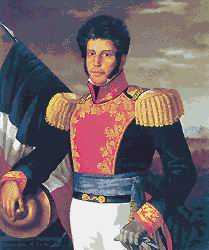
In 1829, Mexico's president, Vicente Guerrero, son of an African slave mother, inadvertently spawned a Mexican underground railroad for African-Americans by signing a decree banning slavery in the Mexican Republic.


“Sometimes someone would come along and try to get us to run up north and be free. We used to laugh at that. There was no reason to run up north. All we had to do was walk south, and we’d be free as soon as we crossed the Rio Grande.”


 Felix Haywood, a Texas slave, as quoted in 
“The Slave Narratives of Texas” 


Beginning in 1822, more than 20,000 slave owners settled into Texas. Even though Mexican Federal Law clearly reasserted the nation’s commitment to defend the right of enslaved Africans to liberate themselves, slave owners in Texas pressed for an extradition treaty which would require Mexico to return runaway slaves. After Texas gained independence from Mexico, the slave population in Texas as well as the number of runaways across the border into Mexico mushroomed

Mexicans living in Texas took great risks and invested enormous resources toward facilitating the escape of enslaved Africans. The Texas-to-Mexico routes to freedom constituted major unacknowledged extensions of the Underground Railroad. 

The Tejanos (Texas Mexicans) were accused of tampering with slave property, consorting with blacks, and stirring up a spirit of insubordination among the slave population. Mexican Americans stood their ground refusing to return runaways and continued to support slave uprisings.


In 1857, the same year that the U.S. Supreme Court ruled against Dred Scott, an enslaved African who had sued for his freedom on the grounds that his owner forfeited any claim to him after taking him into a free state, the Mexican Congress declared that enslaved people were free the moment they set foot on Mexican soil.


During the 1890s, hundreds of Black migrants fed up with slave-like conditions and segregation, left Alabama for Mexico and established 10 large colonies. Shortly thereafter, during the period of the Mexican Revolution, large numbers of black people migrated from New Orleans to Tampico, Mexico, as the oil industry prospered. These Africans in Mexico established branches of Marcus Garvey’s Universal Negro Improvement Association (UNIA). 


Sadly today, we hear of conflicts and polarization between African Americans and Mexican Americans in communities around the country. Gone are the days when César Chávez established relationships with Coretta Scott King and members of the Southern Christian Leadership Conference; gone are the days when the Black Panthers were allies with the Mexican-American Brown Berets, and gone are the days when blacks in the Student Nonviolent Coordinating Committee (SNCC) allied with Movimiento Estudiantil Chicano de Aztlán (MEChA), a Mexican-American student organization on college campuses. I cite ignorance in both communities.

Sunday, March 30, 2014

Why I Celebrate Cesar Chavez

César Chávez


We in the Community Must Continue to Work Together!

When I first started blogging African American-Latino World, my primary goal was to explore and celebrate the Spanish-speaking portion of the African diaspora; its history, culture, and present-day challenges. However, with March 31 being the birthday of César Chávez, I'm bluntly reminded that, despite cultural differences between the African-American and Latino communities in the U.S,, we have more in common than, sadly, many members of both communities realize. 

On 19 September 1966, Martin Luther King Jr. sent the following telegram to César Chávez: 
 “As brothers in the fight for equality, I extend the hand of fellowship and good will and wish continuing success to you and your members. You and your valiant fellow workers have demonstrated your commitment to righting grievous wrongs forced upon exploited people. We are together with you in spirit and in determination that our dreams for a better tomorrow will be realized.”
After King’s death, Cesar Chavez became friends over the years with Coretta Scott King, Ralph Abernathy, Andrew Young, and other major figures of the black civil rights movement.

I was a college freshman, when I first heard of César Chávez and joined a demonstration in front of a major supermarket in Albany, New York advocating the boycott of grapes in support of the largest farm worker strike in U.S. history. A strike led by Chávez himself to protest low wages and deplorable working conditions that Mexican, Mexican-American, Caucasian American, African American, and Filipino farm workers were enduring. His public-relations approach to unionism and aggressive, but nonviolent tactics, made the farm workers' struggle a moral cause gaining nationwide support. 

I never met César Chávez personally, but I met his union co-founder Dolores Huerta at the Latin-American Library here in Oakland where I used to practice my Spanish by reading Latin-American literature. She and I attended a formal ceremony of the Latin-American Library’s name change to the César Chávez Library. 

Later that year, I had a good laugh as I read in a local newspaper that a high school here in Oakland was talking about changing its name to César Chávez High School, and how black students got upset because they confused this civil rights leader with the reigning world's lightweight boxing champion from Mexico—“Julio” César Chávez; an entirely different person from an entirely different generation. 

When César was ten years old, his family’s home in Arizona was taken away because they did not have enough money. César’s family moved to California to find work on a farm. They worked very long hours with few bathrooms and little clean water to drink, not to mention the little money they earned. Everyone in the family had to work, even the children, and they were not treated with respect or dignity. To make things worse, the men in charge of the farm workers would sometime cheat and steal money from the workers, including César’s family. 

Life changed for César when he met a man named Fred Ross who believed that if people worked together they could improve their community. César worked in many communities to help people gain the respect they deserved. Eventually, César started the National Farm Worker Association to help improve the working conditions of farm workers of different races and cultures. And as the saying goes;  the rest is history.

However, the struggle for many of us is far from over. We in the community must continue to work together.

Saturday, September 14, 2013

Black Contributions to Mexican Independence—September 16, 1810


.

In 2006, Chicago’s National Museum of Mexican Art revealed the missing chapter in Mexican history with a groundbreaking exhibition, “The African Presence in Mexico.” As Mexico celebrates her Independence Day, I am never surprised to meet Mexican nationals and Mexican-Americans, not to mention so many of my fellow African-Americans, who are unaware of Mexico’s third root -- there is the indigenous,  there is the Spanish, and there is the African.

This is understandable because after centuries of interracial marriages (and “relationships”), the sub-Saharan African presence in Mexico took a much sharper decline than most other Western nations with a history of slavery.

It was the late anthropologist and professor at Mexico’s University of Vera Cruz, Gonzalo Aguirre Beltrán, who published interesting facts in his book, La Población Negra de México (the Black Population of Mexico). One of the facts he pointed out was that more than 500,000 African slaves were brought in through Mexico’s Port of Vera Cruz from the time of the invasion of Hernando Cortez until the day of Mexican independence on September 16, 1810.

I recently engaged in a conversation with an immigrant from Mexico’s State of Guerrero, where the resort city of Acapulco is located. She was so surprised when I told her that her state is named after her country’s liberator General Vicente Guerrero. I didn't share the fact that this liberator happens to be the son of an African slave mother and a Mestizo peasant father, and abolished slavery in Mexico after becoming Mexico’s second president in 1829. She seemed overwhelmed just with hearing how her state got its name..


A statue of Gaspar Yanga who who freed his Mexican town of runaway slaves from Spanish rule almost 200 years before the rest of Mexico.

A Mexican couple was equally surprised when I told them that in their home state of Vera Cruz, almost 200 years before Mexico officially became independent, an African slave rebel named Gaspar Yanga joined forces with another rebel slave leader named Francisco de Matosa to establish Mexico’s first free town, a free Black town independent of Spanish rule. 

It was the diligent work of Vicente Guerrero’s grandson, a writer, an attorney, a former military general, and Mayor of Mexico City, Vicente Rivas Palacio, who made Yanga a national hero as he published accounts of Yanga’s revolutionary valor against Spanish forces in an anthology in 1870.

In the book, No Longer Invisible: Afro-Latin Americans Today by Minority Rights Press, the writer/researcher Jameelah Muhammad pointed out that the African presence in Mexico is a subject often denied, but people of African descent have influenced every aspect of Mexican life, culture, and history. 

Blacks played major roles In Mexico’s war of Independence from Spain believing this will help to end slavery and the caste system. Full blooded black men in leadership positions in the Mexican revolution included Juan Bautista, Francisco Gomez, and José María Alegre. According to some historians, it was the Ejército Moreno (the Colored troops) who launched the independence struggle on behalf of Mexico.


Other Posts on “Black” Mexico
Mexico’s Dark Secret
La Bamba: The Souls of Black Mexican Folk
Mexico’s Third Root
 

Thursday, August 22, 2013

African-American in a Spanish-Speaking Texas Town


McAllen, Texas

Guest Blog Post
This post is from a fellow blogger, Jelisa Jay Robinson, at Black Girl Latino World. Her blog has a focus of bridging the gap between the African-American and Latino communities.

The looks you get when you speak Spanish in Texas are hilarious! I'm a noticeably Negra, there is no doubt about that. So it always trips people up when I speak Spanish with a better accent then they expected me too. "You speak Spanish so well? Where did you learn?" "Are you like Afro-Latino?" No, I just love the language, the culture and connecting it with my own.

When I found this blog, I was looking for other African Americans who felt passionate about Afrolatino culture. It was like "Okay, people who look like me exist." As I started getting more and more involved in Austin I found people that shared the same interest. Black people! Like my my friend Olivia who learned both Spanish and Portuguese. It started with Omar in the fifth grade. I was smitten so I learned all the ways to say "You are fine." Of course, I never told him these things! Learning the language has opened my life to new experiences, new people and communities. When I visited McAllen, Texas, a primarily, Hispanic city, I was able to have conversations with people I met. Using the language, I think, makes the stories and jokes easier to understand.

There is a down side. Sometimes people question your "authenticity as an African American. "So you think you Mexican?" Or maybe sometimes Spanish Speakers will make it a point NOT to speak to you in the language. To that you just keep it moving. You know who you are, your passions and what makes your heart sing! For me that's spanish, Afrolatino culture and great nights out dancing until my feet hurt. And dance is a universal language.

Friday, July 5, 2013

Contemporary Expert on “Black” Mexico

 
 Professor Bobby Vaughn, PhD
AFRO-MEXICO
 
With my being a lifetime student of the Spanish language and an explorer of Black heritage in Latin America, I have, over the years, developed an admiration for Bobby Vaughn, a Stanford University Scholar and Professor at Notre Dame de Namur University who has become an expert on Mexico's Black heritage. Professor Vaughn was born in San Francisco, CA in 1971, and was raised in South San Francisco where he graduated from South San Francisco High School. He received my bachelor's degree from Lafayette College in Easton, PA with a double major in Government & Law and Spanish in 1993, He then went on to receive his Masters and PhD in Anthropology from Stanford University.

As a junior in college, he studied Spanish in Mexico City. Already having a passion for Afro-Latin music, Professor Vaughn developed an interest in Mexico's history and culture with a heavy emphasis on Black Mexico's history and culture.As a cultural anthropoligist, he spent 20 years interacting and exploring Mexico's Black history and culture.

His website, Afro-Mexico presents a brief introduction to the culture, history, of Mexicans of African descent focusing on the Costa Chica region of southern Mexico where most black Mexicans live today. In another website, Bobby Vaughn's Black Mexico gives a list of personally selected sources dealing with Black Mexicans. Vaughn is also co-author of Afroméxico, a Spanish edition of Mexico's Black History


Friday, June 28, 2013

Roots of Mexico's Black Population


Since grade school, I was under the impression that the first African slaves who arrived in America in 1619 were the 20 or so slaves from Angola who stepped ashore in Jamestown, VA. What they did not teach us in grade school was that by 1609, 11 years before the Mayflower, the first black-ruled town in North America was granted its status as a self-governing municipality by Spain. This town is called Yanga in Mexico's state of Veracruz where a statue of its founder, Gaspar Yanga, a former runaway African slave, graces the town square today.

According to the historian Herman Bennett in his book, Africans in Colonial Mexico, the Black population was equal to, if not more than, the Spaniards throughout Mexico, then known as New Spain. And in the State of Veracruz, African descendants made up of 63% of the non-indigenous population. By 1810, the year Mexico declared her independence from Spain, there were 624,000 free Blacks making up10% of the total population, and making Mexico the second-largest slave nation, and the largest nation with free black population in the Western world.

Mexico's Black population traditionally was concentrated along its two coasts, one around the port of Veracruz (where most of the slaves landed) on the Gulf of Mexico, and the other in a district known as the Costa Chica, on the Pacific Ocean near Acapulco. The primary reason why the Black presence in Mexico today is not as plentiful as during the colonial era is because of interracial marriages over a period of over 500 years, which unlike the USA, were never outlawed. Many Mexicans and Mexican=Americans would deny that they have any strain of African blood. According to the Schomburg Center for Research and Black Culture in New York City, 75% of Mexican people has a Black great grandmother/father in their closets. There is more to Mexican culture than the Spanish and the Indigenous; there is the African--the third root.


Wednesday, July 13, 2011

Mexican-American Allies of the Black Panther Party

The Brown Berets

I felt inspired to write this piece because of the many conflicts and polarization between black Americans and Mexican Americans. I cite ignorance in both communities, especially among the youth. There was a time when we knew better. As a black American, I will always remember and honor the Mexican-American Brown Berets as much as I remember and honor the Black Panther Party.


Bobby Seale (L), co-founder of the Black Panther Party, meets with El Tigre Reies Tijerina (R) and members of the Brown Berets at Defremery Park in Oakland, CA


The Brown Berets was a group of Mexican-American revolutionaries from the barrios of the Southwest that emerged during the Chicano movement of the 1960s. The Chicano movement, or El Movimiento, was an extension of the Mexican-American Civil Rights Movement of the 1940s. Like the Black Panther Party, the Brown Berets were involved in community projects in their struggle for self-determination and social justice.


 Black Panthers and Brown Berets in a show of force.

In 1966, as part of the Annual Chicano Student Conference in Los Angeles County, a group of high school students discussed different issues affecting Mexican-American communities, and subsequently formed the Young Citizens for Community Action, and later named Young Chicanos for Community Action (YCCA). The YCCA decided to wear brown berets to symbolize a united struggle with the Black Panthers against police harassment, inadequate public schools, poor job opportunities, inadequate political representation, and the Vietnam war.  Their newspaper was La Causa (the Cause).

 Young Brown Berets in training


The Brown Berets became a national organization having opened chapters in California, Arizona, Texas, Colorado, New Mexico, Wisconsin, Iowa, Illiniois, Michigan, Minnesota, Ohio, Oregon, and Indiana. 

Like the Black Panthers, they also organized free medical clinics and breakfast programs. They also came to be known for their direct action against police brutality, protesting murders and abuse by law enforcement agencies. They supported César Chávez and the United Farm Workers movement, the Land Grant Movement in New Mexico, and even participated in the first Rainbow Coalition involving the Black Panther Party, Young Patriots (white anti-racist organization), and the Young Lords (Puerto Rican allies of the Black Panther Party), and were involved in the Poor
Peoples Campaign in Washington DC. 

As the story goes with the Black Panthers, the Brown Berets, the Young Lords, and the Young Patriots were weakened, diffused, and eventually disbanded through police and FBI infiltration.