Saturday, April 23, 2011

Cultural Exploration


Exploring Black Latino
(Afro-Latino) Cultures


It was a well-rewarding 25-day vacation through El Salvador, Perú, and Ecuador, and am already planning my next trip, which will include Colombia and/or Chile later this year. I'm in love with the Spanish language and various Latin-American cultures, specifically those with African roots.

A few African-Americans and Latinos, including those in the Spanish-speaking countries that I've visited, assume I'm Latino. When they hear me speak, they think I may be Cuban or Puerto Rican. The Cubans will beg to differ, but I've been influenced from an early age by New York's Puerto Rican community. I've been criticized openly by a few African-Americans for being a sell-out to my own race, and by a few Latinos as being self-loathing wanna-be bored with my own culture. Of course, I know better than this because I spent most of my high school and college years reading up on black history, which made me proud of my heritage.

I've been criticized for being a sell-out to my own race and a self-loathing, wanna-be bored with my own culture.

One Latino told me that he feels sorry for me. My question was why? Because he couldn't give me an intelligent answer, I reckoned, perhaps, he was bored with his own culture and could not understand why anyone else would enjoy it as much as I. In truth, I'm no different from the Xicano (Mexican-American) who embraces hip-hop culture, or the Boricua (Puerto Rican) who communicates in a soulful African-American lingo, or the Quisqueya (Dominican) who enjoys the African-American theater like I do. The one thing that we are all have in common is that we are expanding our horizons and experiencing other cultures as well as our own.

Sunday, April 17, 2011

I Got Robbed in Perú

November 24, 2010 made my fourth vacation trip to Perú. I've always had a great time and made some lifetime friendships. I even have a goddaughter and several extended families with whom I stay in touch and send money between trips. Perú has become my home away from home.

Being from New York and having traveled to more than 100 cities in 13 countries, I'm usually privy to shady characters and their slick games long before they open their mouths. When traveling, I learned to take solid precautions against robberies, theft, and other related offenses. I've even ventured and lived in one of Lima's roughest neighborhoods and was never given a second look, let alone harmed.

However In December 2010, I became very sick. I thought, perhaps, it was something I drank and that plenty of rest would help me recover. That did not happen. My condition got progressively worse, and I ended up in a local hospital. Later that evening, I was awakened by a member of one of my extended families. She was with my goddaughter and her family, plus others from the community. To this day, I really appreciate the love and support during this very trying time.

“Smiling Faces show no traces
of the evil that lurks within"

The Undisputed Truth


One of the woman, I'll call her Jezebela, kept hugging me, and even encouraged me to change shirts with the one she brought because mine was very dirty. She even rode with me by ambulance to a bigger and better hospital where I was treated very well and released five days later. That's when I noticed about 150 Peruvian dollars (nueva soles) missing. Also missing were my cell phone and two luxury pens.

About 150 Peruvian dollars
(nueva soles)
came up missing

On the day of my discharge from the hospital, I got a call from Jezebela's mother inviting me to stay with her family for the duration of my vacation. This extended family of mine, made sure I ate right and got my proper rest. Jezebela herself seemed unusually happier with me than normal. She always wears a lovely smile, and from day one had a pleasing personality, but as the old Rhythm and Blues song goes, smiling faces show no traces of the evil that lurks within. Because of my closeness to Jezebela, her family, and members of her community, I let my guards down more than once. Jezebela seems to feel that I'm much wealthier than I really am because I'm a gringo. She probably thinks that that I didn't even miss the money nor any of my personal belongings. Yes, Jezebela is my #1 suspect in this robbery. However, there isn't much I can do about it... at least right now, but what goes around comes around.

Friday, April 15, 2011

Latin Oakland

I first to Oakland from New York by way of the U.S. Navy where my ship was home-ported at the nearby Alameda Naval Air Station. It was years after my honorable discharge when I noticed an influx of Spanish-speaking immigrants. This, along with my undying love for salsa and Afro-Cuban music, made my desire to learn to speak Spanish resurface with a vengeance. When I first started teaching myself Spanish in New York at the age of 10, native speakers, white, brown, and black, insisted on answering me in English. That was discouraging, so I gave up trying. This time, while learning as an adult, I stayed away from those who were bilingual and focused my attention on non-English speakers.

Yolanda, a Mexican-American friend, noticed my progress in Spanish and advised me to learn the culture as well. I set out to do just that, but there was a problem---there must be at least 17 different Spanish-speaking cultures. Exactly where I was suppose to begin? Finally, after some serious thought, I decided the best place to start was with something I enjoyed most---salsa and Afro-Cuban music. I learned about their history and development through reading and my travel to Cuba.


Oakland, CA

I read books like Boricua: Anthology of Puerto Rican Writings by Roberto Santiago, When I Was Puerto Rican by Esmeralda Santiago (no kin to Roberto), and América by the Afro-Cuban Poet and Writer Nicolás Guillen. I then began reading as much as I could on Afro-Latinos, such as author/poet Nelson Estumpiñan Bass of Ecuador, dancer/choreographer/musician Ronaldo Campos of Perú, and the Mexican liberator and former president Vicente Guerrero (México's Barack Obama in 1829).

Of course, I began traveling to selected countries like Perú, Ecuador, Colombia, and Cuba. Countries like México, Panamá, and El Salvador were flukes where I took advantage of long layovers to roam about and practice my Spanish with the citizens.

Thursday, April 14, 2011

Music and The Cuban Evolution

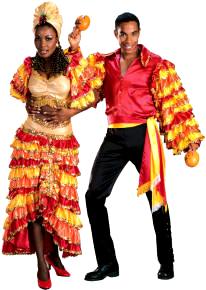
From Flamenco to Salsa to Timba

When the Spanish first came to Cuba in 1492, naturally they brought their music and dance with them.


The Spanish invasion, spearheaded by Christopher Columbus, led to the enslavement of Cuba's native population----the Tainos (erroneously called Indians).


So many of Tainos died from overwork and disease that Queen Isabela of Spain authorized the transport of West African slaves to replace the dying Tainos.


West African music was eventually fused with Spanish music forming a whole new genre of music---Rumba.

Over the years, the term Afro-Cuban music was coined, which included rumba, changui, and the Son Montuno. It was the son montuno that gave birth to Salsa Music among Cuban immigrants and Puerto Ricans in New York City.


While salsa thrived in many parts of the world, Cuban music continued with its evolution and songo was born; made popular by the group Los Van Van (Go-Go).


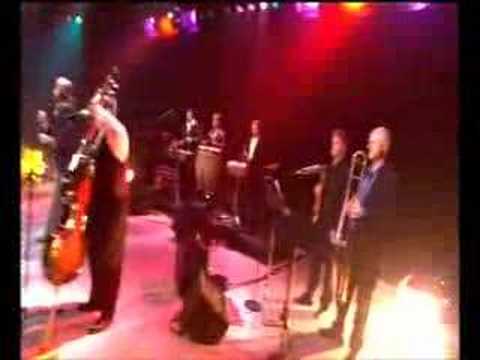
Today, Timba, is the latest genre of music thriving in Cuba today. Timba music includes a mixture of jazz, rock, disco, funk, and hip hop on top of traditional folkloric music like rumba, guaguanco, and sacred santería songs. The group Bambeleo (below) is one of Cuba's most popular Timba groups.


I welcome your opinions in the comment section below.

Possessed and Obsessed with Latin Music

During my first two years attending the State University of New York at Albany, I thought I wanted to major in African-American studies. I not only took the classes and read a lot of books, but I took trips to the Schomburg Center for Research and Black Culture in Harlem, NY, and discovered that the African diaspora extended from Canada to Argentina. I learned that in the Western Hemisphere, black people speak English, Spanish, French, Portuguese, and Dutch as a first language, all as a result of the slave trade. This explained why Latin music, specifically salsa has so much of the African influence in its music.

Some of my African-American friends noticed my ever growing collection of Latin music and made a comment about my turning into a Puerto Rican.

I was going into my junior year in college when I met my girlfriend Jenny who was straight out of New York's Latin Manhattan, more specifically, New York's Lower East Side. When she learned of my love for salsa music, she was good enough to teach me the basic steps and some slick moves. At that time, I was still a klutz. It wasn't until years later that I perfected those steps by practicing slowly until I got the rhythm in my system, and became a respectable salsa dancer. Sometimes, at the salsa clubs, women who didn't know me would turn me down assuming a "brotha" knows nothing about salsa to only be sorry when they see me flow through fancy dance patterns and footwork with other women who were not so judgmental. Of course, I would never ask such snobbish women to dance again because there were too many down-to-earth women around who would love the offer of dance from a gentleman.

I learned that in the Western Hemisphere, black people speak English, Spanish, French, Portuguese, and Dutch as a first language
While in college, some of my African-American friends noticed my ever growing collection of music by Eddie Palmieri, Joe Cuba, Ray Barretto, and other Latin music stars and made a comment about my turning into a Puerto Rican. I had to laugh that one off. I still loved my jazz and rhythm & blues, and depending on my mood, that was the music I played; classical music included.

Tuesday, April 5, 2011

Mayate


¡Pinche mayate!


A Name They Call Black People

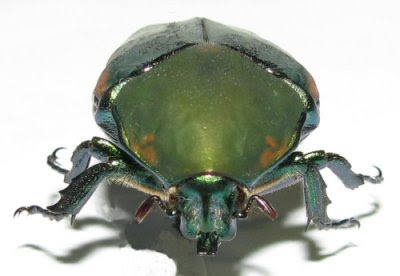
When I saw the film American Me, that was my first time hearing the expression mayate. I was not offended but was extremely curious about the word's origin. All racial slurs have original meanings. I asked a Mexican American friend, and her mitigating response was that it is just a name they call black people. 

However, one summer I was teaching labor market orientation to high school students in Berkeley, California, and approached a group of Mexican-American students with whom I had a fairly decent rapport. I asked them what is a mayate? Obviously containing their laughter and not wanting to hurt my feelings, they became very tight-lipped. What was even more hilarious was that I was pronouncing mayate wrong by putting the accent on the wrong syllable.

Statue of Gaspar Yanga outside of the Mexican town named in his honor who led black runaway slaves in establishing a free Black town by defeating the Spanish over 200 years before Mexico won her independence.

The youngest member of the group repeated the correct pronunciation and told me that it was a little bug. One of the girls in the group shouted, ¡Cállate! (shut-up).  In defiance, he told me that a mayate is a little black bug. Now it was my turn to laugh as my curiosity was finally satisfied. Welcome to the United States of America where almost every ethnic group, including Mexican-Americans, has pejorative terms attached.


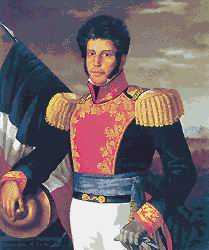
Vicente Guerrero, son of a black woman led Mexico to her independence from Spain in 1810 and became Mexico's second president in 1829. Mexico's state of Guerrero, where the resort city of Acapulco is located, was named in his honor.


Every time I hear that term mayate, it is always used in the context of conflict. In the films American Me and Blood In and Blood Out, mayate was primarily used towards a rival gang known as The Black Guerrilla Family. 

One day, I was passing by a group of Latino construction workers and overheard one venting his frustration on how he felt about “that mayate.” When he saw me looking at him, he immediately stopped talking wondering if I understood. I simply gave him a humored smile and a wink and continued to cross the street at the green light.

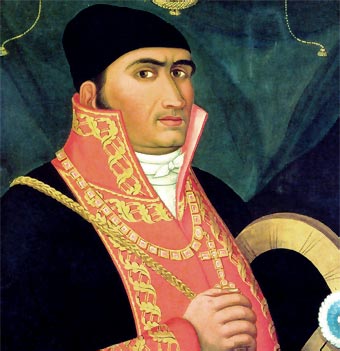
José María Morelos y Pavón, son of a freed African slave, was a revolutionary war hero. Mexico's state of Morelos was named in his honor. 


Because of my level of education, mayate is not something I take personally; it's a joke, actually. It's a joke because even Mexico itself has an African history and presence, particularly in states of Vera Cruz, Oaxaca, and Guerrero, which today still have black villages. 

Mayates, excuse me, Black people, played major roles in Mexico's independence from Spain, including pure Africans like  Juan del Carmen, Juan Bautista, and Francisco Gomez. In fact, according to research done by Jameelah Muhammad that was published in the book, Afro Latino--No Longer Invisible by Minority Rights Press, Africans made important contributions to Mexican folk tales, religion, medicinal practices, cooking styles, and most notably, music and dance.


Related Blog Posts


Sunday, April 3, 2011

Compassionate Travel

Brazil's Boys in the Hood

Rio de Janeiro is the most visited city in the southern hemisphere and is known for its carnival celebrations, samba music, Bossa Nova, Copacabana, Ipanemea, and of course, the Christ the Redeemer statue, which has been named one of the New Seven Wonders of the Word.

I was watching the documentary Favela Rising, about life in one of Rio's most feared slum areas where poverty, drugs, gang wars, and police brutality claim the lives of youth by the thousands. The film focuses on Anderson Sá, a former drug trafficker who turns social revolutionary, working to make a difference in the lives of young people by organizing a hip hop and drumming group called Afro Reggae to help, which turned out to be very successful in steering young people away from crime and drugs.

Haunted by the murders of his family and many of his friends, Anderson Sá used hip-hop music, the rhythms of the street, and Afro-Brazilian dance to rally his community to counteract the violent oppression enforced by teenage drug armies and sustained by corrupt police.

While watching this film, I began to wonder how many of us who are travelers and tourists, having so much fun; the time of our lives, think about the abject poverty close by; poverty suffered by many who, like I, are of African descent. Rio de Janeiro is one such place where not far from the tourist areas are impoverished shanty towns that would make any slum or housing project in U.S. ghettos look like an upper middle class community.

As a traveler, I prefer to find small ways of helping a man, a woman, or a child, particularly of African descent, who is not as fortunate as I, who am able to travel, enjoy life, and see it from a different, cultural perspective than what I'm accustomed. I try to find small ways of helping, like taking a family out to dinner, giving larger than normal tips, or patronizing black vendors.

Below are photos of my taking families to the beach and paying for their meals as I'm grateful to be in such a position to travel, and at the same time, help others while learning the culture and improving my Spanish.

Going to the beach
Taking my goddaughter Daniela (right/front) to the beach
in Chincha, Perú
Pollo Brasa
After the beach, it was dinner on me
Polla a la Brasa
Pollo a la Brasa
in Chincha Perú
R1-12A
Ice cream cones on me for my goddaughter (in pink) Daniela
and family members