Monday, December 7, 2015

Blacks and Latinos: Cultural Difference; Common Causes

Disclaimer: The title “Blacks and Latinos is just that, a title. Realistically, Black people come in many different cultures, including Latino, and Latinos come in many different races, including black.

Last night, I was so deeply touched watching a movie about César Chávez that I wanted to jump through the screen and hug the actor who played the role of this great civil rights leader, and how he so eloquently handled the same rednecks who oppress black folks. It was like watching a film documentary of the black civil rights movement.

For me, it is plain and simple that despite the cultural differences between black and brown people in this country, we inadvertently are being confronted by critical issues based on race and ethnicity, and it would behoove both communities to put their illogical and ludicrous animosities aside and align to confront these issues. 

Now, before any black or Latino haters start articulating venom against each other, I would implore you to read the rest of this blog post because it is filled with historical facts that you should know. 

As I pointed out in my post, “Why I Celebrate César Chávez,”Martin Luther King himself sent the following telegram to Chávez:
As brothers in the fight for equality, I extend the hand of fellowship and good will and wish you continuing success to you and your members. You and your valiant fellow workers have demonstrated your commitment to writing grievous wrongs forced upon exploited people. We are together with you in spirit and in determination that our dreams for a better tomorrow will be realized.
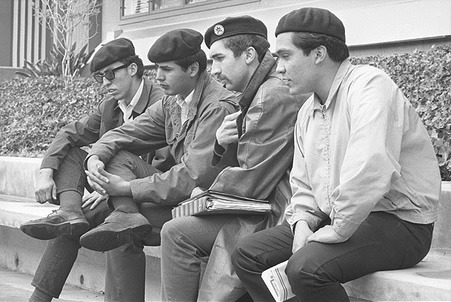


The Mexican-American allies of the Black Panther Party, the Brown Berets, was formed in the barrios of California and the U.S. Southwest with similar struggles for self determination and social justice.

 At the State University of New York at Albany where I was a member of the Black Student Alliance, we were so successful in increasing the enrollment of Latinos as well as blacks, among other accomplishments, that we had to drop the Black Student Alliance name in exchange for one that included all people of color.

Meanwhile, in New York City, black students from varying ethnic groups, and Puerto Ricans of all colors came together in one united front to make positive changes at the City University of New York.

Sadly, gone are the days when the Black Panthers were allies with the Puerto Rican Young Lords Party and the Mexican-American Brown Berets as they were all infiltrated and crushed by the FBI's Counter-Intelligence Program.

 
Afro-Puerto Rican Felipe Luciano headed the New York Branch of the Young Lords Party applying the same work as the Black Panthers in the Puerto Rican community. Luciano was the original member of the Last Poets, a trio of revolutionary poets and drummer addressing political and social issues in the black community.

In 1982, Cha Cha Jimenez, leader of the Chicago Young Lords Party galvanized the Puerto Rican community to help elect Harold Washington as Chicago's first black mayor. After the election, Jimenez introduced Washington to over 100,000 Puerto Ricans at a celebratory event sponsored by the Young Lords.

Also, gone are the days when the black Student Non-violent Coordinating Committee (SNCC) allied with Movimiento Estudiantil de Atzlan (MEChA), a Mexican-American student organization on college campuses. I cite narrow-mindedness on both sides.

Some years back, I attended a lecture at the La Peña Cultural Center in Berkeley, CA where the Mexican-American presenter spoke of Mexicans being lynched during the same time period when black Americans were regularly lynched. Although, this was the first I heard of such a horror happening to Latinos, I was not one bit surprised.


After the death of Martin Luther King, César Chávez became friends with Coretta Scott King and other leaders of the black civil rights movement in recognition of a common struggle.

Mexican Americans, like African Americans, were not only lynched for being “uppity,” taking jobs away from whites, and accused of making advances toward white women, but were also lynched for acting too “Mexican,” i.e., speaking Spanish too loudly and proudly showing off aspects of Mexican culture.

During slavery, Mexican Americans took great risks and invested in enormous resources to facilitate the escape of enslaved blacks creating the little-known underground railroad south of the border. , the In my post Mexico's Historic Aid to the Black American Freedom Struggle, I added that that the half black, half mestizo president of Mexico Vicente Guerrero, who abolished slavery in his country, steadfastly refused to comply with the demands of American slave holders to return runaway slaves who escaped to Mexico.

In the events of perpetual police misconduct in the U.S. where blacks and Latinos are targets, I strongly believe that protesters from both communities need to make their presence known simultaneously, such as what occurred in San Francisco when blacks were protesting the murder of a black youth while Latinos came out in protest of police murdering Latino members of their community. As the saying goes, “there is strength in numbers.” 

It is my utmost conviction that, despite cultural differences, black and brown people need to come together under one umbrella confronting common causes as we so often have done in the past.


Tuesday, December 1, 2015

African-American Dis-ownership of Afro-Latinos

Slave revolt leader Alonso de Illescas was perceived as the single most powerful person in the predominately black Esmeraldas region of Ecuador, South America in the 16th century.


The interesting thing about the African diaspora is that there has always been a few, like Malcolm X (USA), Marcus Garvey (Jamaica), and Kwame Nkrumah (Ghana), who are culturally aware enough to recognize and respect those who are fellow members of the diaspora, regardless of language or cultural differences. In most instances; however, too many blacks in varying cultures, including black Americans, cannot see past their own culture, and understand that a black person from another culture shares the same roots, history, and the effects of racism.

In some of my other blog posts, I've addressed attitudes that some Afro-Latinos have towards black Americans even to the degree of denying their own blackness to avoid being identified with us. This is primarily due to the lack of awareness of their own history as well as ours. And I have to say that the same holds true for many black Americans and their attitudes towards other members of the African diaspora.

I once had a good laugh in my office when a black American woman asked me if I were black. I am thinking to myself, what else could I possibly be? My response to her was, “when I looked in the mirror this morning, I was black as always; why do you ask?” Her blunt response; “because you got all this Latin sh... (expletive!) on your wall!” She was referring to pictures reflecting my trips through “Black” Latin America. 

Living in California where there is a small Afro-Latino population, I could partially understand this woman's naivete; as hilarious as it was, but in a city like New York with a large representation of Afro-Latinos, it is totally baffling, if not disappointing, to hear that there are black American New Yorkers who also do not seem to know any better.

A tri-lingual (Spanish, English, and Garífuna) friend, Mariana, from Honduras, Central America whom I admire and respect, tells me her story:  
Puerto Ricans and Dominicans always assume I'm African American because of my New York/American accent, but once they realize that I am Latina, I am accepted right away.

African-Americans, however; have always denied me my Blackness saying Black people don't speak Spanish. They, too, have been denied the education of the transatlantic slave trade.
Mariana happens to be a descendant of African people who successfully fought off the British trying to enslave them before taking refuge among the indigenous population; mainly in Honduras, but also in Belize, Guatemala, and Nicaragua, and developed a distinctive language called Garífuna in addition to Spanish.
 
Mariana adds...
Growing up in a black (American) neighborhood in Brooklyn, the confusion among my friends didn't come until my mother yelled at me in Spanish because I stayed out so late. Instead of my black American friends making fun of me, they questioned me with "I thought you were Black?" 
The interesting thing I learned from my travels through “Black” Latin America is that they know much more about us black Americans than we, as a whole, know about them. They know about hip hop, jazz, R&B, and gospel. In fact, it was an Afro-Peruvian woman who turned me on to a black American folksinger whom I never heard. Yet, hardly any of us black Americans know about punta (Honduras), rumba (Cuba), marimba (Ecuador), or festejo (Perú)—all “black” music.

What the American history books does not teach us is that slave ships began docking in Latin-American countries in the 1500s, almost a full century before before they started docking in the U.S. For this reason, Spanish-speaking black folks in the Americas far outnumber us English-speaking black folks. 

I have personally met Central Americans, Cubans, Puerto Ricans, and heck, even Peruvians (yes, Peruvians!) who are closer to their African roots than most African Americans. So, who are we to judge Afro-Latinos as being anything other than black?

Furthermore, what American slave rebels like Nat Turner and Denmark Vessey attempted to do before being ratted out by house negroes, Gaspar Yanga of Mexico, Benko Biohó of Colombia, and Alonso Illescas of Ecuador, and so many others, were successful in terms of winning their freedom and creating palenques (fortresses) for protection. A black woman in Ecuador won her freedom by taking her slave master to court.

Although I am a proud black American considering our history, struggles, and accomplishments, too many of us feel that we are the only legitimate black folks on the planet, when in essence, we are just a mere minority. A black Venezuelan living in Washington DC made that point very clear out of frustration in one of our recent discussions.

We, as a community, as well as blacks around the world, need to learn to recognize and respect other members of the African diaspora, especially those who are also descendants of slaves in the Western world. Collectively, we speak Creole, Dutch, English, French, Garífuna, Gullah, Patois, Portuguese, and Spanish.

Saturday, November 28, 2015

My New York Afro-Latino Connection


A country in South America celebrates African Heritage Month

As expected, since my return to New York City, and after teaching myself Spanish and traveling to nine Spanish-speaking countries being totally immersed in the language, I have a much better command of Spanish, which is not perfect, but adequate, and I'm loving my developing Afro-Latino connections. 

In California where I was living most of my adult life, people thought I was Cuban assuming if you are black and speak Spanish you must be Cuban. Even while in Perú and Ecuador, people thought I was either Cuban or Puerto Rican, in addition to Panamanian or Brazilian; again, people were looking at the color of my skin.

Just yesterday in the Bronx, however; I was in engaged in a Spanish-speaking conversation with a Boricua (Puerto Rican), a Garífuna (descendant of escaped slaves in Honduras who fought the British for their freedom and won), and a Dominican. All three, including the Dominican, thought my roots were in the Dominican Republic. Amazing!

Surprisingly, I still run into Spanish speakers who seem to feel that if you are black that there is no way in the world that you could speak Spanish. That too is amazing, especially in a city with such a large Afro-Latino population. 

Pedro, an Afro-Venezuelan friend living in Washington DC reminded me that many of these Latinos who come to the US stereotyping blacks do not even have a high school education, and can easily be brainwashed. He says that as a black man he gets the same reaction from non-black Latinos and really feels sorry for a lot of them because, obviously, the school systems are failing them.
   

Saturday, November 21, 2015

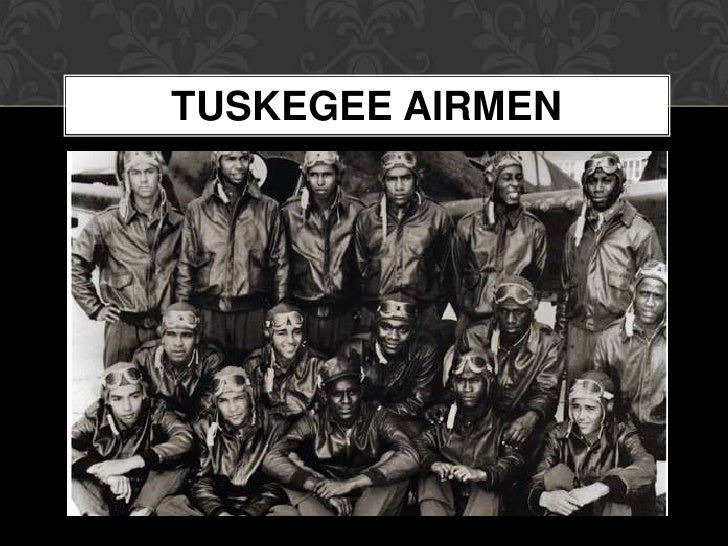
Black Latino Among Tuskegee Airmen


2nd Lieutenant Esteban Hostese, Tuskegee Airman
United States Army Air Corps

 An ex­hib­it that opened at the City Col­lege of New York (CUNY) paid trib­ute to immigrants from the Domin­ic­an Republic who served in the U.S. armed forces dur­ing World War II. Among the honorees will be Esteban Hotesse, a Domin­ic­an Republic nat­ive who im­mig­rated to the coun­try as a child with his mother and little sister. They came through the fam­ous port of El­lis Is­land.

A de­term­ined re­search as­so­ci­ate, Ed­ward De Je­sus, at the Domin­ic­an Stud­ies In­sti­tute at CUNY, made the dis­cov­ery dur­ing a three-year re­search mis­sion in­to the role of Domin­ic­an ser­vice­men and wo­men who made sig­ni­fic­ant con­tri­bu­tions to the war ef­fort or to so­ci­ety.

Hotesse, who en­lis­ted in Feb­ru­ary 1942, was among a group of 101 Tuskegee Air­men of­ficers ar­res­ted for re­fus­ing to fol­low Jim Crow or­ders from a white com­mand­ing of­ficer at a base near Sey­mour, In­di­ana where the KKK had a strong pres­ence. This act of dis­obedi­ence later be­came known as the Free­man Field Mutiny. 

  He made second lieu­ten­ant before joining the Tuskegee Air­men, the first all-black group of mil­it­ary pi­lots in the U.S. Armed Forces who made their presence known against the Germans during the war with 1578 combat missions, winning at least one Silver Star, 96 Distinguished Flying Crosses, 14 Bronze Stars, 744 Air Medals, and 8 Purple Heart.

This post should serve as more than a history lesson to black people in the Dominican Republic who, despite their actual skin color, refuse to believe that they are black. Here in the U.S., Dominican Immigrants have been noted for commenting that they are not black, but Dominican. They confuse their race with their nationality.

If Lieutenant Esteban Hotesse were anything other than black, he would have never been subject to Jim Crow laws in KKK territory, let alone having been considered for such a fine unit as the Tuskegee Airmen.

Thursday, November 5, 2015

New York City - Home Sweet Home

 This photo is from the album cover of the salsa group Africando out of Senegal, West Africa whose mission is to bring salsa music back to its African roots.


"New York City, I don't know why I love you;
could be you remind me of myself!"
- Gil Scott-Heron
Yesterday, I off boarded the subway train at East Tremont in the South Bronx, a community primarily of black Americans and Latinos. As I walked down Grand Concourse to my scheduled appointment, I felt very uplifted hearing salsa and bachata music blaring from people's apartments. This was blunt reminder that I finally arrived back at my home sweet home of New York City after spending most of my adult life in Oakland, California.

 New York City residents asked me why would I want to leave California, as though California were some type of utopia, to return to New York. The rational answer that I gave is that my brother inherited a luxury living space in Midtown Manhattan, just blocks from Central Park, and invited me to come back home and be with family. 

What I left out of my response was that I am a New Yorker at heart. While going to school in upstate New York, and all during my stay in Oakland, known on the streets as Oak-Town, I could not stop talking about New York, NY. I am surprised that no one suggested that I go back. I've done quite a bit of traveling in my life, and there is no city that matches the rich, cultural, and literary depth and diversity as New York City. Besides, I love the straight-forward communication style of native New Yorkers.

My special attraction to New York is its heavy Afro-Latino population. As a young kid growing up just walking distance from Spanish Harlem, I started feeling a strong attraction to the Spanish language and Latin-American culture, especially the music. 

It was in New York where I was introduced to the likes Eddie Palmieri, Ray Barretto, Willie Colon, Ralphi Pagan, Hector Rivera, and Pete Rodriguez, all whose music spilled over into the black American community way back in the day. Even black American radio stations like WWRL and WBLS featured these artists because of the heavy African influence in their music.

As I alluded to in my blog post, Coming Out as Trans (Trans-Cultural), there is a strong element of Latino culture in my soul that I feel from deep within even though I was born a black American, which has thus far inspired my travels to nine Spanish-speaking countries where I was totally immersed in the language and the culture. 

Even after flying into New York from Oakland, I found myself engaged in a Spanish-speaking conversation with my Dominican cab driver who appeared more comfortable speaking Spanish than English.

Here in New York, I will get to use, and thus, develop my Spanish more. The trick is learning who is bilingual and who isn't. As I was walking through the South Bronx, I overheard a couple of Afro-Latinos speaking Spanish, and when I stopped to ask for directions in Spanish, they, in a very friendly manner, gave me the directions I needed—in English. However, once I resume my Latin-American travels, I will not have to worry about that type of response any more.

At least here in New York, I will be able to attend more Afro-Latino events, go to plays, and get access to libraries and museums about Afro-Latinos that California lacks.

Saturday, October 3, 2015

Ecuador to Include Black History in Textbooks


When I first crossed the border from Perú into Ecuador, my intentions were to connect with Ecuador's black community like I did in Perú; get a feel for their black experience, and learn more of Ecuador's black history. Thus obviously not knowing anyone, I headed towards a black community up in the Andes cold and unannounced. As it took an hour or too for me to overcome their initial suspicion, I was eventually invited to a party. However, my greatest Afro-Ecuadorean connection was with my late lady friend, Gloria, and her family whom I met through Facebook.


Alonso de Illescas was a successful slave rebel in Ecuador's 
predominately black province of Esmeraldas

Black Ecuador has relatively made significant gains in their country, but like the rest of us in the African diaspora, they still have a long way to go. Quito, Ecuador's capital, reminded me so much of home as I was often racially profiled by cab drivers. One evening while trying to get to a friend's house on the other side of town, taxi cab after taxi cab zoomed past me ignoring my signals to stop. It came as no surprise when one cab driver stopped 25 feet from where I was signaling to pick up a white couple.


 Afro-Ecuadorean Cultural Center in Quito, Ecuador

Finally, I noticed a taxi that had just stopped as passengers stepped out. When I tried to enter, the driver wagged his finger in utter defiance. Facetiously, I waved my American dollars at him. I don't know if this would have worked in the U.S., but this cabby had me laughing with his sudden change of heart. Once in his cab, however; he became even more relaxed and cordial when he learned that I am American, and not Afro-Ecuadorian. This sounds so familiar as to how foreign blacks living in the U.S. are perceived as less of a threat to White America than we home-grown black folks.

 The black region of Valle de Chota, which produces Ecuador's major soccer stars, such as Agustín Delgado (below), the Shaquille O'Neil of Ecuadorian soccer.


A week ago, Ecuador had just celebrated National Day of Afro-Ecuadorean People. This celebration lasted a whole week. And with the historical struggle and incremental gains blacks in Ecuador made, one more victory was scored. The article below describes this gain in greater detail. 


Former slave María Chinquiquirá took her master to court and won her freedom. 
This photo is in a museum in Guayaquil, Ecuador's largest city.


On Sunday, October 4, 2015, Afro-Ecuadoreans celebrated what they have gained, but also recognized there are still challenges. To mark “National Day of the Afro-Ecuadorean People,” Ecuador’s National Congress passed a resolution Saturday that ensures the history of the country’s racial minority will be included in school textbooks starting next year. “After various years of constant struggle, it has been agreed together with the Ministry of Education to include in textbooks the history of Black people in Ecuador, its importance and participation in the main historical events of the nation,”

Assembly Member Zobeida Gudiño told state news agency El Telegrafo. The historic move comes as Afro-Ecuadoreans across the country celebrated their heritage Sunday to honor the historic achievements the racial minority has made, while highlighting the challenges of racism and discrimination they continue to face today. In the upcoming days, Afro-Ecuadoreans turn the public spotlight on the importance of their lives, historical legacy and culture through an array of parades, musical performances, marches and academic panels to mark the 11th year of the “National Day of the Afro-Ecuadorean People.”

Every first Sunday of October, Ecuador’s Afro-Ecuadorean community celebrate this day after it became a hallmark in 1997 following a national mobilization that pushed Congress to declare the “National Day of the Black Ecuadorean,” the recognition of Alonso Illescas as national hero, and the inclusion of Afro-Ecuadoreans into national history. http://www.telesurtv.net/english/news/Ecuador-to-Include-Afro-Ecuadorean-History-in-Textbooks--20151004-0014.html

For Victor Zambrano, an Afro-Ecuadorean student and activist from the coastal province of Esmeraldas, this day is bitter-sweet; a reason to celebrate what Afro-Ecuaodoreans have gained, but also to remember the challenges ahead for the 604,000-strong racial minority. The National Day of the Afro-Ecuadorean People is an achievement because through this decree of Congress we have been recognized and made visibile, recognizing our struggles and contributions to Ecuadorean society,” Zembrano told teleSUR English. RELATED:

Piedad Cordoba Says Afro-Latinos are ‘Totally Invisible’ “On this day we have to remember all the contributions we have made as a people and bring it, together with our history, to the rest of the people because many don’t know it, which enables a lot of forms of discrimination,” he added. Zembrano sees this discrimination manifested in everyday life, but also in the labor market. “When walking through the streets at night you become ‘suspicious.’ People change streets and prefer to walk very fast to avoid getting robbed.

The same work opportunities don’t exist because they prefer people ‘that are presentable,’ that is to say, that they sell a stereotyped mestizo image. A lot of us don’t fit that image,” the 24-year-old activist for Afro-Ecuadorean and LGBTI rights said. This content was originally published by teleSUR at the following address: "http://www.telesurtv.net/english/news/Ecuador-to-Include-Afro-Ecuadorean-History-in-Textbooks--20151004-0014.html". If you intend to use it, please cite the source and provide a link to the original article. www.teleSURtv.net/english

Black Bolivians Jam to their Own Form of Rhythm & Blues


Black Boliva has been on my list of places to visit for quite a few years. The closest I came to entering Bolivia was during my trips to Ecuador and Perú where all I had to do was cross the border. As a budget traveler, I find ways to visit nearby countries of the countries I'm visiting, usually for a few days. 

However, Bolivia is a challenge because of their high visa fees. Why pay nearly $200 to cross the border and only stay a few days? However, thanks to my Afro-Bolivian Facebook friends, I will find a way, and once I do, I will have some friendly contacts who can show me the ropes.

The black music of Bolivia is known as Saya. It is inspiring how the Afro-Bolivian community uses their traditional music, their own cultural form of rhythm and blues, as a manner of resistance and empowerment in a racist society. 

There is a film coming out that explores what is rarely told in history books of how black Bolivia's African ancestors came to the colonial region as slaves, and goes on to explore the resilience of Bolivia's black community today, and their culture and their tradition of Saya music and dance. It is their movement for recognition in the world.

The Saya music of Afro-Bolivians comes from the word, “nsaya.” It is from the Kikongo (Kongo) language in the are of the African continent now known as the Democratic Republic of the Congo and Angola. It is an art form of traditional Andean and Afro-Bolivian music and dance which originated in the jungles of the predominately black Yungas areas of Bolivia's Department (State) of La Paz.

Today, Afro-Bolivians have use Saya music and dance in their struggle to reclaim their rights within Bolivian society. In this movement, the Saya has functioned both as a way of expressing and solidifying black Bolivians, and as a way to express their identity in the context of national social movements based on ethnic identities.

Solidarity in Saya: An Afro-Bolivian Music Movement - TrailerHD