Sunday, March 24, 2013

They Are Trying to Be So Slick!

 My goddaughter Daniela and me in El Carmen, Perú

A Peruvian friend of mine living here in Oakland warned that me one day that people in Perú will try to use my goddaughter Daniela, who lives in Peru, to get more money out of me because they know I have a soft spot for her. Being a seasoned traveler, I was not surprised and I only knew it would be matter of time before some jerk tries it. Sure enough, it happened. I recently wired money to Daniela's uncle to buy her another bicycle as her first one was broken and sold to someone who can fix it. I paid him some money in exchange for doing me that favor. Daniela was such a happy camper I was happy for her. Especially when the family next door, who gives me a room to stay when I'm in Perú, sent me a picture of her on her new bicycle.


I called a few days later to see how she liked it, and that's when Daniela told me that she needed $150 worth of school supplies (in February). I asked her describe exactly what she needed, and it was the usual, a notebook, pencils, erasers, and things that don't cost any more than $10. I knew that this request was not Daniela's idea. In fact, I can hear the concern in her voice that she was not comfortable lying to me. Someone is trying to be slick. I've wired money to Daniela's family frequently in the past without their ever asking for a dime. It's saddening that a 10-year-old is being taught by so-called role models to be so dishonest. Very sad! I can only pray that this does not corrupt her as she reaches maturity.


Tuesday, March 19, 2013

Why I'm Not With a Latina

R1- 1A

Posing with a new found Peruvian friend Karen of Lima

I often get questions from people, including my younger brother, as to why I'm not hooked up with a señorita since I'm so hooked on the Spanish language and Latino culture, specifically Afro-Latino culture with an emphasis on the music. For me that is a complex question to answer. Do I like Latinas? Yes, but I also like African-Americans, Africans, and Caribbean women. Especially the ones who are down to earth, good conversationalist, and have broad interests and value good, solid communication in a relationship be it friendship or intimate.


 D Fuentes of Havana, Cuba who is the only woman during my Latin American 
travels whom I entertained the thought of bringing home to mom and pop.

So far, I've traveled to nine Spanish-speaking countries going on 11, and as of this writing, I've met only one Latina (a woman in Havana, Cuba) I would have considered hooking up with. She's well built, dark, physically attractive, but most importantly, she is a good communicator, and doesn't play the games that the average American (men and women) play in relationships. The problem was when I got back to the US, the difficulty in keeping touch due to US/Cuban relations was overwhelming, and I just let it go. And so did she.

But the most profound answer I could give for not being with a Latina is that I'm not really looking. I'm content traveling, continuing to improve my Spanish, enjoying the music, the food, and the people I meet. Another reason is religion. I am not a believer of any organized religion, and that includes Catholicism. The woman I do hook up with be she Latina or not will be an independent thinker, and not prone to make life decisions solely based on the wishes of her family.

Friday, March 15, 2013

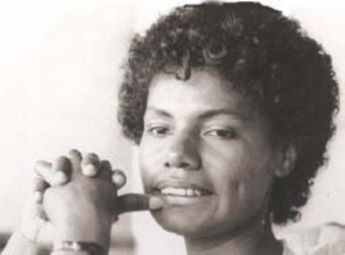
She Died in Her Struggle Against Violence and Abuse Against Women

María Elena Moyano
Perú
November 29, 1958 – February 15, 1992

I commemoration of women's history month, María Elena certainly deserves to go down in history as a martyr who made her mark in this world. She was a community organizer and activist of Afro-Peruvian descent. Moyano was born in the Barranco district of Lima. Her activism began in her teens, as a member of the Movimiento de Jóvenes Pobladores (Young Population Movement), in a vast shantytown on the outskirts of the capital, largely populated by migrants from the interior of the country. At age 24, she was elected president of the Federación Popular de Mujeres de Villa El Salvador (Popular Federation of Women of El Salvador Village).

At this time, The terrorist group, Shining Path, was trying to consolidate its hold on the poorer neighborhoods of Lima. They were suspicious of all social organizations in Peru, such as the one led by María Moyano.The fear, and terror pushed impoverished women to speak up, and get involved in organized groups. The war between the Shining Path and the military affected women for most of them were raped excessively by the military group. Maria Elena went on to confront the Shining Path by calling them terrorist, and the Peruvian National Police accusing them of violence, and murder.

Maria Elena Moyano soon began to contemplate her death, as she had good reason since many women activists in Peru were murdered. Shining Path guerrillas assassinated Maria Elena Moyano on February 15, 1992 in front of her son: Gustavo and her husband David Pineki at a fund-raising meal for a group of women.

The assassination of Moyano was one of the last major atrocities carried out by Shining Path before their downfall. Moyano has been honored through a film after her death: Coraje (Courage). The film was written and directed by Alberto Durant. A country filled with violence, inequality and danger; Maria Elena Moyano proved to be a signal of hope when approximately 3,000,000 people accompanied her coffin.  a statue honoring Moyano was erected, and her autobiography was published.

Monday, March 11, 2013

Celebrating Latinas: Women's History Month


Monica Carrillo (Perú)
Multi-talented singer, educator, hip-hop artists, leader of the Peruvian civil rights organization, Lundú, serving as advocate for young Black youth.


Piedad Cordoba (Colombia)
Colombia's first Black senator has been a strong legislative advocate against discrimination based on race, gender, and sexual orientation. Córdoba evolved into one of the most notorious figures of the Latin American feminist movement in Colombia.


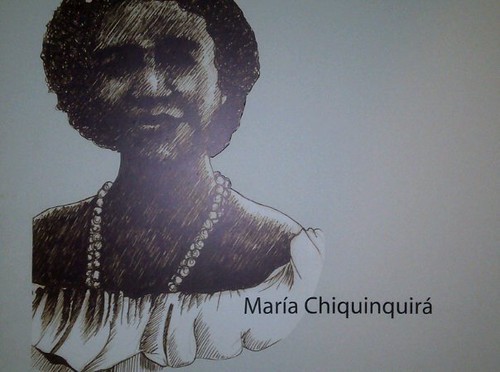
María Chinquiquirá (Ecuador) 
Enslaved in Guayaquil, Ecuador in the 1700’s and was the first slave in Ecuador to win her freedom. She was enslaved by Presbyter Afonso Cepeda de Arizcum Elizondo. Maria Chiquinquira “entered a legal battle” for her and her daughter’s freedom in May 1794 and changed the course of her history and for thousands of black women in Ecuador. 


Adelina Ballumbrosio (Perú)

This is the widow of the late, great godfather of Afro-Peruvian music and dance, Amador Ballumbrosio. It's with her family where I stay when I'm in Perú. She is like a mother to me and refers to me as hijo (son). My money is no good in her house as I also get two square meals per day.


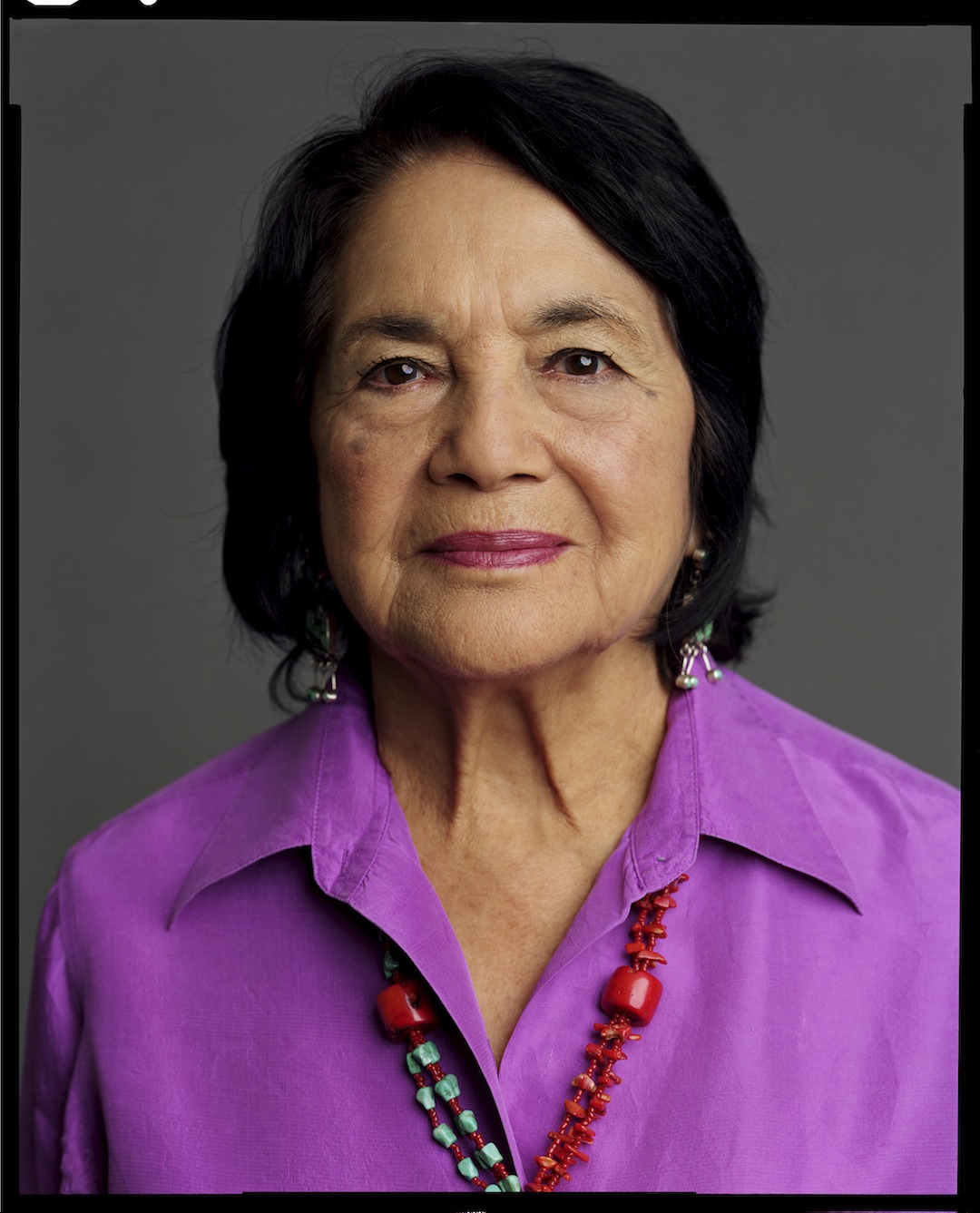
 Dolores Huerta (California)
Co-founded the United Farm Workers Union with César Chávez. She (Mexican ancestry) worked to improve social and economic conditions for farm workers and to fight discrimination. To further her cause, she created the Agricultural Workers Association (AWA) in 1960.


 Sonia Sotomayor (New York)
The first Latina Supreme Court Justice (Puerto Rican ancestry) grew up in a South Bronx housing project, across the Harlem River from where I grew up.


Victoria Santa Cruz (Perú)
Composer, choreographer and daughter of the greatest exponent of Afro-Peruvian culture Nicomedes Santa Cruz.


Toña Negra (México)
Afro-Mexican singer known for her interpretation of boleros, sones, rumbas and songs. She also sang for the Sonora Matancera. The alley where she was born in the old barrio of "La Huaca" in the city of Veracruz, México, carries her name. After her death the municipality of Veracruz has erected a statue of Toña la Negra.


Lucila Campos (Perú)
One of the original members of the world's famous dance troupe, Perú Negro (Black Peru) also became a solo artist of Afro-Peruvian music. She is one of my favorite singers.


Lucresia (Spain)
 This Cuban born Jazz singer now living in Barcelona, Spain has included a mix of traditional Cuban music with, salsa, and boleros. She has recorded nine CDs and has had phenomenal success in Spain and throughout Europe,


 María Elena Moyano (Perú)
Community organizer and activist who was assassinated by the maoist Shining Path (Sendero Luminoso) insurgent movement. She courageously stood up in the face of death to protest violence and abuse against women.


Thursday, March 7, 2013

Strong, Gifted, Black Peruvian Woman


Mónica Carrillo Zegarra

With the month of March being Women's History Month, and with all of my trips  to Perú and explorations into Black Peruvian history and culture, I think of several women whom I admire and respect:

  1. Adelina Ballumbrosio, wife of the late great Amador Ballumbrosio, the godfather of Afro-Peruvian music and dance who always gives me food and a place to stay every time I'm in Perú. 
  2. Victoria Santa Cruz, composer, choreographer and daughter of the greatest exponent of Afro-Peruvian culture Nicomedes Santa Cruz.
  3. Susana Baca, the internationally acclaimed singer of Afro-Peruvian music who is also Perú's Minister of Culture.

However, the woman I want to highlight will certainly go down in history as one of Perú's greatest civil rights leaders as her work, while still in her 30s, has given her international recognition. She is Monica “Oru” Carrillo, who has become a role model and an advocate working to empower Perú's Black community, particularly the young, and is striving for Perú's rich African heritage to be included as part of the Peruvian national identity. I first learned of Monica from watching the Documentary Series, Black in Latin America, which was aired on PBS. 

Oru, as she is also known, is the leader of Lundú. The name, Lundú, originates from a traditional African dance in the Kongo region of Western Africa, which means “successor.”  This organization helps young Afro-Peruvians overcome racism and sexism using the arts, advocacy, education, civic engagement, and economic and educational opportunities. It's outreach to black youth involves life skills, sexual education, black pride workshops, and empowerment against violence, abuse, forced sex, and unwanted pregnancies. I personally have a10-year-old goddaughter in Perú, and often try to  say and do things to contribute to her self esteem. I've been trying to get her involved in Lundú because the girls who are involved have developed a healthy dose of self esteem, which is one of the greatest gifts anyone can receive.
 
Monica's parents are from El Carmen in Chincha, Perú, which is the hub of Afro-Peruvian culture. She grew up living a hard life in Lima, the nation's capital, and being Afro-Peruvian of female persuasion, made life even harder. She was only 11 years old when her and her sister, age 12,  were riding a bus when someone spit on them shouting, Negras conchetumadre (f... you nig...). No one on the bus attempted to defend those children, and no offered to help them get cleaned up. As an adult she spoke of a day when she left her house and counted12 insults that she received in just 20 minutes. The people who make these insults, she says, don't run away because they feel that they are in the right. It's machísimo thing.

Instead of her breaking down and letting her self worth deteriorate, she grew into an activist, feminist, college graduate, having also studied at Oxford. She is a hip-hop artist, writer, poet, singer, musician, journalist, and educator. She mixes poetry, Afro-beat, soul, hip-hop, and Afro Peruvian music to highlight contributions made by black Peruvians to combat racism and sexism. Her music has been featured internationally, particularly on Europe's MTV.

I was so thrilled when Moncia, whom I've been in communication with on social media for two years, called me from 148th Street and St. Nicholas Avenue in Harlem, NY, just three blocks from where I lived when I was in the second and third grades. She was visiting Harlem to do a presentation at the Arturo Alfonso Schomburg Center for Research and Black Culture, which is right across the street from where I went to elementary school. She and I plan to meet in person upon my return to Perú later this year. 

I won't say to you Happy Women's History Month, because in reality, Women's History Month is every month!

Sunday, March 3, 2013

Insecure Men


I've met a lot of insecure men in my life, Black, White, Brown, and other, but this one takes it all! It was at Cosmos Night Club, a hole-in-the-wall Salsa club in East Oakland's Fruitvale District where everyone came to party hearty. Yet I almost had to defend myself on a couple of occasions against a jealous husband because I was doing nothing but sitting on the bar stool focusing on the music and the dancers. 

This African-American man was routinely and intensely checking on his wife who worked in this club as a cocktail waitress. He wanted to know why I was there every Friday and Saturday night. This is little Tijuana, he uttered in contempt! He then looked me and asked, you are not one of those Black Puerto Ricans, are you?  
I explained to him that I grew up in what used to be the salsa music capital of the world, New York City (Now, it's Cali, Colombia), where I fell in love with the music. He simply could not believe that a brotha could be this deep into Latin music, and thus, did not buy into my story. He thought I was fooling around with his wife, or trying to.

This poor, insecure man did not understand that I'm from an entirely different world than he. I fell in love with Latin music, more specifically Salsa and Afro-Cuban, music at a young age primarily due to an African-American radio station, WWRL-New York, that gave airtime to Puerto Rican musicians, like Joe Cuba, Willie Colón, and Ray Barretto, and whose recordings hit #1 on the African-American charts more than once and lasted many weeks at a time.

The Oakland/San Francisco Salsa scene was a place where many couples come in together and dance with everyone in the club who knows how to dance, then the significant others would generally go home together and call it another lovely evening. No one gets into fights or exchange cross words. People are just out to have “fun,” and go home, which was exactly what I was doing at Cosmos Salsa Club. 

This distinguished gentlemen (ha-ha), who eventually got around to telling me to stay away from his wife, was eventually barred from the club because he was hindering his wife from doing her work. I could understand if I had been looking at her or throwing lines at her, but the only time I said anything to her was when I was buying a drink or sending a drink over to a woman whom I really liked. Certainly, I was not thinking about his wife. Poor guy (SMH)!


Wednesday, February 27, 2013

Afro-Latinas Underrepresented in Latino Film

Celebrating Afro-Latina Documentarians for Black History Month

Reposted from SydneysBuzz 


by Vanessa Erazo
February 20, 2013 1:00 PM


Actors of color contend with stereotypes and typecasting on a daily basis. In Hollywood, even in the ‘post-racial era’ an actor’s ethnicity can severely limit the types of roles they are considered for. A Latino actor often has no choice but to audition for roles as a gardener, maid, or janitor and be asked to fake an accent. It’s not much better for blacks.

Despite the success of black actors in mainstream blockbusters and African-Americans having won Oscars in all the major acting categories, it is still rare to have an all-black cast or to see a black actor in a leading role in Hollywood. Most of the roles offered in mainstream movies to a person of color are that of the token minority. Either that or you play a criminal, thug, gangbanger, or sometimes a reformed criminal trying to change your life around.

What if you happen to be Latino and black? Well, things get even more complicated. Early last year mun2, an English-language television network targeting U.S.-born Latinos, took on this very issue in a short web documentary called Black and Latino. Actors, musicians, and journalists like Christina Milian, Tatyana Ali, and Judy Reyes take on the question, “What does it mean to be black and Latino in the U.S.?”
Watch the full doc here.

Black and Latino features interviews with Latino actors Laz Alonso (Avatar, Jumping the Broom), Tatyana Ali (Fresh Prince of Bel Air), Gina Torres (Suits, Hercules: The Legendary Journeys) and Judy Reyes (Scrubs), musicians Christina Milian ("Dip it Low") and Kat DeLuna ("Whine Up"), and journalist Soledad O'Brien (CNN), among many others.

Afro-Latino actors are a conundrum for casting directors who are looking for a more ‘typical’ Latino look (read as light-skinned and Mexican). They end up booking more African-American roles because they don’t fit the stereotype of what Latinos look like. In Black and Latino actress Gina Torres explains, “When I became an actress I quickly realized that the world liked their Latinas to look Italian, not like me. So I wasn't going up for Latina parts. I was going up for African-American parts.”

Beyond the acting world Afro-Latinos contend with a host of issues. They have to fight for acceptance within the Latino community and sometimes even within their own family (lighter skin is often considered more desirable amongst Latinos). And to further complicate things many Latinos are unaware of or even deny their African roots. But outside of the Hollywood system, in the indie film world, there are Latinos who have embraced their African heritage and focused their cameras on Afro-Latinos. LatinoBuzz talked to some Afro-Latina filmmakers who have decided to tell their own stories. Who needs Hollywood anyway? Here are three documentaries that are currently in production.