Friday, October 15, 2010

Passing Through El Salvador

The interesting thing about learning to speak a foreign language is that when you are in a country where only that language is spoken, your level of fluency goes up a few notches by default. I had a seven-hour layover in El Salvador before my next flight to Lima, Perú. I took advantage of those hours by getting a tourist card ($10.00) and leaving the airport to explore the surrounding areas. I hired a taxi at $60.00 for three hours. Our first stop was Café Yessenia in Costa del Sol (Sun Coast) to have lunch.

The beauty of this popular tourist attraction was the fact that it was early and we, the cab driver and I, were the only ones there. I try to avoid crowds when I can, which is one of the reasons I no longer live in New York City. Also, I always pick a slow season of the year to travel. We had a great meal as he was filling me in on the people and culture of the area.


R1-5
El Salvador's Costa del Sol (Sun Coast)

We then proceeded to drive around stopping at beaches and towns. When I travel, I prefer to see the "real" country and its people versus highly populated tourists areas. This is how you learn the true culture of the country, and in my case, develop fluency in the language.
While hanging out with this cab driver, I felt so relaxed speaking Spanish without struggling to translate in my head. I was actually "thinking" in Spanish and not English. Of course, this is not my first time being in a Spanish-speaking country so I understood how this phenomenon works. When I was in Cuba, I even had a couple of dreams in Spanish. Now, that's what I call progress! :-)

R1-14A
My cab driver got it made in the shade
He gets cab fare and a seafood lunch on me

We stopped in a grocery store to get some inexpensive goodies. Perhaps, something I could take on my flight to Lima, Perú. I was amused by the looks I was getting from the store clerks; it's like they never seen a black person before. Speaking of black people, I was wondering if the people in the coastal areas of El Salvador had an African presence at one time like other areas of Latin America because so many people were so dark. Then I realized that it was not that they had African blood in their veins; they spent too much time working in the sun.

To make sure that I did not miss my plane, I instructed the taxi driver to get me back to the Comalapa Airport two hours before my flight to give me time to get through security and get settled. The taxi driver gave me his business card and encouraged me to call when I pass through El Salvador again.

R1- 7A
I'm headed back to Comalapa Airport
to catch my flight to Perú

However, just recently, I was introduced to a web site giving the facts on El Salvador and her black history. As in other Spanish colonial territories enslaved Africans were also brought to El Salvador to work in labor enterprises and eventually became absorbed into the mestizo mix.
Their historical presence has never been officially acknowledged in a society that does not recognize ethnic diversity. Nevertheless the genetic legacy can still be determined by the appearance of distinctive hair texture and darker skin tones in some members of the population as a whole as well as within marginalized indigenous groups.



Saturday, October 9, 2010

Who Was That Ecuadorian Goddess?

BRIEF ENCOUNTER with an AFRO-ECUADORIAN WOMAN

It was 11:00 at night when I had just flown into Quito, Ecuador from Guayaquil after an 18-hour bus ride from Lima, Perú. I checked into a hotel and went out to take a look at the city I was going to be visiting for a few days. The area where I was staying is called La Mariscal, better known as Gringo-Landia (Gringo Land). So named because this is where people from all over the world come to stay and hang out. It is a very congested part of town, and on Friday nights, it's like a parking lot with all the heavy traffic. Fortunately for me, everyone I ran into spoke Spanish. My primary reason for my being in South America in the first place was to be immersed in the Spanish language. The second reason was to get connected with the Afro-Latino experience.


Being hungry, I stopped in the first restaurant I saw. Upon leaving, there was a black Ecuadorian male hanging out. Thinking he might turn me on to Quito's black community, I tried to make conversation. He asked me to get him something to eat, which I did. But when I returned with the food, I saw him down the block throwing a "pitch" at some white tourists. Realizing he was hustling, I left him alone. Meanwhile a black woman appeared, seemingly out of nowhere. I immediately introduced myself. I can tell by the way she spoke that she was local, and figured she might turn me on to some Afro-Ecuadorian action. But I got a little suspicious of her vague conversation coupled with the fact that she was hanging out in Gringolandia (La Mariscal) alone at night, seemingly doing nothing. She seemed overly elated that I even stopped to talk to her.

As I gazed into her eyes, I did not get the impression that there was an attraction other than what's in my wallet. I figured she could be hustling or setting me up for a robbery. Quito has a long-standing reputation for tourists being hustled and/or harmed by locals. This explains why I saw so many heavily armed militia maintaining a visual presence in the area. A local Spanish school encourages their foreign students to never walk around Quito alone. I thought of Gloria, an Afro-Ecuadorian friend whom I met through a FaceBook friend; someone whom I was supposed to meet the next day. It was at that moment I said, adios, and went back to my hotel--- alone!

As of this writing, it's been almost a year since this strange encounter, and I always wonder who she was and what was she really about. Was she working in cahoots with the Afro-Ecuadorian male hustling the white tourists, or was she just an innocent passerby? Who was that Ecuadorian goddess?


Friday, October 8, 2010

Chota, Ecuador: “The Hood”


Valle de Chota in the Andes Mountains. The Home of 2000 Afro-Ecuadorians.

For several years, I wanted to visit Ecuador's black communities of Esmeraldas and Valle de Chota while immersing myself in the Spanish language to improve my level of fluency. My time finally came in December 2009. After spending a week in Perú, I took a bus into Ecuador to hang out for a few days. I didn't have time to visit Esmeraldas because it was six hours away from the nation's capital of Quito, besides, I heard stories about the heat, the malaria, the drugs, and the crime. Perhaps, one day I'll find out for myself because you cannot always trust hearsay.

R1- 8A
Local teens gave me the 411 on their little community.

However, Valle de Chota, or Chota for short, was only two hours from Quito where I was hanging out with Gloria, an Afro-Ecuadorian friend whom I met through a FaceBook friend. Chota is the town that produces a lot of Ecuador's soccer stars like Augustin Delgado (see his soccer plays at the bottom of this post). They even have a soccer training school for young boys who aspire to be professional soccer players. The beauty of this school is that these boys must be willing to be tutored in academic subjects and keep their grades up while training.

R1- 9A
Future world class soccer stars involved in a pick-up game.

My reception by the people of Chota was mixed. The fact that I was a total stranger entering the area cold, and speaking Spanish with a funny accent made some people nervous. One woman went to get the police. The police station, next door to her business, was the size of a three-bedroom apartment manned by two cops. They called me over with a pleasant smile to ask me what I was doing in their town. I tried to keep from laughing as I struggled with my Spanish and explained to them that I'm a fan of Ecuador's soccer team due to the fact that most of the soccer stars are from this little town and made Ecuador proud in the 2006 World Cup Games. The officers seemed pleased and let me finish my personal tour.

R1-12A

People were suspicious of me until we began to chat

R1-10A

As I kept touring the town on foot, I met some friendly families, took their pictures, and chatted. Finally, I stopped in a little store and ordered a can of beer. The lady at the counter seemed quite fearful giving me that “WTF-is-this” look. As I sat and chilled in the shade sipping the beer, some teens came over to make conversation. They asked me about blacks in the USA and I asked them about Chota, especially their soccer stars.

R1-00A
Chota's soccer school, which produces many of Ecuador's star players.

I was also told about some venues where I could party that evening and get a better feel for their culture. Unfortunately, I already made plans to be back in Quito with Gloria who was having a family get-together at her house. After chatting with the teens, I proceeded over to the very soccer field that produced so many of Ecuador's stars and conversed with the young boys practicing their game. They seemed excited about my visit and the fact that I was taking snapshots.

R1-25A
Cops wanted to know what I was doing in their town.

Finally, I made my way back to the police station to get directions to the bus stop for my trip back to Quito. I chatted with the cops, who seemed to have nothing to do in this seemingly crime-free town as I took their pictures and gave each one a Barack Obama post card. Everywhere I went in Latin-America, people seemed to really appreciate the Obama postcards as souvenirs. I left Chota feeling exhilarated to have to have connected with friendly men, women, and children in this famous town----a travel-dream-come-true.

Valley de Chota's own Augustín Delgado gives Poland a thrashing in the 2006 World Cup Games


Tuesday, October 5, 2010

In Recognition of Afro-Ecuadorian Heritage Day

R1-00A
Note: This information was released by the Afro-Ecuadorian Cultural Center, posted on Facebook by an Afro-Ecuadorian friend May Perlaza, of which I translated into English.

Alonso de Illescas (1528-1585)

In 1997, the National Congress of Ecuador declared October 2, the national day of Black Ecuadorians giving formal recognition to Alonso de Illescas (pronounced O-lone-zo Day EE-yes-cahs) a native of Senegal, West Africa. He was brought to Ecuador on a slave ship around the age of 25 and grew up to be a strategist skilled in guerrilla warfare. Behind a fortress built by by an alliance of escaped African slaves and Indigenous people, Illescas and his men fought and turned back many expeditions of Spanish forces.


Afro-Ecuadorians remember Alonso de Illescas, the national hero.

Alonso was also a diplomat, who on one hand, fought against the Spaniards, and on the other hand, knew how to make friends. He assisted other Blacks who were on shipwrecked slaves ships and nursed them back to health, then recruited them into his revolutionary force against Spanish troops.


Esmeraldas is on the Northwestern coast of Ecuador, a six-hour drive from Quito, the nations capital.

He was also a true governor of what is now Ecuador's province of Esmeraldas; never subject to bribes, and even rejected the title of governor when many politicians gave up their properties to take on the title of governor of Esmeraldas. Olonso IIlescas trained new leaders starting with his son Alonso Sebastian de Illescas and his grandson Jerónimo (Geronimo) so that they be loving of justice and liberty and keep their territory free of Spanish rule. Although, Esmeraldas was the first province invaded by the Spanish, it was the alliance between Blacks and Indigenous people that kept the Spanish from taking full control.


Thursday, September 30, 2010

The Joy of Giving


I earn a modest income, that is, on American standards. Yet, I enjoy giving to worthy causes, such as my church, my community, and to random individuals who really need a helping hand.

This morning, I was eating breakfast at a local café, and a woman came over to me spewing the same tired-ass words I hear often from creative panhandlers: pardon me sir, I mean no disrespect; I'm on my way to the welfare office and I just need $2.00 so I can get my kids something to eat

R1- 7A
My joy in giving includes Daniela and her neighbor and playmate Mariana at a play-center in Grocio Prado, Perú.

OK! Since we were already in a restaurant, I suggested that she order something for her, and especially the children who were with her, and I will pay the bill. I was expecting a bill for $10 or $15, which I didn't mind giving to what I thought was a worthy cause. When I actually saw the bill, I was astonished that it was only $4.00; she bought a little sandwich. This woman was not hungry, nor did she want to feed her kids. She was just another creative panhandler.

R1-25A
Javier, of Chincha, Perú works long hours doing odd jobs to eke out a living. He would be eternally grateful to programs here in the U.S., which help the poor help themselves instead of depending on handouts.

My mind immediately went back to my goddaughter Daniela, her family, and her neighbors in Perú whom I send money via Western Union on a monthly basis. Every time I call Western Union and am told that the money I sent has been cashed, I get that familiar joyful feeling. I feel joyful because I'm sending money to people who don't have the resources that this woman I met in the cafe has; nor do they have the opportunities and resources to advance their economic standards like this woman I met in the café does. In most countries in the world, there is no welfare, general assistance, or unemployment. If you don't work, you don't eat (period)!

R1- 4A
My joy of giving includes, clockwise, Daniela, Alma, Mariana, Yomira, Zenaida, Ruth, Javier, of El Carmen and Chincha, Perú.

Giving what I can afford to give to Daniela, her family, and her neighbors is not only a joy, but a worthy cause. I'm thankful to be in a position to give what I can afford to help those who really need the help.

Related Posts on Black Perú

Monday, September 27, 2010

The Latin Soul Music Era

AFRO-LATINO MUSIC
(1960s to early 1970s)


This old classic attracted a large African-American audience and ran #1 on the chart of New York's African-American radio station WWRL for many weeks.

I was just in my bedroom doing a little homework when this song Bang Bang from the album Wanted Dead or Alive played on the local radio station WWRL. It certainly go my attention as it was one of the main pieces that converted me to Latin music.

Another big one by Joe Cuba was I'll never go back to Georgia. Joe wrote that song because he and members of his band went into Georgia during the time of racial segregation, because they were Puerto Rican, got a taste of racial segregation. Thus, in their song, they vowed they will never go back to Georgia.


The highly respected Latin pianist, composer, arranger, bandleader, and producer Hector Rivera of New York City (Manhattan) was featured on New York's top soul music station of the time WWRL.


The chief rocker Frankie Crocker (right) was a popular radio personality when Latin soul music was making the top 10 hits on African-American radio station WWRL in New York City.


Afro-Filipino Joe Bataán, born and raised in New York's Spanish Harlem, combined African-American doo-wop with Latin Rhythms producing my favorite songs, like Ordinary Guy, Aguanta La Lengua (watch your mouth), Gypsy Woman, and Unwed Mother.


Above is Ralphi Pagan, Bronx born Latin soul singer of Puerto Rican parentage mixed a lot of his albums with soul music and salsa singing in English and Spanish. In this song, Just One of Your Kisses, sung in English, he beautifully ends in Spanish, mi linda solo quiero besito (my pretty, I only want a little kiss).


One of the biggest popular hits in the African-American community was El Watusi by the late, great maestro Ray Barretto.

Ray Baretto's first and undying love was jazz. During World War II, while stationed in Germany, Ray used to join in on jam sessions with African-American soldiers. However, it was salsa and Latin soul that made him wealthy until he had enough. A few years before he passed away, he went back to his first love----jazz, and contemptously referred to salsa as the “s” word.

Thursday, September 23, 2010

A Question about Susana Baca

Afro-Peruvian Music

On September 22, 2010, I went to see Susana Baca perform live for the third time in my life. The first time was at the La Peña Cultural Center in Berkeley, CA back in the late 90s. I was on a natural high for six months. It was like listening to Billie Holiday or Bessie Smith in Spanish with a combination of African, Indigenous, and Spanish rhythms and melodies for accompaniment.
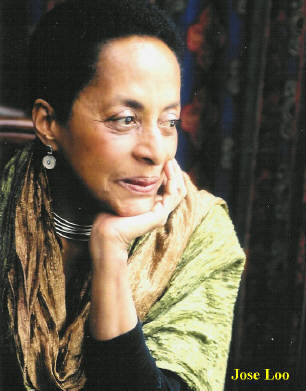
The second time was very recent; the spring of 2010, she performed at Yoshi's Jazz Club in Oakland, CA. This time, her rhythm sections along with the guitar and choral accompaniment were much more upbeat as she displayed her smooth dancing moves on stage. Although, I would have liked to have seen and heard more traditional Afro-Peruvian instruments like the quijada del burro (jawbone of a donkey) and the cajón (a wooden box slaves used as a substitute for the drum, which was forbidden by slave holders), I felt her music and that of her band deeply as she combined Afro-Peruvian, Afro-Cuban, Jazz, and modern music in her pieces.


Baca sings about Afro-Peruvians but there are no Afro-Peruvians in her band.


Finally, I went to see Susana Baca at the Palace of Fine Arts theater in San Francisco. Susana is always moving her body well to the heart felt music. I thought of her as one of the hardest working women in show business. From watching and listening to the talented musicians who were accompanying her, I noticed something disturbing, and I stand to be corrected on this if anyone reading this blog understand the music business.


Does Susana discriminate against Afro-Peruvian musicians or is such discrimination beyond her control?

This is the third time I've seen Susana Baca with a five or six-piece band. It was only when I saw her back in the late 90s did she have an Afro-Peruvian musician in her band. If she is going to be singing about Africans, the diaspora, and black people, she could at least include two or three Afro-Peruvians in her band, if not an all Afro-Peruvian band. There is too much job discrimination against blacks as it is. Why is she perpetuating it? Can she not find talented Afro-Peruvians for hire or is this beyond her control?

Related Posts on Black Perú