This blog is about my exposure to the Spanish language and various Latin-American cultures through travel and research; particularly Black/Afro-Latino.
Tuesday, April 2, 2013
Meeting a Black Carib from Honduras
Travel networking is one of the most wonderful experiences I've ever had. It gives me that homey feeling when I visit a foreign country for the first time. On my trip to Cuba, I was introduced to a wonderful family by a Cuban immigrant who lived down the street from me. On my trips to Ecuador and Perú, I've made an abundance of lifetime friends through Facebook who gave me tours, directions, advice, and home-stays. And today, I return that favor by helping others who want to travel to where I've been.
However, just last night, I was in a restaurant and made Spanish-speaking conversation with one of the servers, a Black woman from Honduras. I asked if she was Garífuna, a Black Carib, a descendant of African people who escaped British slavery and merged themselves with the Indigenous population known as the Caribs. I explained to her that as a hobby, I visit and learn about the African heritage in Spanish-speaking countries, and that her home village of Travesía, Honduras and another Garífuna village of Livingston, Guatemala were on my list of places to visit.
Later, as I was finishing my meal, this restaurant worker came over my table speaking perfect English. She gave me her number and wants to introduce me to the people in her town and give me a place to stay when I arrive in Honduras. She even went to her car and gave me a free CD of Garífuna (Black Carib) music of which she was selling for $10. Yes, travel networking is a wonderful experience!
Sunday, March 31, 2013
Judge Mathis Exhorts Latino Pride
I never understood it, and hopefully, someone reading this can enlightened me. Every American, with the exception of the Native American, has original roots in other parts of the world. And as I mature, I have developed a lot of respect for many cultures, especially the folk music, be it European, Latin-American, African or Asian. What I do not understand is why so many Americans want to downplay their roots.
I was watching the Judge Mathis show the other day, and a Latino defendant, obviously born and raised in the United States, took it upon himself to explain his inability to speak Spanish, and even attempted to verbally camouflage his Latino heritage. Judge Mathis asked him if he is Latino, and the defendant gave a fuzzy answer. Judge Mathis began to comment on how so many Latinos he's met (not all, of course, certainly not all) try to keep their Latino heritage on the down low. Mathis felt that if his family speaks Spanish he should want to learn to speak Spanish himself, and if his heritage is Latino, stop trying to cover it up. STAND UP and BE PROUD, he proclaimed! I shouted, THANK YOU, JUDGE MATHIS, because I often noticed the same thing among quite a few Latinos as pointed in my blog post, Is it Shameful to be Latino?.
I once had a supervisor from Chile who was so proud that he did not allow people to mispronounce his last name. He insisted on the Spanish pronunciation of, Cabello (Cah-bay-yo), and not the Anglicized pronunciation that we Americans tend to practice. One of my favorite TV newscasters was Rigo Chacón who also proudly emphasized the Spanish pronunciation of his name on the air. As a proud African-American, knowledgeable of my history and the positive contributions that Africans and African-Americans contributed, I have similar admiration for Latino cultures, especially after having grown up close to New York's Spanish Harlem and having traveled to nine Spanish-speaking countries. My being a music lover has brought me even closer to Latin-American cultures and garnering more of my respect.
A co-worker of mine at my weekend job is a US Army veteran from New York's lower East side, an area heavily populated by Puerto Ricans. However, he is adamant about keeping his heritage on the down low and even interrupted a Spanish-speaking conversation I was having with a worker from Nicaragua in an attempt to switch our conversation to English. He feels this is America and we should be speaking English. I don't think he realizes that Spanish was spoken right here in the United States of America long before the Declaration of Independence was even signed and is still with us today with a stronger presence as ever before..
Thursday, March 28, 2013
Hugo Chavez and the Black Community
“The U.S. media's portrayal of Venezuela "has nothing to do
with reality.”
-- Actor Danny Glover
While planning my trip to Venezuela, I had planned on making it plain to immigration and others I meet upon my arrival my admiration for Hugo Chávez. I was then warned, not only by the travel guides I was reading but in my communication with Venezuelans in a couple of online forums. They stated that comments for or against Chávez, depending on who you are taking to, can be very touchy. Of course, the same could be applied here in the US when it comes to politics, which is one of the reasons I generally do not discuss politics, especially with strangers. However, the predominately Black Region of Barlovento in Venezuela, where I visited, is a known Chavista (Chávez supporters) stronghold.
Hugo Chávez however, the lateVenezuelan president, has boldly sought to forge ties with poor communities of color in the United States. In the wake of Hurricane Katrina, Chávez provided relief assistance to the poverty stricken and largely African American victims of that disaster. The head of Citgo, the U.S. subsidiary of Venezuela's oil company, set up disaster relief centers in Louisiana and Texas in the wake of the hurricane and provided humanitarian relief to thousands of victims in terms of medical care, food and water. Chávez expanded his program to the predominately African-American and Latino South Bronx. While in New York, Chávez toured the poorest congressional district in the nation's richest city, the South Bronx, and was treated like a veritable rock star.
Hugo Chávez himself is of mixed racial roots. In an interview, Chávez remarked that as a young man applying to the military academy, he was wearing an Afro and has not sought to distance himself from his ethnic heritage. His Indegenous roots are from my father's side who is also of mixed African heritage. Like many other Venezuelans of color, Chávez grew up in poverty as a farm kid from the plains." Chávez entered the military, which historically has been one of the few paths towards social advancement for men of color. While on duty, he toured the country and became aware of economic exploitation and racial discrimination.
As Afro Venezuelan groups celebrated the 150th anniversary of the end of slavery in Caracas, Chávez made an appearance and some participants expressed optimism that racial progress would be made under the Chávez government. The TransAfrica Forum sent a delegation of influential African-American artists, actors, activists, and scholars to Caracas to meet with government officials. The group included screen actor Danny Glover who expressed his excitement at the social changes taking place in Venezuela. Glover remarked that the U.S. media's portrayal of Venezuela "has nothing to do with reality." Glover and others presided over the inauguration of a new "Martin Luther King., Jr." school in the coastal town of Naiguata. The area is home to large numbers of Venezuela's Black community. The school inauguration was the first official Venezuelan recognition of the importance of the slain civil rights leader.
Meanwhile, Chávez has cultivated ties with civil rights leader Jesse Jackson. Speaking later at the National Assembly, Jackson discussed the role of Martin Luther King Jr. during the civil rights struggle. Jackson praised Venezuela for making slavery illegal prior to the United States. "You in Venezuela ended the system of slavery in 1854," he remarked (the US ended slavery in 1865). At the end of his speech Jackson was cheered with thunderous applause from Venezuelan lawmakers.
Sunday, March 24, 2013
They Are Trying to Be So Slick!
My goddaughter Daniela and me in El Carmen, Perú
A Peruvian friend of mine living here in Oakland warned that me one day that people in Perú will try to use my goddaughter Daniela, who lives in Peru, to get more money out of me because they know I have a soft spot for her. Being a seasoned traveler, I was not surprised and I only knew it would be matter of time before some jerk tries it. Sure enough, it happened. I recently wired money to Daniela's uncle to buy her another bicycle as her first one was broken and sold to someone who can fix it. I paid him some money in exchange for doing me that favor. Daniela was such a happy camper I was happy for her. Especially when the family next door, who gives me a room to stay when I'm in Perú, sent me a picture of her on her new bicycle.
I called a few days later to see how she liked it, and that's when Daniela told me that she needed $150 worth of school supplies (in February). I asked her describe exactly what she needed, and it was the usual, a notebook, pencils, erasers, and things that don't cost any more than $10. I knew that this request was not Daniela's idea. In fact, I can hear the concern in her voice that she was not comfortable lying to me. Someone is trying to be slick. I've wired money to Daniela's family frequently in the past without their ever asking for a dime. It's saddening that a 10-year-old is being taught by so-called role models to be so dishonest. Very sad! I can only pray that this does not corrupt her as she reaches maturity.
Tuesday, March 19, 2013
Why I'm Not With a Latina
I often get questions from people, including my younger brother, as to why I'm not hooked up with a señorita since I'm so hooked on the Spanish language and Latino culture, specifically Afro-Latino culture with an emphasis on the music. For me that is a complex question to answer. Do I like Latinas? Yes, but I also like African-Americans, Africans, and Caribbean women. Especially the ones who are down to earth, good conversationalist, and have broad interests and value good, solid communication in a relationship be it friendship or intimate.
D Fuentes of Havana, Cuba who is the only woman during my Latin American
travels whom I entertained the thought of bringing home to mom and pop.
So far, I've traveled to nine Spanish-speaking countries going on 11, and as of this writing, I've met only one Latina (a woman in Havana, Cuba) I would have considered hooking up with. She's well built, dark, physically attractive, but most importantly, she is a good communicator, and doesn't play the games that the average American (men and women) play in relationships. The problem was when I got back to the US, the difficulty in keeping touch due to US/Cuban relations was overwhelming, and I just let it go. And so did she.
But the most profound answer I could give for not being with a Latina is that I'm not really looking. I'm content traveling, continuing to improve my Spanish, enjoying the music, the food, and the people I meet. Another reason is religion. I am not a believer of any organized religion, and that includes Catholicism. The woman I do hook up with be she Latina or not will be an independent thinker, and not prone to make life decisions solely based on the wishes of her family.
Friday, March 15, 2013
She Died in Her Struggle Against Violence and Abuse Against Women
María Elena Moyano
Perú
November 29, 1958 – February 15, 1992
I commemoration of women's history month, María Elena certainly deserves to go down in history as a martyr who made her mark in this world. She was a community organizer and activist of Afro-Peruvian descent. Moyano was born in the Barranco district of Lima. Her activism began in her teens, as a member of the Movimiento de Jóvenes Pobladores (Young Population Movement), in a vast shantytown on the outskirts of the capital, largely populated by migrants from the interior of the country. At age 24, she was elected president of the Federación Popular de Mujeres de Villa El Salvador (Popular Federation of Women of El Salvador Village).
At this time, The terrorist group, Shining Path, was trying to consolidate its hold on the poorer neighborhoods of Lima. They were suspicious of all social organizations in Peru, such as the one led by María Moyano.The fear, and terror pushed impoverished women to speak up, and get involved in organized groups. The war between the Shining Path and the military affected women for most of them were raped excessively by the military group. Maria Elena went on to confront the Shining Path by calling them terrorist, and the Peruvian National Police accusing them of violence, and murder.
Maria Elena Moyano soon began to contemplate her death, as she had good reason since many women activists in Peru were murdered. Shining Path guerrillas assassinated Maria Elena Moyano on February 15, 1992 in front of her son: Gustavo and her husband David Pineki at a fund-raising meal for a group of women.
The assassination of Moyano was one of the last major atrocities carried out by Shining Path before their downfall. Moyano has been honored through a film after her death: Coraje (Courage). The film was written and directed by Alberto Durant. A country filled with violence, inequality and danger; Maria Elena Moyano proved to be a signal of hope when approximately 3,000,000 people accompanied her coffin. a statue honoring Moyano was erected, and her autobiography was published.
Monday, March 11, 2013
Celebrating Latinas: Women's History Month
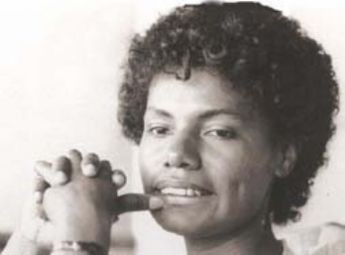
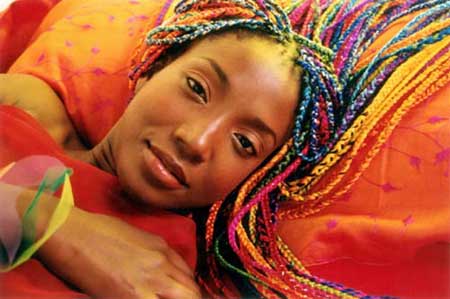
Multi-talented singer, educator, hip-hop artists, leader of the Peruvian civil rights organization, Lundú, serving as advocate for young Black youth.
Piedad Cordoba (Colombia)
Colombia's first Black senator has been a strong legislative advocate against discrimination based on race, gender, and sexual orientation. Córdoba evolved into one of the most notorious figures of the Latin American feminist movement in Colombia.
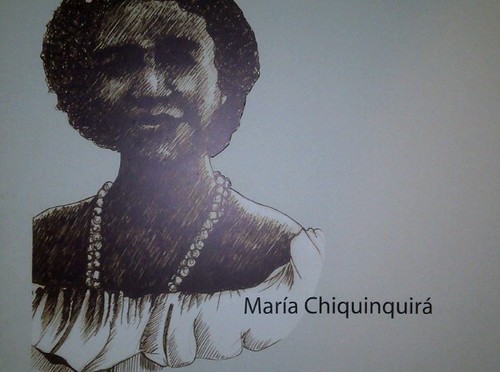
Enslaved in Guayaquil, Ecuador in the 1700’s and was the first slave
in Ecuador to win her freedom. She was enslaved by Presbyter Afonso
Cepeda de Arizcum Elizondo. Maria Chiquinquira “entered a legal
battle” for her and her daughter’s freedom in May 1794 and changed the
course of her history and for thousands of black women in Ecuador.

Adelina Ballumbrosio (Perú)
This is the widow of the late, great godfather of Afro-Peruvian music and dance, Amador Ballumbrosio. It's with her family where I stay when I'm in Perú. She is like a mother to me and refers to me as hijo (son). My money is no good in her house as I also get two square meals per day.
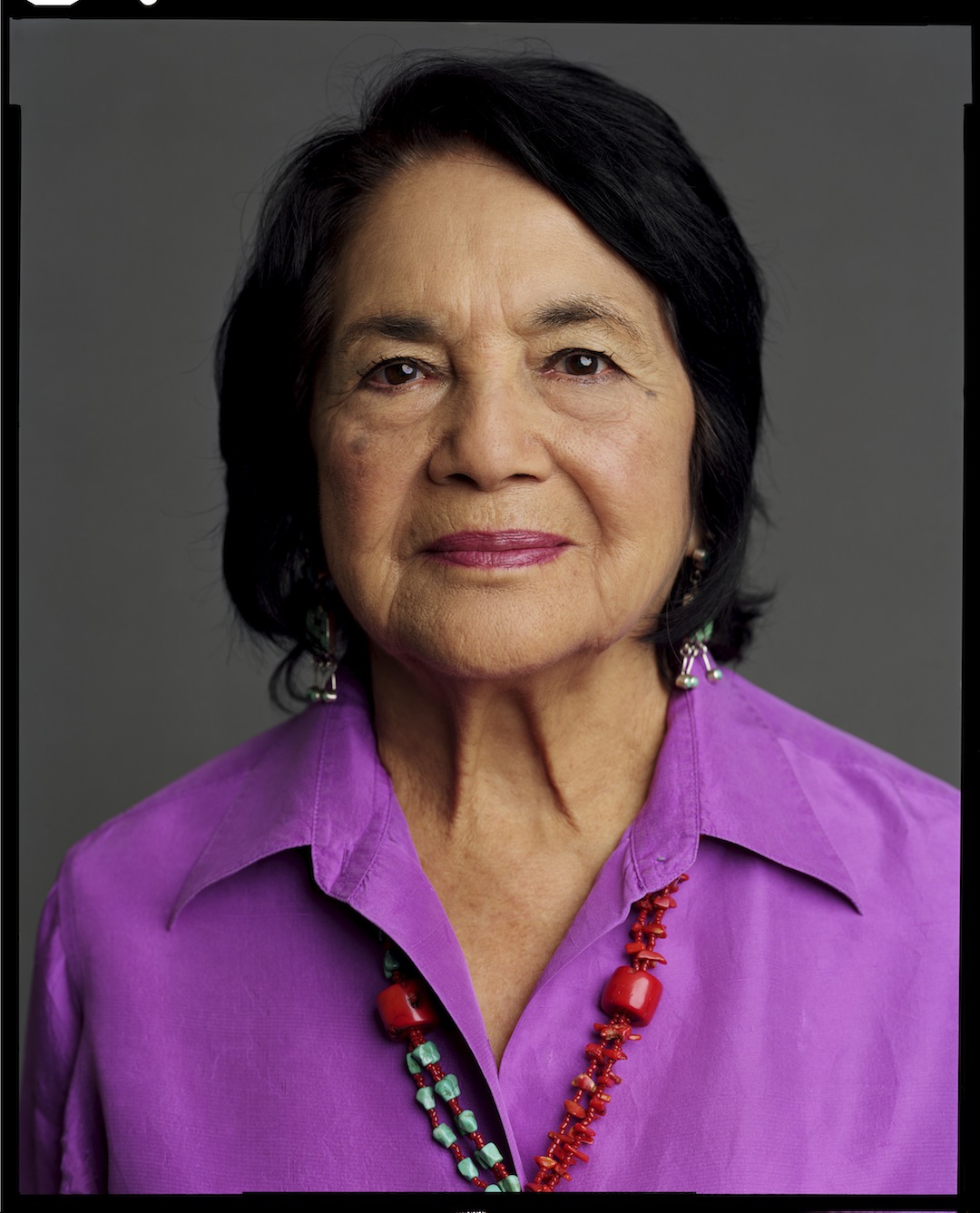
Dolores Huerta (California)
Co-founded the United Farm Workers Union with César Chávez. She (Mexican ancestry) worked to improve social and economic conditions for farm workers and to
fight discrimination. To further her cause, she created the
Agricultural Workers Association (AWA) in 1960.
Sonia Sotomayor (New York)
The first Latina Supreme Court Justice (Puerto Rican ancestry) grew up in a South Bronx housing project, across the Harlem River from where I grew up.
Victoria Santa Cruz (Perú)
Composer, choreographer and daughter of the greatest exponent of Afro-Peruvian culture Nicomedes Santa Cruz.
Toña Negra (México)
Afro-Mexican singer known for her interpretation of boleros, sones, rumbas and songs. She also sang for the Sonora Matancera. The alley where she was born in the old barrio of "La Huaca" in the city of Veracruz, México,
carries her name. After her death the municipality of Veracruz has
erected a statue of Toña la Negra.
Lucila Campos (Perú)
One of the original members of the world's famous dance troupe, Perú Negro (Black Peru) also became a solo artist of Afro-Peruvian music. She is one of my favorite singers.
Lucresia (Spain)
This Cuban born Jazz singer now living in Barcelona, Spain has included a mix of traditional Cuban music
with, salsa, and boleros. She has recorded nine CDs and has had phenomenal success in
Spain and throughout Europe,
María Elena Moyano (Perú)
Community organizer and activist who was assassinated by the maoist Shining Path (Sendero Luminoso) insurgent
movement. She courageously stood up in the face of death to protest violence and abuse against women.
Subscribe to:
Posts (Atom)

+of+4886603289_8a3a00cd86.jpg)