Saturday, January 22, 2011

A Taste of Colombia

Although I only spent five days in Colombia, Cartagena to be exact, I got a good first impression. First, it seemed that the Colombians are trying very hard to get over its bad rap. Secondly, because I'm an American, I was pleasantly surprised that I didn't have to pay a departure tax before my airline departure like I've had to do in other foreign airports.

I've even seen ads on television encouraging Americans to take a vacation in Colombia. Long before I decided to take the trip, I read scores of accounts on line about how friendly the people were and how much safer it is today than back in the day. Even a personal friend from Perú who passed through Colombia told me how warm the people were. I was discussing a possible trip to Colombia with my supervisor at work. When I asked about kidnappings, he waved my question off as if to say hell no; those days are over.

I felt very much at home when I first arrived at the Raphael Nuñez Airport in Cartagena, Colombia. There was a black presence everywhere. I was so pleased, I gave a black skycap a big tip for helping me with my luggage. It has been my lifetime goals to visit every Latin-American country to explore its African heritage while practicing my Spanish. I didn't think to ask him about getting to San Basilio de Palenque, a black landmark town approximately 40 minutes south of Cartagena where African slaves defeated Spanish forces to gain their freedom. San Basilio de Palenque is becoming a tourist attraction. I also didn't think to hire him as my private guide while he was off duty. It is much more economical to hire a struggling, hardworking citizen who can use some extra cash and knows the area than to hire a professional. I would have loved to meet people in the community, like i did in Ecuador and Perú, but five days were just not enough for such a fast and busy town like Cartagena.

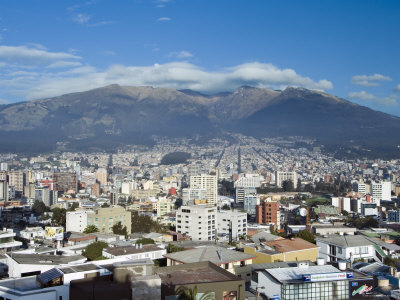
Cartagena neighborhood


Central Cartagena I shopped, exchanged currency, and warded off hustlers.

Cartagena is a very fast town of 892,545 people. I found it to be all hustle and bustle. I really felt the pace of the city when I went into Central Cartagena to shop and exchange my money into Colombian pesos. There I felt I needed a big stick to ward off hustlers trying to get me to by their merchandise. One black guy kept pestering me to buy one of his necklaces. He seemed to have felt because we were “brothas” I should patronize him. Indeed I felt that way too, but I had no personal interest in jewelry. I had no wife or girlfriend to think about, thus there was no logical reason to buy. However, further down the street, I saw a black woman trying to sell food on a small makeshift booth by the curb. Although, she seemed to not get any business at all, I stopped to check out what she was selling--didn't like any of it, but gave her a 1000 peso tip and moved on.


Cartagena's Getsamani District where I stayed.


Because of the rapid pace of the city, five days were not enough time for me to make any meaningful friendships. Everyone was simply trying to work, hustle and survive. People seemed to have much on their minds. One lady who worked in a restaurant near my hotel seemed interested in me but I don't know if that was a real attraction or if she was looking for a gringo to take her back to “America (see blog, “Marriage, I Don't Think So”). I know, this is my “stuff, ” but I didn't have time to worry about it. I was headed for Ecuador soon.
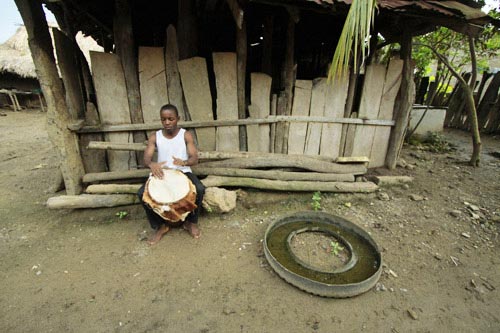

San Basilio de Palenque, a black landmark town approximately 40 minutes south of Cartagena where African slaves defeated Spanish forces to gain their freedom.
That Friday night, before my trip to San Basilio de Palenque, I went out on the town in the Getsamani District, where I was staying, and decided to stop in a black bar, buy a local brand of beer, and hang out for a while. I was surprised not to hear salsa or cumbia music, both of which has its roots in Spanish and West African music (more specifically Yoruba), but Vallenato music. Later, I learned that vallenato music originated from Spanish minstrals (juglares) and the West African tradition of storytellers (griots).

While in Colombia I was functioning at 80% of my strength after having gotten very sick in Perú (see my blog “Travel Insurance Saved My Life”). I didn't do as much running around as I expected. My trip to the town south of Cartagena, San Basilio de Palenque. wore me out physically from walking all over town and having to ride on the back of a motorbike to and from the town, that I ended up going to bed early that evening before catching my flight to Ecuador.


Saturday, January 15, 2011

Layover in Panama City


The cool thing about long layovers during international travel is that you get a chance to see another country, free of charge. This seems to be a pattern with me when purchasing cheap flights on the web. With long layovers, I had a chance to see Costa Del Sol, El Salvador (7 hours), Guayquil, Ecuador (9 hours), Mexico City (11 hours), and Panama City (6 hours).

Most recently, I passed through Panama City's Tocumen International Airport on the way to Cartagena, Colombia. After clearing immigration and customs, which took about an hour, I still had another four hours left to go into town and hang out, and still make it back in time to catch my next flight. Airport security would not have let me leave had I told them that I wanted to visit the Panama Canal or some other relatively faraway destination because I would not get back in time. I only wanted to go to a nearby mall to get a quick feel of Panamá, sample some local food, browse the shops, and look at the women.


As in other Latin-American countries, this cabbie wanted to charge the gringo tax.


Panamá has its share of beautiful women.

When I left the airport, I wanted to catch a bus to the mall, but was confused as to the location of the bus stop. An empty cab just happened to pass by and we agreed on a five-dollar fare. At the mall, I got to see a cross section of Panamanians doing their Xmas shopping. The people are much more racially diverse than I expected because an overwhelming majority of the Panamanians I've met in New York, where I grew up, and California, where I live, are black.

I was disappointed, however, that Panamá uses American dollars because. As a hobby, I collect dollars as souvenirs from every country I visit and put it on my office wall for display. The only unique currency I could bring back from Panamá was coins; coins which are strictly Panamanian. At the mall, I was humored to see Taco Bell, Wendys, and other fast food restaurants from the states.

Tocumen Mall entrance
Entrance to the mall Centro Comerical de Tocumen

After my little trip to the Panamanian community, I decided to head back to the Tocumen Airport to make sure I didn't miss my next flight. I flagged a taxi, and immediately we began to haggle over the fair. I paid five dollars to get the mall, how come I have to pay $10 to get back. As in every country, I have to beware of the gringo tax.

Tuesday, January 11, 2011

“Hot” Summer in Havana


One Saturday morning, on a quiet street in the El Vedado section of Havana, Cuba, my classmates and I, who were attending a Spanish language immersion program at the University of Havana, were mounting our bicycles getting ready for a guided tour of the city. I noticed an attractive Afro-Cuban woman observing us from across the street and went over to introduce myself. Her eyes lit up like a neon sign as I heard virtual cash registers ringing in her head. Just because I'm an American she seemed to have felt that I’m a black relative of Bill Gates or Donald Trump and sought to get what she could.

In turn, I saw Luisa as opportunity to practice my Spanish and get immersed in Afro-Cuban culture. I met her two children Miguel (7) and Ingrid (5); her mother Isabel, and other members of her family who lived in a rough-looking housing project. However, after visiting Luisa numerous times, I realized that although the people were poor, there was hardly any crime. The Cuban government is very hard on crime. What might get you a slap on the wrist in the USA can easily get you 10 to 20 years in Cuba.

The first time Luisa and I were alone, her first request was that I take her back to the United States. The last thing I wanted from Cuba was a wife; especially one who couldn’t see past my wallet. She started telling her family, that I was going to take her. My response was that I wanted to stay here in Cuba with her and support the revolution. That shut her up! But later, as we went shopping, she lured me over to the appliance section trying to get me to buy her a refrigerator; way over my vacation budget.


As I got to know Luisa better, I realized that she was not being devious. She was desperately trying to make ends meet for her and her children. And with this unrelenting trade embargo against Cuba, it was evident that it isn’t hurting Castro nearly as much as it is hurting innocent people like Luisa and her children. For this reason, I felt good about helping Luisa and her family in ways I could afford. The day before my departure, I gave the children Miguel and Ingrid gifts that they thoroughly appreciated. You can just see the exhilaration in their eyes. I also handed Luisa's mother some money. After returning home to Oakland, Luisa and I stayed in touch by phone and by mail. I just feel bad that it is so difficult to send money or gifts without the Cuban government's greedy interference.

My trip to Cuba was a vacation from heaven. There was something about the energy of the Cuban people that made me feel like a long, lost member of the community who finally came home. Words cannot express how uplifted I felt to just walk about town hearing salsa, merengue, and Afro-Cuban music blaring from homes and businesses. One day, there was a group of us walking through Central Havana as we heard this loud salsa song coming from a restaurant. I couldn't take it anymore. I reached out and grabbed a woman, and we danced right there in public. Of the 12 countries that I've visited in my life, Cuba is the only country from which I returned feeling homesick.


In fact, many Latin-American people suspect that I myself might be Cuban. Even Cubans thought I was Cuban until I opened my mouth. I couldn't even fake a Cuban accent. At a popular Havana night spot, I was so flattered when a lovely woman asked my date if she could cut in to dance with me. I took her into my arms and busted one of my favorite salsa moves. She was NOT impressed as she blurted out in astonishment, ¡tu bailas como extranjero /you dance like a foreigner!). I guess she thought I was Cuban too.


The Cubans have a name for people like me. It's called “Yuma,” a slang word for an American, and rightfully so. I was born in St. Louis, MO and lived in closely knit African-American community called “The Ville” before moving to New York City where I was influenced by my Puerto Rican neighbors to learn Spanish and love salsa music. Perhaps, I may have been Cuban in another life? I tend to think that just might be the case.

Friday, January 7, 2011

Travel Insurance Saved My Life

Thank You, Access America!


If you love to travel, don't test your luck; you never know when it's going to run out----Get Travel Insurance!

I was only a week into my 30-day Latin-American vacation through Mexico, Panamá, Colombia, Ecuador, and Perú. Most of my time was spent in Perú where I already had close ties with people developed from prior trips. However, after one-week, I went into the Sandwich.Com Restaurant in the ritzy Miraflores section of Lima, Perú. I thought because of the location and the international clientele it served, the restaurant staff knew better than to mix local tap-water in its beverages.

I started feeling sick after I got half-way through my drink. The next two days, I suffered from diarrhea. At first, I tried to tough it out thinking after the diarrhea runs its course, I'd be OK. All I needed to do was get some rest. Wrong! Continuing to rough it out believing I will recover naturally, I took a two and one-half our bus ride to Chincha, Perú where I was staying and flopped down on my bed, later waking up in even worse condition. By this time my kidneys were aching and I was feeling even more nauseous. The hotel manager heard my moans and groans and called an ambulance.


Go figure, I was so tempted to use the insurance money for something else and am glad I didn't.


Fortunately, I had a lot of close ties in this town who arranged for me to be transported by ambulance back to Lima to be treated at a very good hospital, La Clínica Ricardo Palma, which in my opinion, is a hospital that will rival any hospital in the U.S. The medical staff was absolutely superb, although sometimes I think they gave me a little too much attention. It was also a good thing I had Access America Travel Insurance because I learned that my intestines were infected and I was to be hospitalized for five or six days. It could have been much longer had I not insisted on an early discharge. I was determined to finish out the rest of my vacation, and I did; contrary to doctor's orders. I spent the rest of my vacation at 75% of my full strength, spending a lot of time between resting between having fun.

Last Day in Hospital
My last day in Lima's Ricardo Palma Hospital.

Were it not for travel insurance, I would have had to pay over $4,000 out of pocket or I could have died from lack of proper treatment. Access America Travel Insurance was able to work out a billing arrangement where all expenses were paid. Access America gave me even further comfort by assigning me a case manager who followed up more than once with phone calls to my hospital room to check on my progress.

Go figure, I was so tempted to use the insurance money for something else and am glad I didn't. If you love to travel, don't test your luck; you never know when it's going to run out----Get Travel Insurance!

Thursday, January 6, 2011

Afrocentric Encounters in Quito

Black Ecuadorians


Ecuador, December 2010

Throughout my travels, I'm always seeking to make lifetime friends, particularly in Latin-American countries because I aspire to gain fluency in the Spanish language. While developing fluency, I also have an interest in learning as much as I can about the black experience in those countries.

It was through Facebook where I met Freddy and Martha. Not knowing they were both dating each other, they and I have been corresponding for almost a year before my trip to Quito, Ecuador where I met them on the campus of Universidad Andina de Simón Bolívar where Freddy works as a consultant of Afro-Ecuadorian Studies. He is originally from Ecuador's predominately black province of Esmeraldas, where escaped slaves originally settled and fought the Spanish for their independence. Martha, who works nearby, came over to the office and the three of us had lunch in the university cafeteria.


Martha is an Afro-Colombian immigrant from Bogota. She moved to Ecuador to seek better opportunities which she says are not available to blacks in Colombia. This surprised me because I was just in Colombia (Cartagena) before traveling to Ecuador where I saw a large black presence working at the airport, in shops, driving taxi cabs, driving buses; much more than I saw in Ecuador. Martha explained to me that Colombia has a much larger black population than Ecuador, so obviously I will see a greater black presence; especially on the Caribbean coast of Cartagena.


In many countries that I've visited where blacks are a small minority, there is generally an acknowledgment of one other, even as strangers. This acknowledgment could be it a subtle nod or fleeting eye-contact. When I was in Hong Kong, I ran into two merchant seaman from Uganda. Not only did we acknowledge each other, we ended up hanging out. The same in Tokyo where I met a group of Kenyans on the train. I noticed very little of this in Quito. Usually when I see a black face among hundreds of non-blacks, I would smile and say good morning/afternoon, and they'd look at me surprised that I said anything all. Kind of reminds me of when I was living in New York City---you just don't speak to strangers (period).

R1-00A
Gloria, whom I met through a Facebook friend in Quito, Ecuador

When I met Gloria, another black woman I met through a Facebook friend, we spoke over the phone upon my arrival in Quito, and arranged to meet for the first time. Unbeknown-st to the both of us, we passed right by each other in the presidential square. I noticed her but she didn't seem to pay any attention. Upon finding a public phone (una cabina), I called her cell and waited for her at my described location and embraced once we recognized the fact that we passed each other. For the rest of my trip, she became such a wonderful guide about town, I had to pay her something; even after I returned to the U.S. I sent more money. She, Freddy, and Martha, to me, are lifetime friends.


Sunday, December 19, 2010

A Taste of Black Colombia


Visiting San Basilio de Palenque


The statue of Benko Bioho of Senegal, in the town Square of San Basilio de Palenque, Colombia. Bioho led a successful slave revolt in the 17th Century, making it the first free black town in the Americas, which maintained its African cultural tradition. 
 

The bus took me far as I could go from Cartagena, Colombia as I headed towards one of the nation´s proudest legacies, San Basilio de Palenque or simply Palenque. A town that was successful in doing what Nat Turner in the U.S. tried to do before he was sold out by uncle toms. The town led by Benko Bioho from Senegal led a successful slave uprising against the Spanish setting an example for the rest of Colombia in gaining her independence from Spain.


The bus driver told me if I was going to Palenque, this is where I needed to get off. Because of the limited public transportation into Palenque, there was a motorcyclist waiting and I had to ride the back.


It was a thirty minute ride into Palenque before I was dropped off at a restaurant across the street from Benko Bioho Square, containing the statue of the legendary liberator Benko Bioho. I had the traditional Palenque meal of fish, rice, and plantains before my tour guide Carlos entered.

Carlos and I walked about town as he explained to me the history of Palenque and the lifestyle of its residents, known as Palenqueros. Carlos himself was born and raised in Palenque before studying at a university in Cartagena. 

I could not help but notice how friendly the people were wanting to know where I was from. One woman kept looking at me and marveling as if she had never seen a black gringo before. The town itself is so peaceful that they don´t even have a police force as it is virtually crime free. Can't we all get along?

Every year on October 12 San Basilio de Palenque holds a Festival of Drums & Cultural Expressions.

How To Fool Pickpockets When Traveling


I wanted to use another “F” word besides ”fool” listed above, but I´m sure you get the message.

Upon entering Perú for the third time from neighboring Ecuador, I was accosted by a Peruvian National Police officer who wanted to see my documents. As I complied with his request, a couple of my expired credit cards and my old, expired passport fell from my back pocket. The cop asked me what those were about. He and my cab driver had a hearty, good laugh when I casually replied “son para los ratersos (they are for the pickpockets).” At a crowded bus station in Lima, a station attendant warned me about rateros. I laughed, pulled out my old, expired passport filled with fake Obama $44 bills, and everyone observing our conversation also joined in on the laughter.

During my five-nation trip to Latin America I had nice gifts for thieves and pickpockets, and souvenirs for the friends I made: Obama dollars sold by Amazon.com

It was through a published travel guide where I was warned about pickpockets targeting tourists. Naturally, after growing up in New York City, and having experienced travel to several other big cities in the U.S. and around the world, I've learned to hide cash in places I will not reveal here. I simply carry enough cash in my side pockets to get me through the day with a silk handkerchief directly on top in the event of a professional pickpocket making any attempt, and all that she/he would get is my silk handkerchief. And, yes, they got my silk handkerchiefs on two occasions. They also got one of my Barack Obama dollars that I purposely placed in my back pocket to see how good these pickpockets really were. I do not carry a wallet while traveling unless it is a wallet filled with funny money and old, expired credit cards.


In future travels I will make it a point to carry a wallet strictly for “rateros,” filled with funny-money and fake credit cards.


In Cartagena, Colombia, I placed my old, expired passport in my back pocket. It was gone in an hour. I never felt anything strange going on until I randomly reached for my back pocket. This to me was my biggest lesson as to how skilled these pickpockets are. My current passport and cash were stored in much safer places.


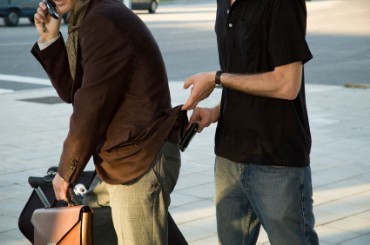
Pickpockets operate in places like crowded buses.

Pickpockets generally operate on crowded buses, bus stations, markets, or streets, such as Avenida Gamarra (Gamarra Avenue) in Lima, Perú. Peruvians warned me telling me that the pickpockets are highly skilled with hands of silk. The first time I was on Avenida Gamarra, I was in a cab. The streets were crowded with one store after another for blocks and blocks.

My front pocket is always in layers. My spending money at the bottom, a couple of handkerchiefs over the spending money, and at the very top, fake, funny money.